Russian Sage
Salvia yangii
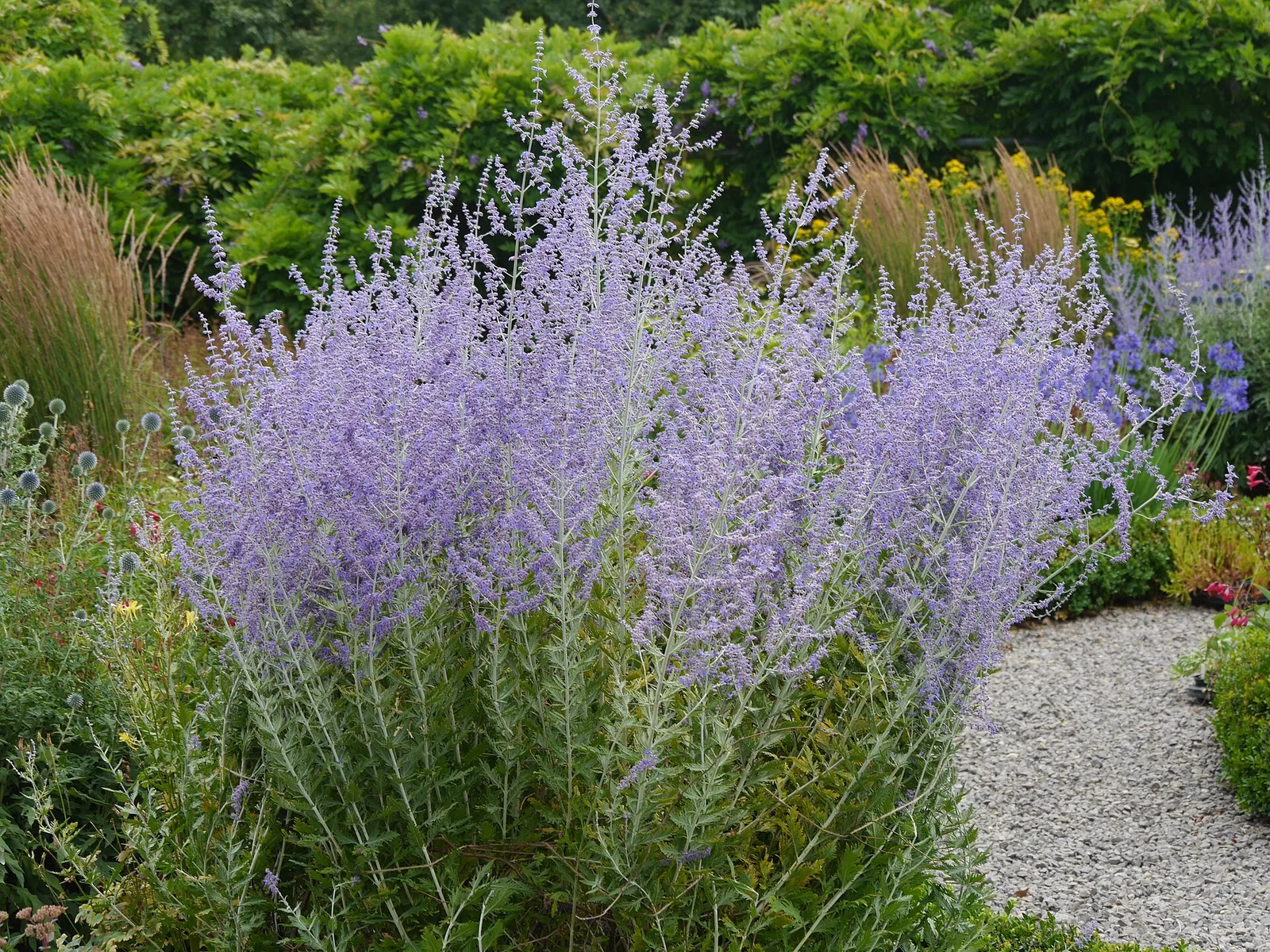
A tough, airy sub-shrub with finely cut, silvery leaves that smell when brushed and a cool haze of lavender-blue flower spikes from early summer to fall. It thrives in heat and dry soil, deer and rabbits leave it alone, and its silver stems stand through winter. Wet soil or shade make it flop or rot.

- Mature size
- 3 × 3 ft
- 0.9 × 0.9 m, tall × wide
- Hardiness
- Zones 5a–9a
- USDA
- Sun
- Full sun
- Water
- Dry to medium
- Blooms
- Jul–Sep
Russian Sage at its mature size
A mature Russian Sage grows 2 to 4 feet tall and just as wide.
Drawn to scale beside a 5 ft 9 in person. With VeraScape, you see it at this size in your own yard.
Typical mature size, unpruned. Sources: NC State Extension.
Through the year
What Russian Sage looks like month by month in a typical zone 6–7 garden.
Dormant · Dec–Mar
Stiff silvery-white leafless stems standing upright.
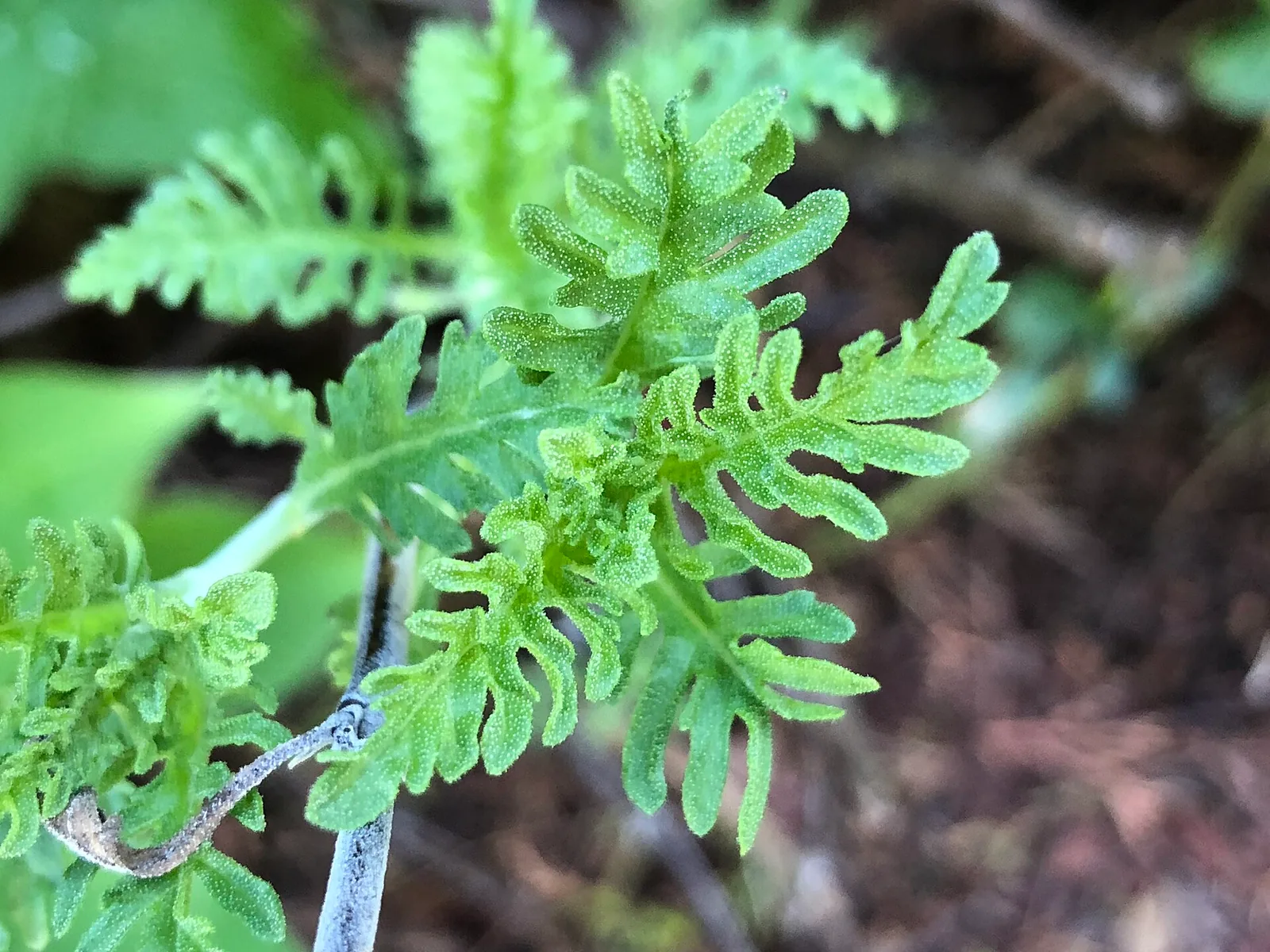
In leaf · Apr–Jun
Airy upright silvery-gray finely cut foliage, no flowers.
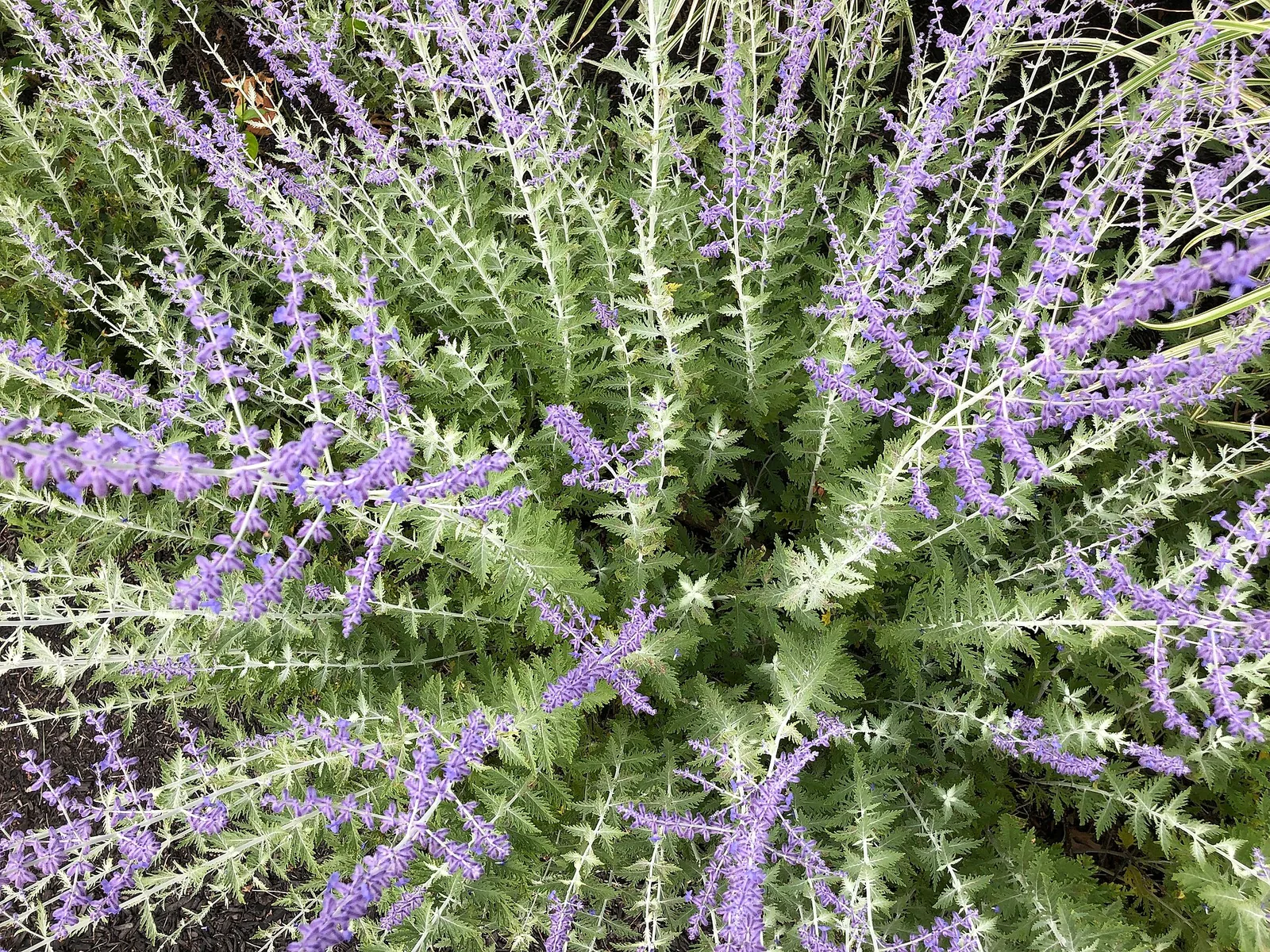
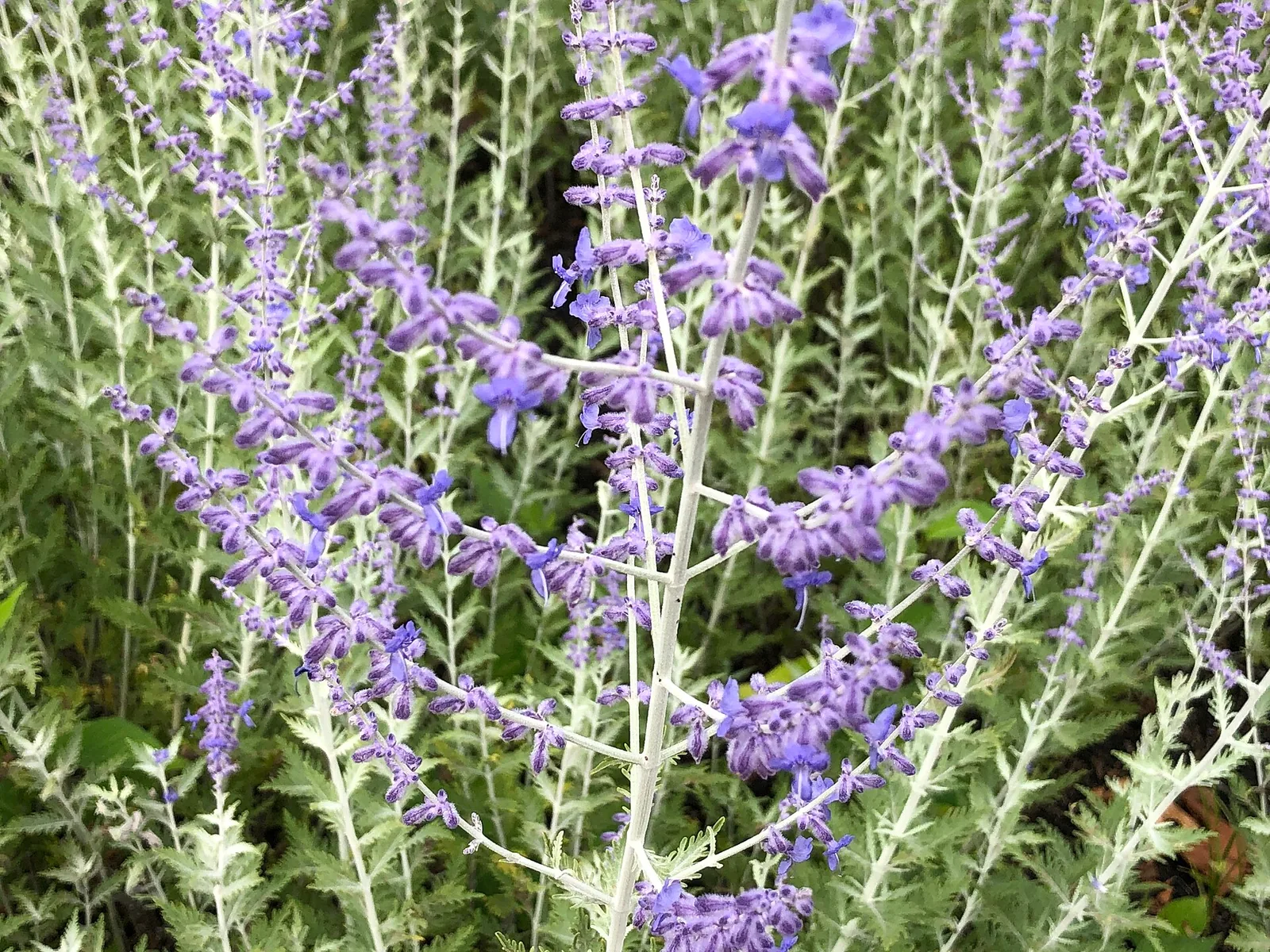
In flower · Jul–Sep
Airy haze of tiny lavender-blue flowers on branched spikes.
Fall · Oct–Nov
Silvery-white stems with small gray-green leaves, flower spikes faded to soft lavender with a slight gray cast; a living plant, not dead gray.
Photos



Growing Russian Sage
- Grows well in
- The Northeast, the Midwest, the Plains and Mountain West, the Pacific Northwest, and California.
- Good for
- Drought tolerant, deer resistant, winter interest, and fragrant
- Leaves
- Dies back in winter
- Native to
- Central Asia
Spacing
VeraScape spaces plants so their grown canopies just touch. For Russian Sage, that’s about 3 ft apart, center to center.
Place a row in your own yard and VeraScape spaces them at their mature width, so you can see whether they’ll crowd the walk.
See Russian Sage in your yard before you dig
Visualize it at its true size, alongside the rest of your design.
Other salvias and sages
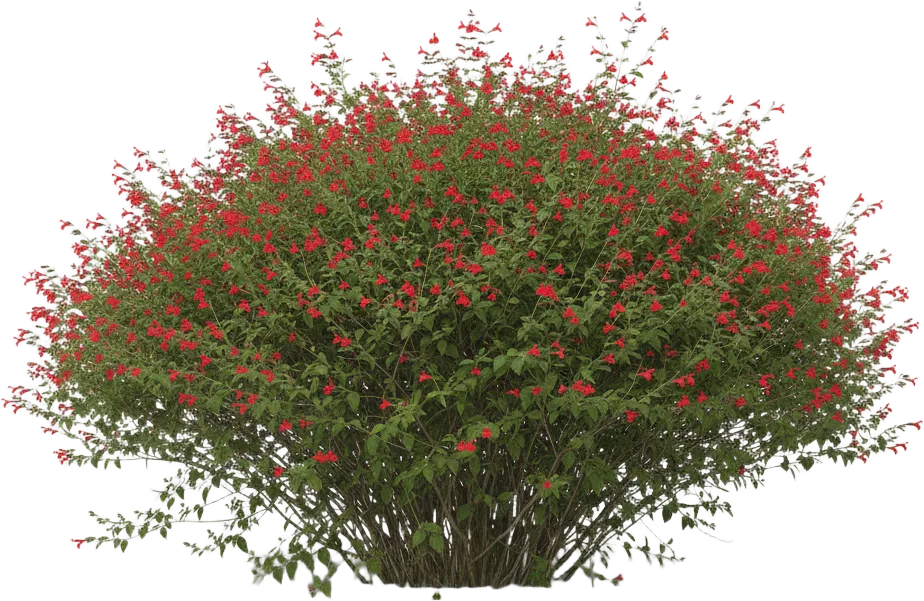 Autumn Sage
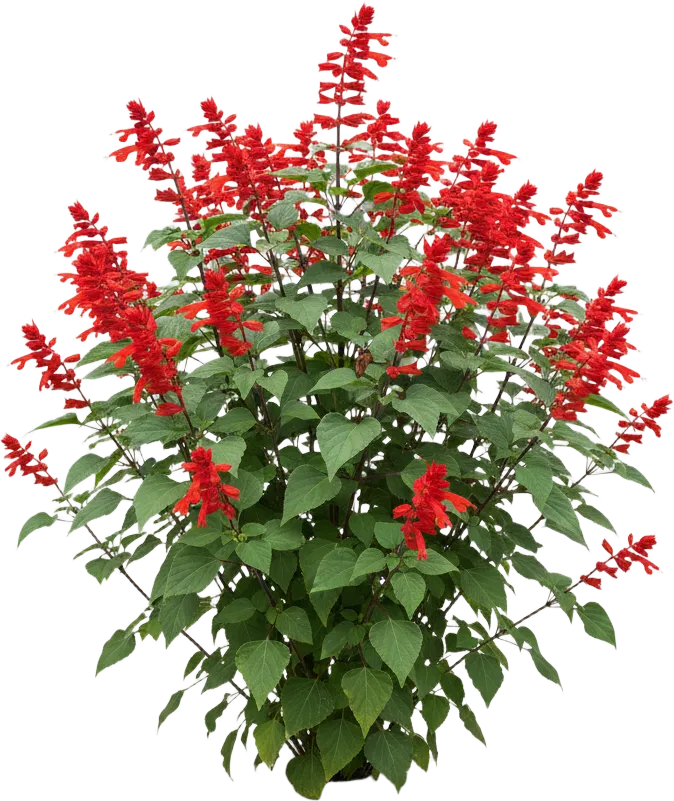 Scarlet Sage
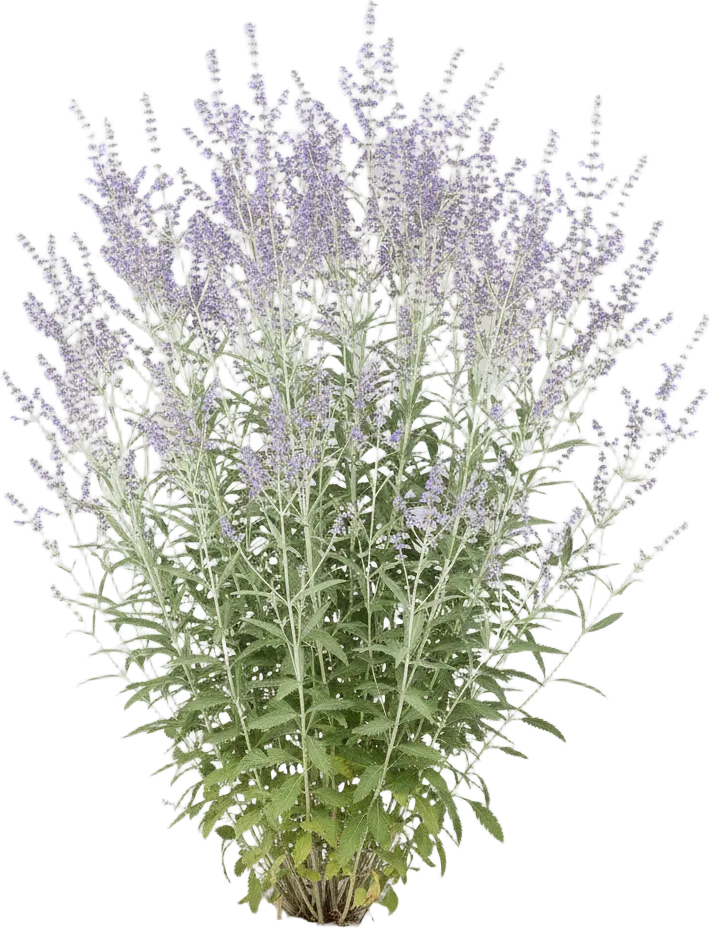 Russian Sage
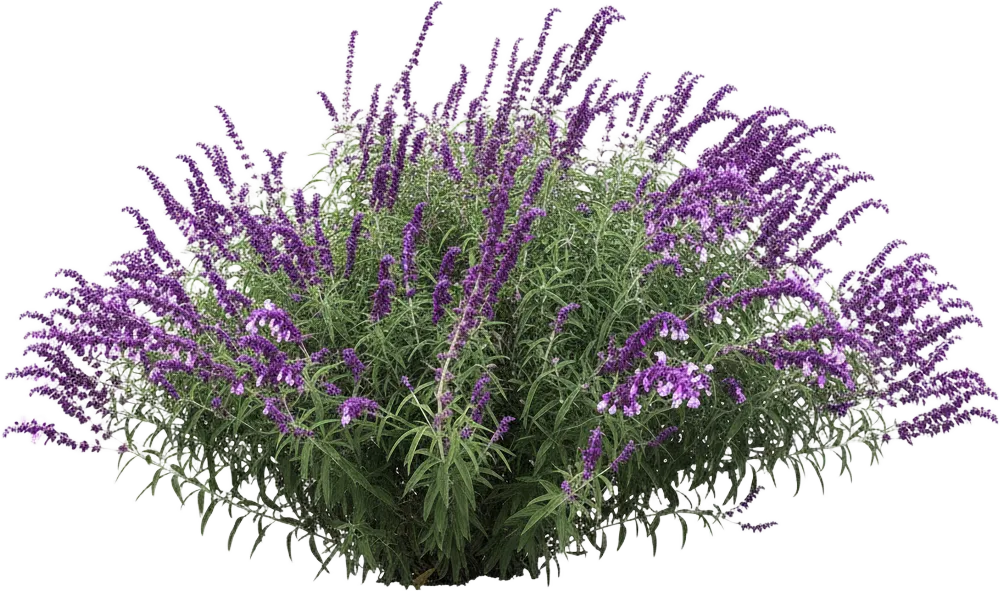 Mexican Bush Sage
All drawn to the same scale.