Autumn Sage
Salvia greggii
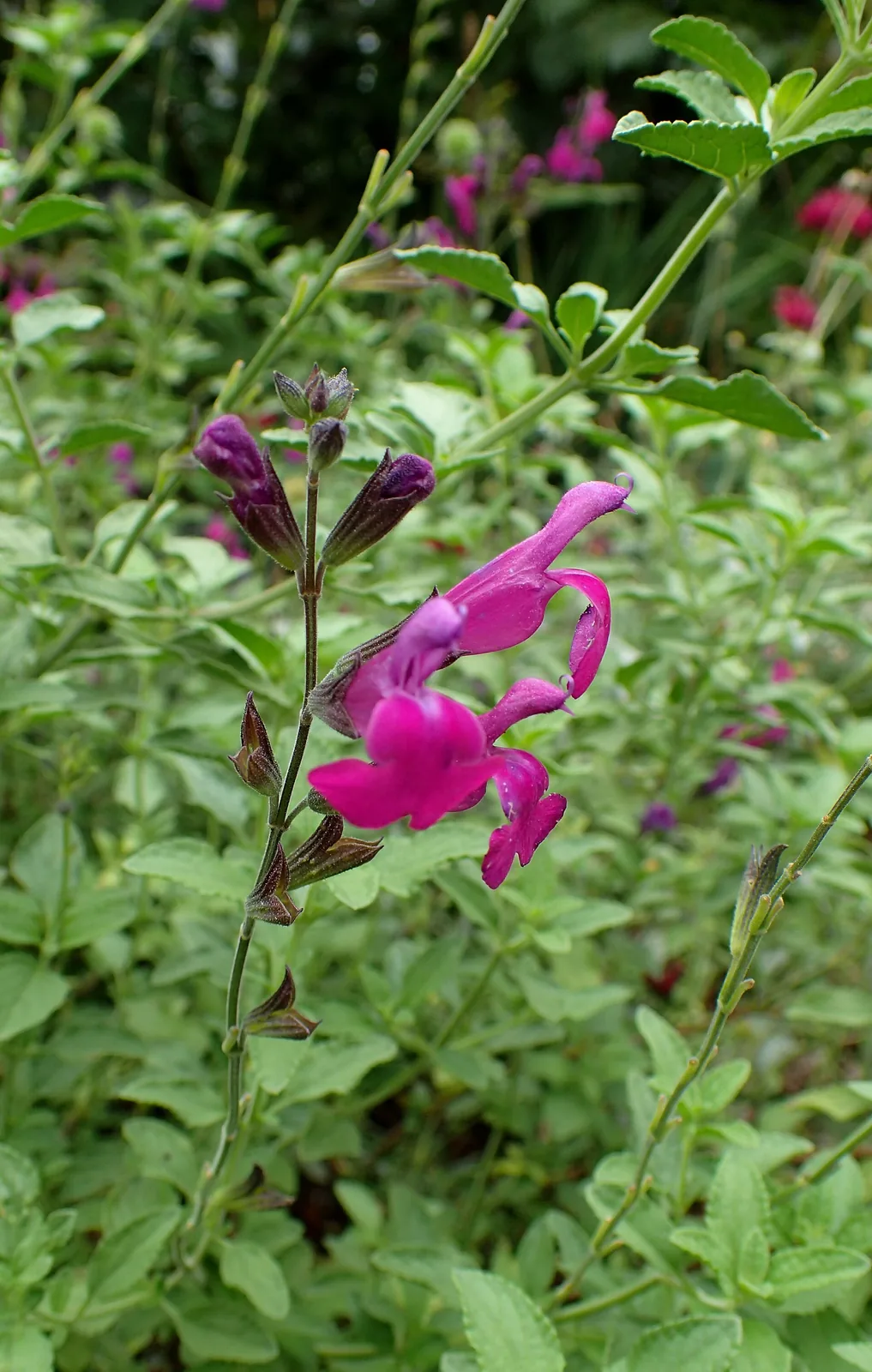
A Texas native sub-shrub with long-lasting flowers in red, pink, orange, purple or white from spring to frost that hummingbirds and butterflies love, good as a low hedge or on a bank. It takes drought, salt and deer. It must have sharp drainage, and its stems are brittle, so keep it back from busy paths.

- Mature size
- 2.5 × 2.5 ft
- 0.8 × 0.8 m, tall × wide
- Hardiness
- Zones 6a–9b
- USDA
- Sun
- Full sun
- Water
- Dry
- Blooms
- Apr–Oct
Autumn Sage at its mature size
A mature Autumn Sage grows 2 to 3 feet tall and just as wide.
Drawn to scale beside a 5 ft 9 in person. With VeraScape, you see it at this size in your own yard.
Typical mature size, unpruned. Sources: NC State Extension, Lady Bird Johnson Wildflower Center.
Through the year
What Autumn Sage looks like month by month in a typical zone 6–7 garden.
Winter · Nov–Mar
Twiggy mound with few leaves and no flowers.
In leaf · Apr–Oct
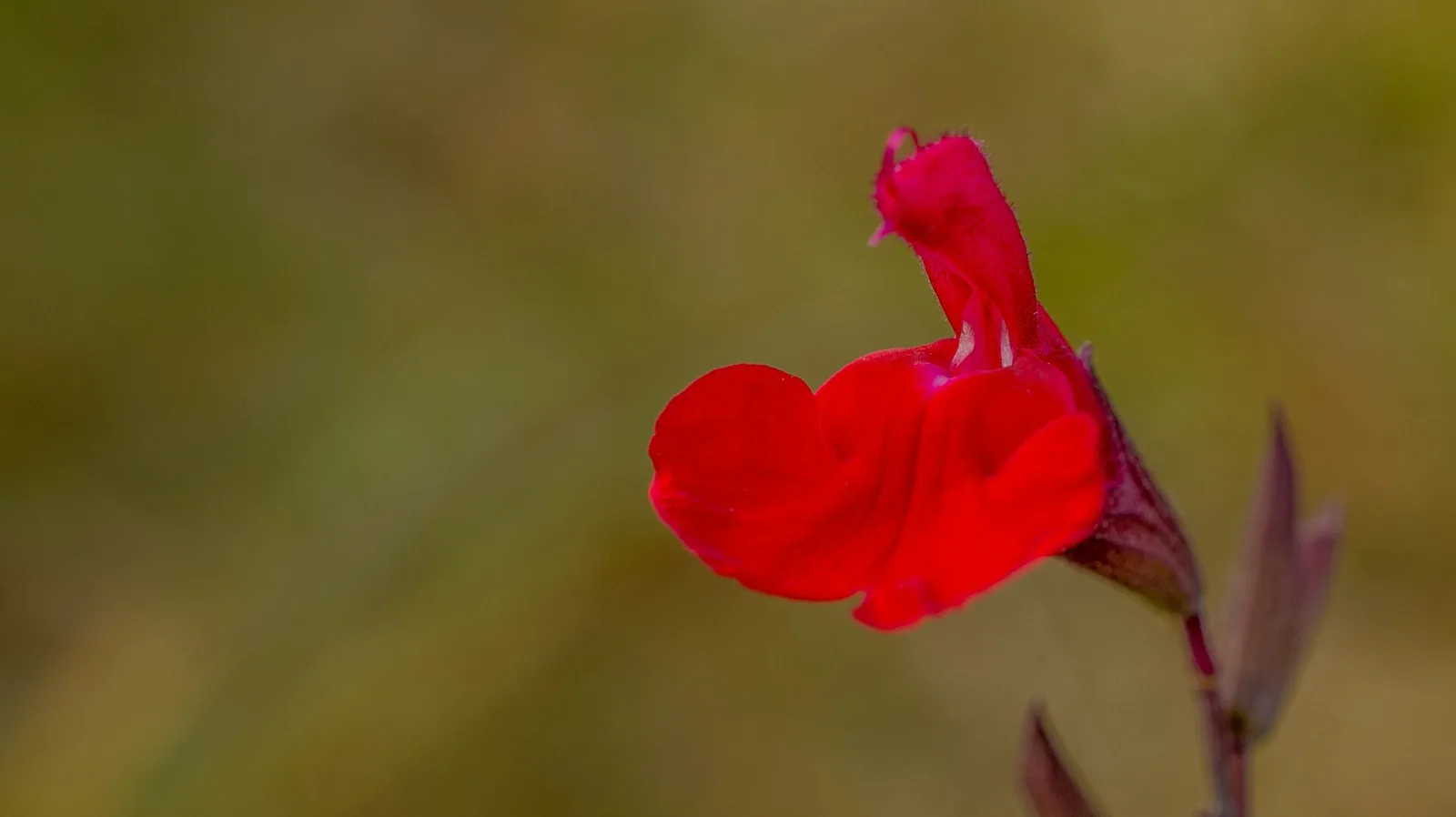
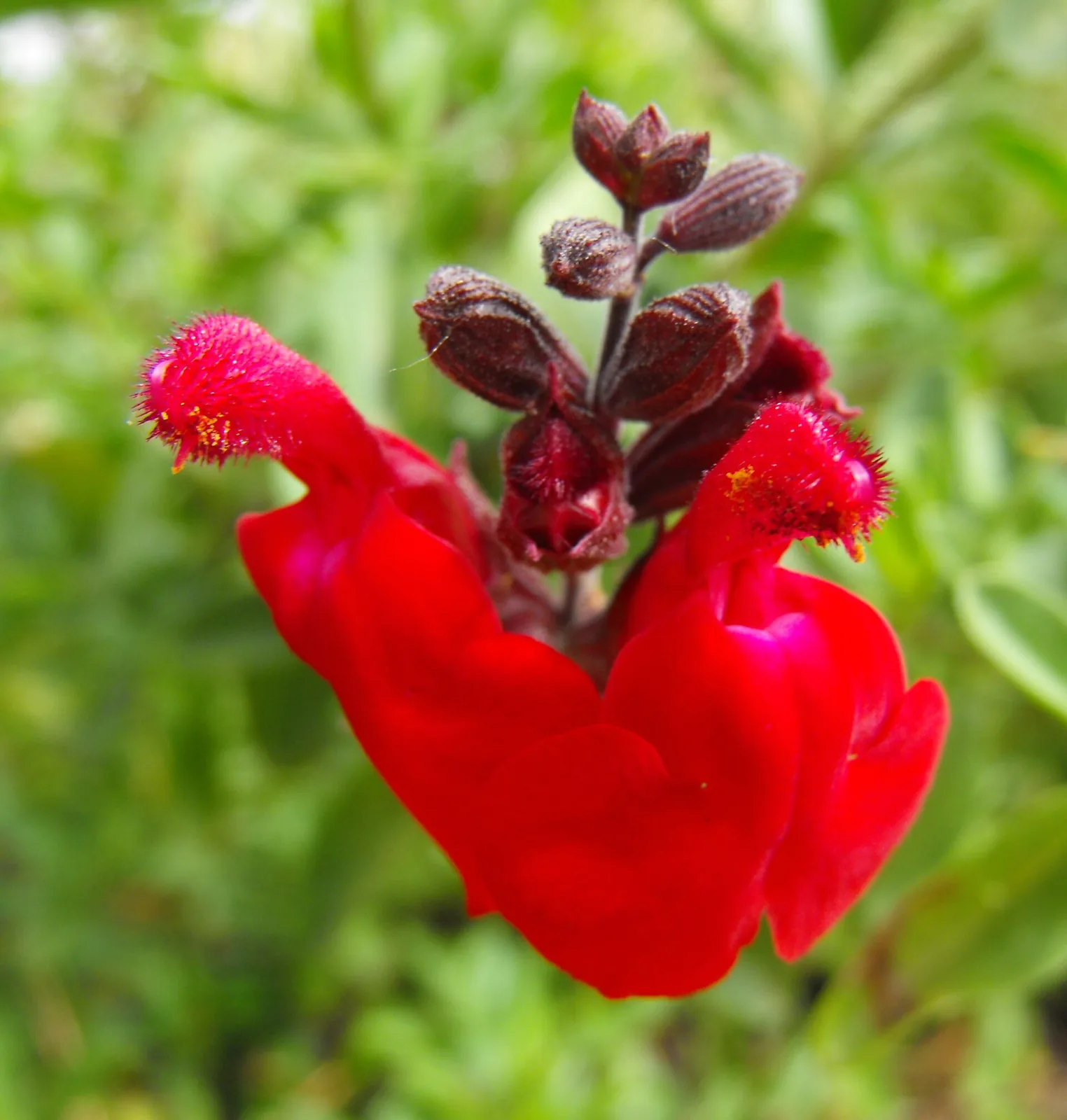
Small bright red flowers all over the twiggy mound.
Photos


Growing Autumn Sage
- Grows well in
- The Southeast, the Plains and Mountain West, the desert Southwest, and California.
- Growth rate
- Medium
- Good for
- Hedge, drought tolerant, slopes, deer resistant, and pollinators
- Leaves
- Dies back in winter
- Native to
- Texas and Mexico
Spacing for a hedge
VeraScape spaces plants so their grown canopies just touch. For Autumn Sage, that’s about 2.5 ft apart, center to center.
Place a row in your own yard and VeraScape spaces them at their mature width, so you can see whether they’ll crowd the walk.
See Autumn Sage in your yard before you dig
Visualize it at its true size, alongside the rest of your design.
Other salvias and sages
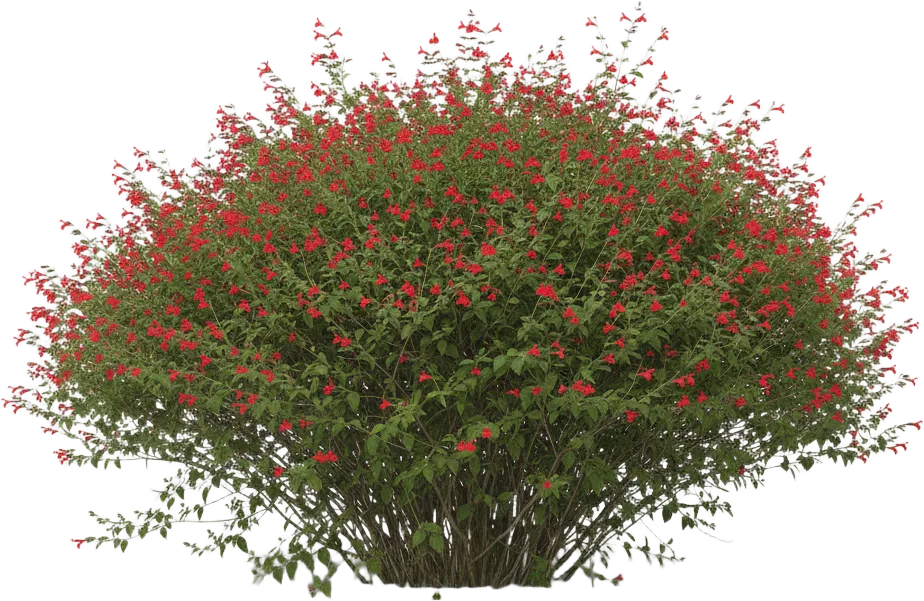 Autumn Sage
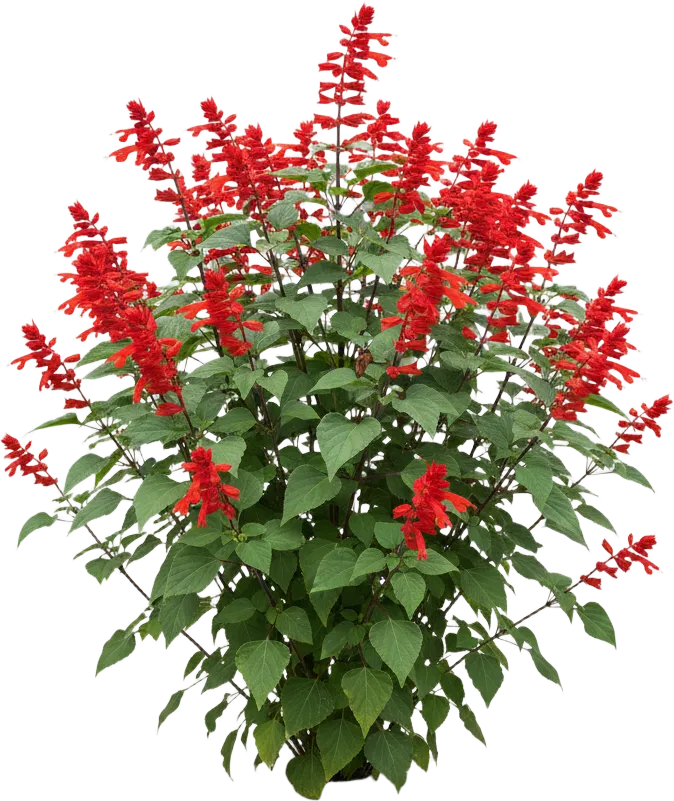 Scarlet Sage
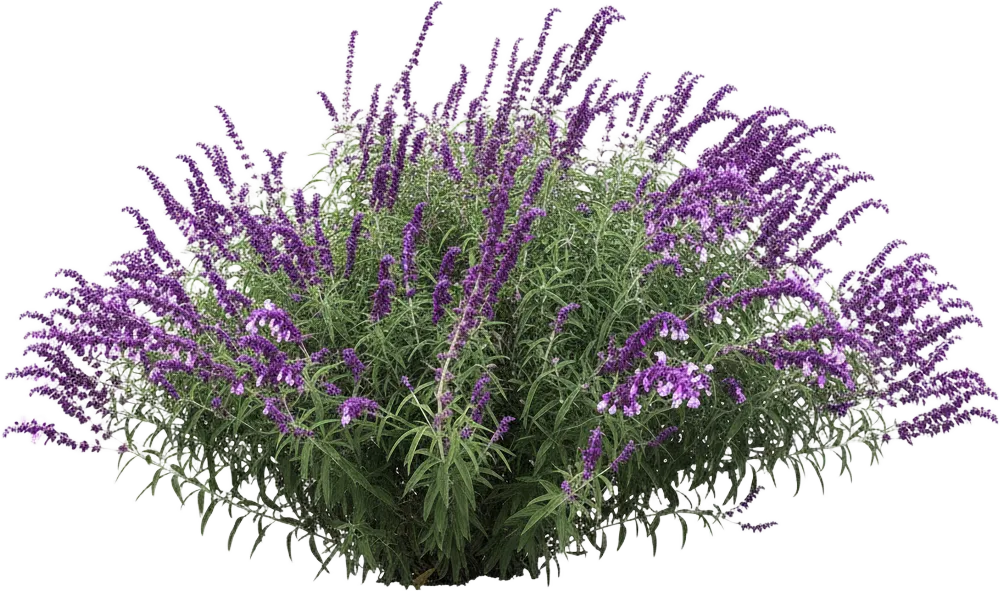 Mexican Bush Sage
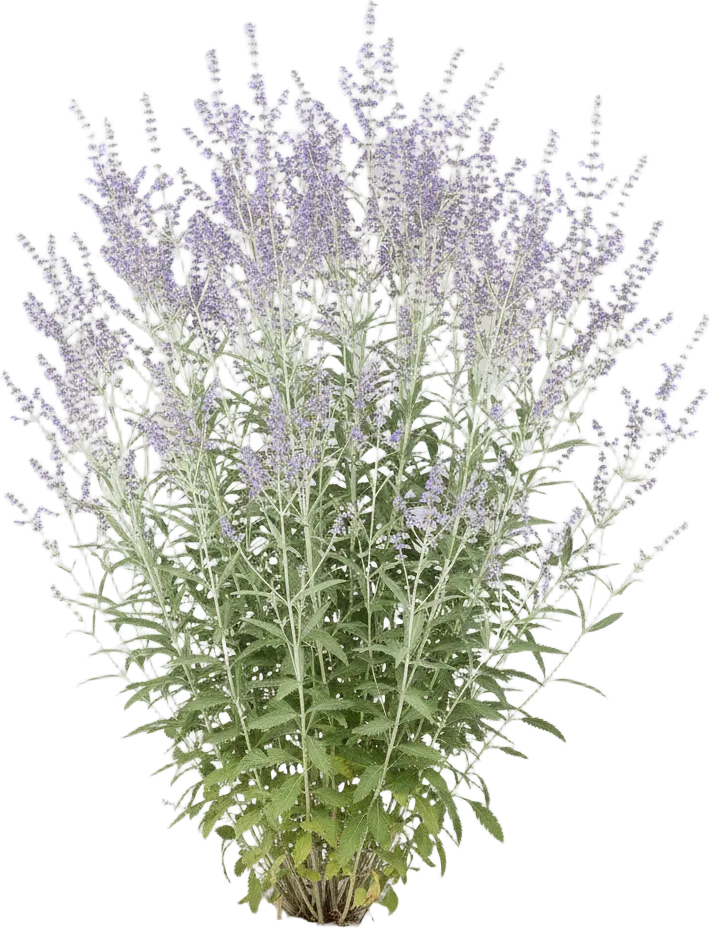 Russian Sage
All drawn to the same scale.