Flowering Dogwood
Cornus florida
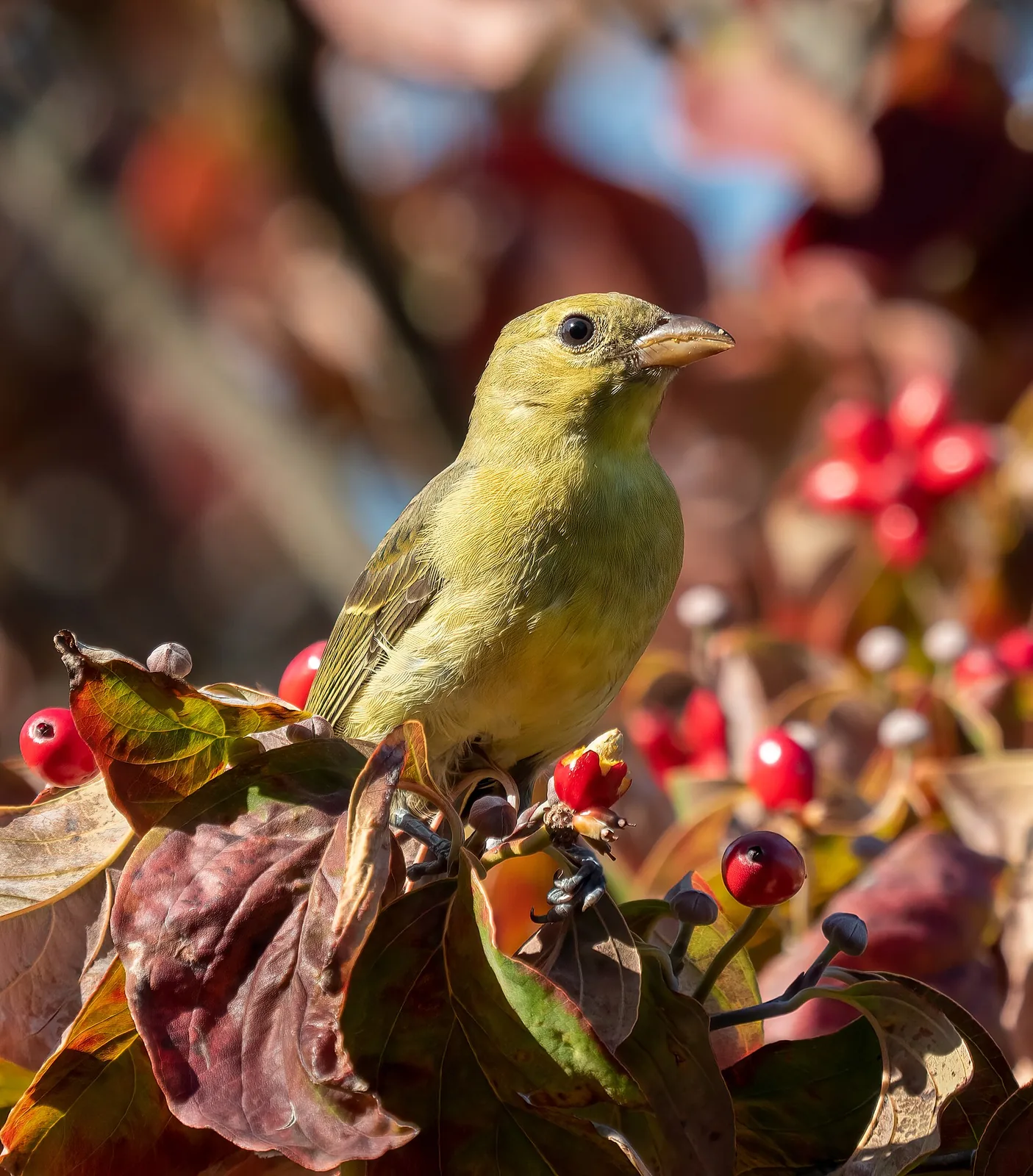
A native understory tree loved for white or pink spring bracts before the leaves, red fall colour and red berries that feed songbirds into winter. It's at its best at a woodland edge with afternoon shade, in rich, acid, well-drained soil. It doesn't tolerate pollution or road salt, so it's a poor street tree.
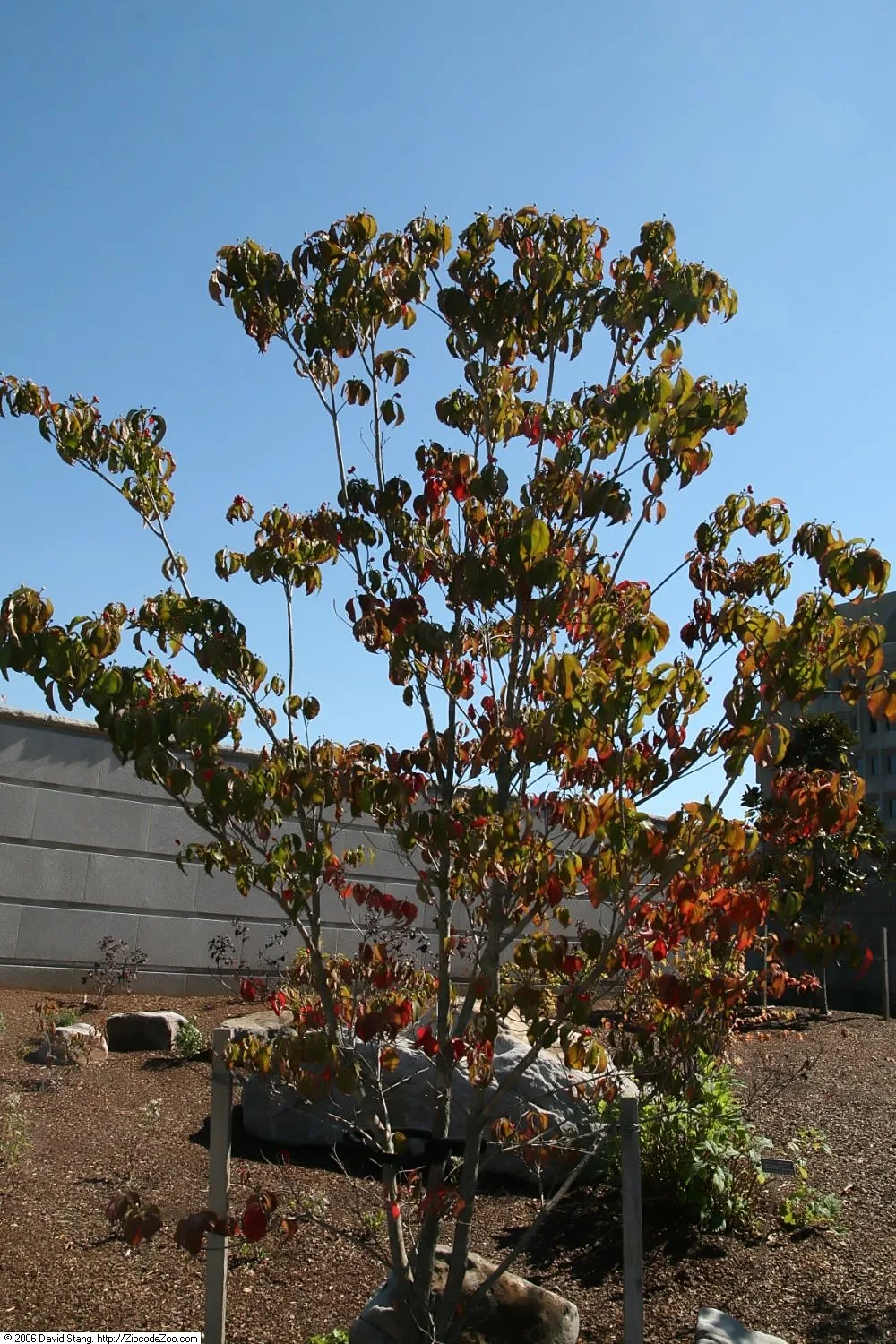

- Mature size
- 25 × 25 ft
- 7.5 × 7.5 m, tall × wide
- Hardiness
- Zones 5a–9b
- USDA
- Sun
- Full sun to part shade
- Water
- Dry to moist
- Blooms
- Apr–May
- Fall color Oct–Nov
Flowering Dogwood at its mature size
A mature Flowering Dogwood grows 20 to 30 feet tall and just as wide, taller than most people.
Drawn to scale beside a 5 ft 9 in person. With VeraScape, you see it at this size in your own yard.
Typical mature size, unpruned. Sources: Purdue Arboretum.
Through the year
What Flowering Dogwood looks like month by month in a typical zone 6–7 garden.
Dormant · Dec–Mar
Bare horizontal layered branches with upturned tips and round flower buds, dark blocky bark.
In flower · Apr
Nearly leafless branches covered in white four-bracted flowers with notched tips.
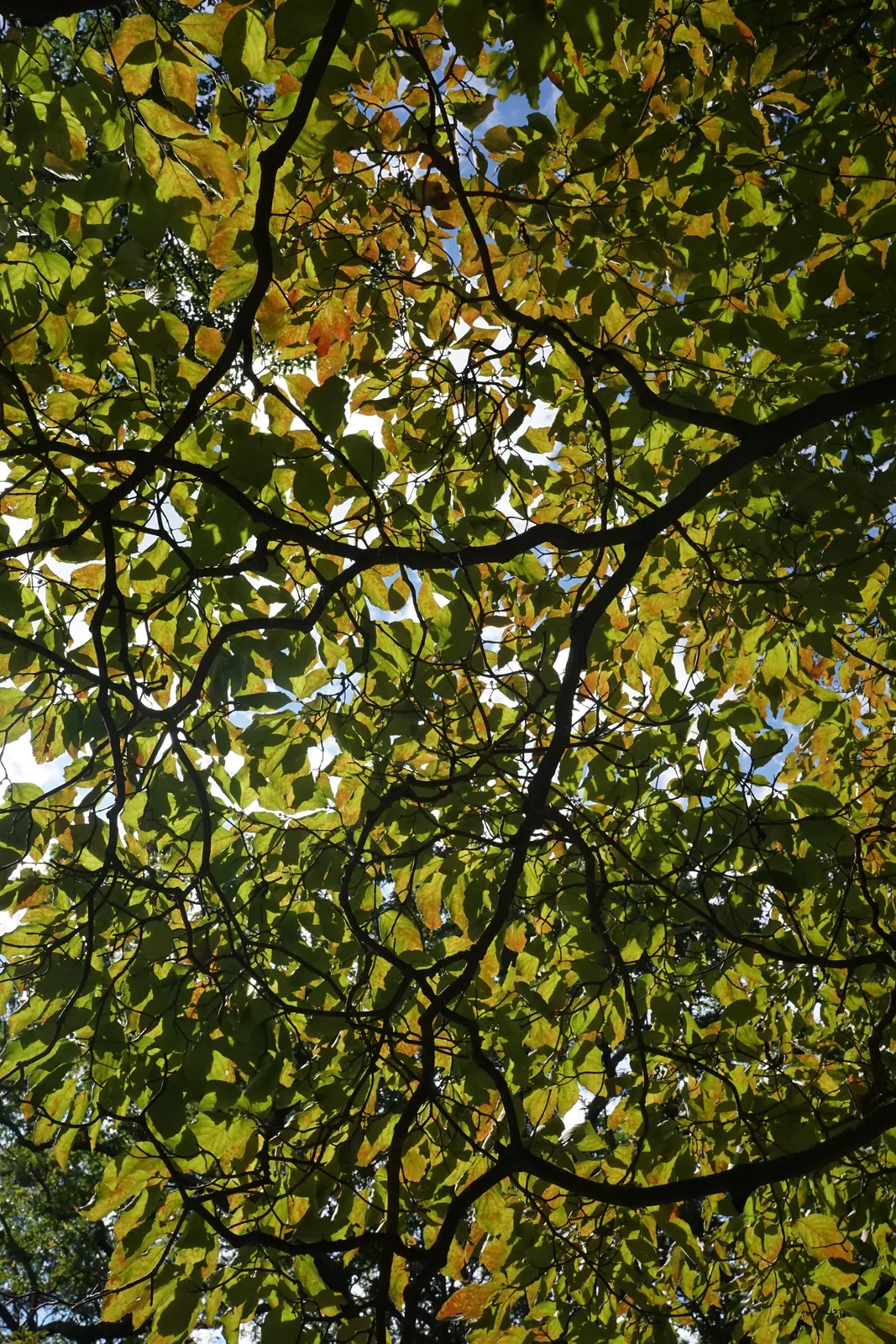
In leaf · May–Sep
Medium green oval leaves on layered branches, no flowers.
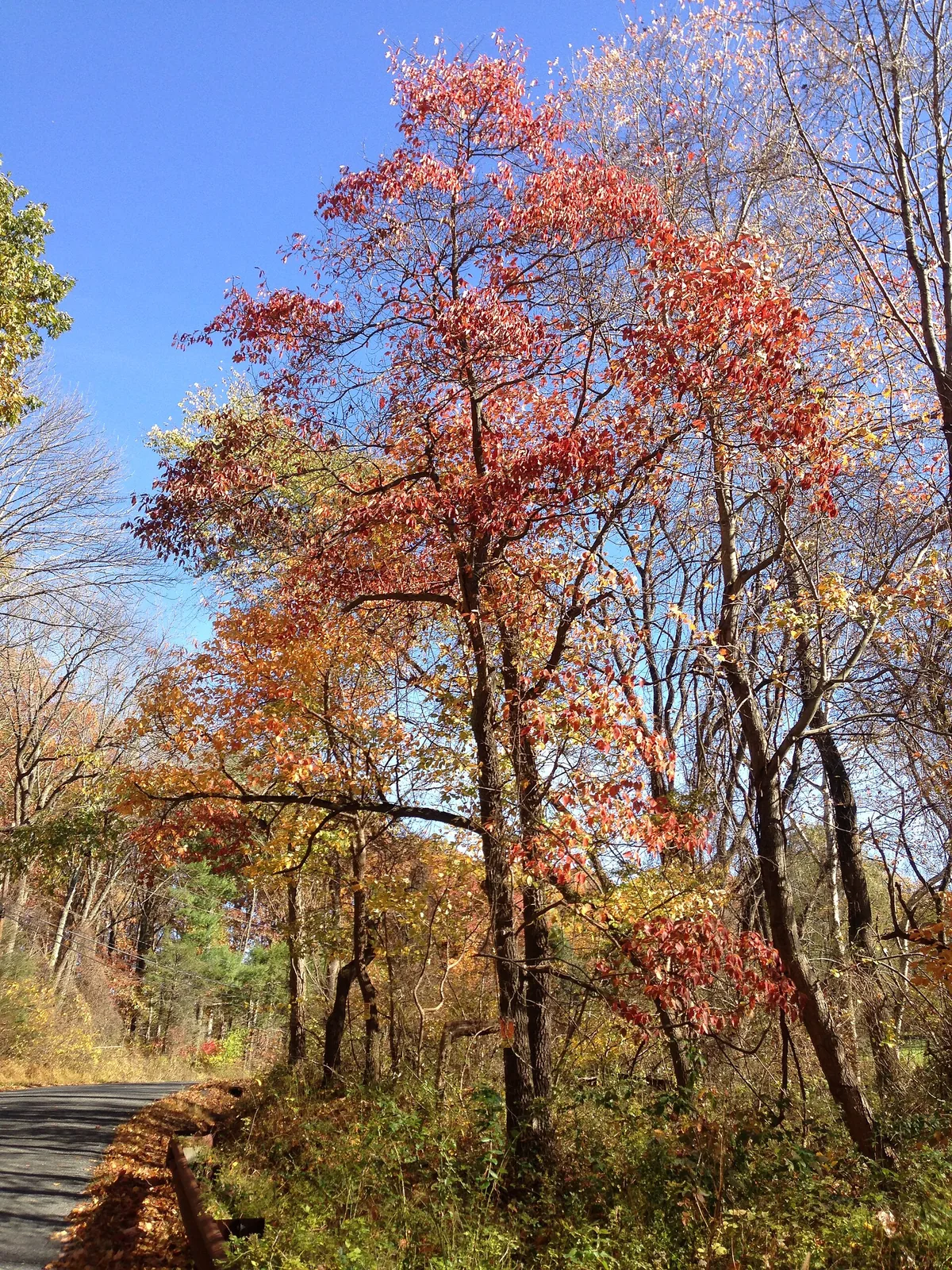
Fall · Oct–Nov
Deep red to reddish-purple, rich and fairly uniform, clusters of glossy bright red berries.
Photos



Growing Flowering Dogwood
- Grows well in
- The Northeast, the Southeast, and the Midwest.
- Growth rate
- Medium
- Good for
- Specimen, drought tolerant, pollinators, fall color, and winter interest
- Leaves
- Drops its leaves in winter
- Native to
- Eastern North America
Spacing
VeraScape spaces plants so their grown canopies just touch. For Flowering Dogwood, that’s about 25 ft apart, center to center.
Place a row in your own yard and VeraScape spaces them at their mature width, so you can see whether they’ll crowd the walk.
See Flowering Dogwood in your yard before you dig
Visualize it at its true size, alongside the rest of your design.
Other dogwoods
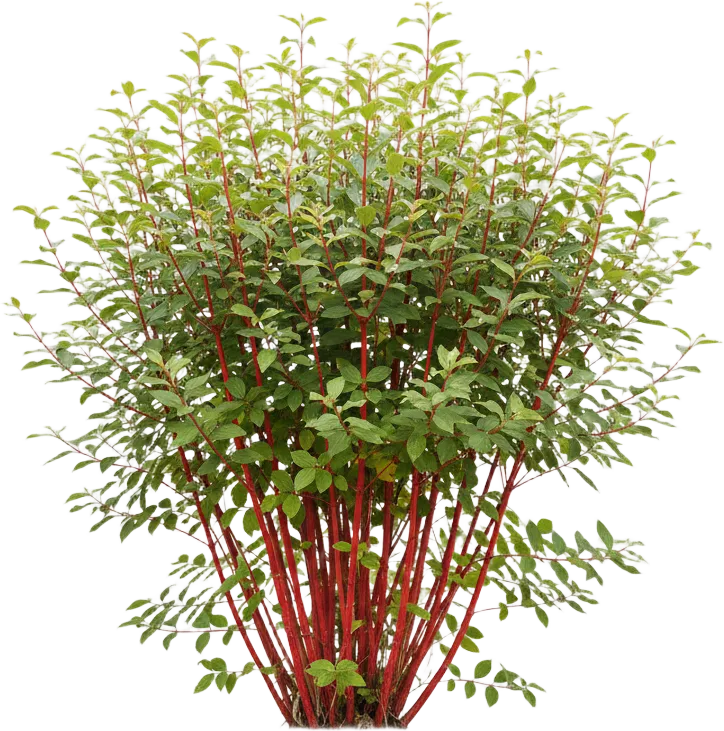 Red Twig Dogwood
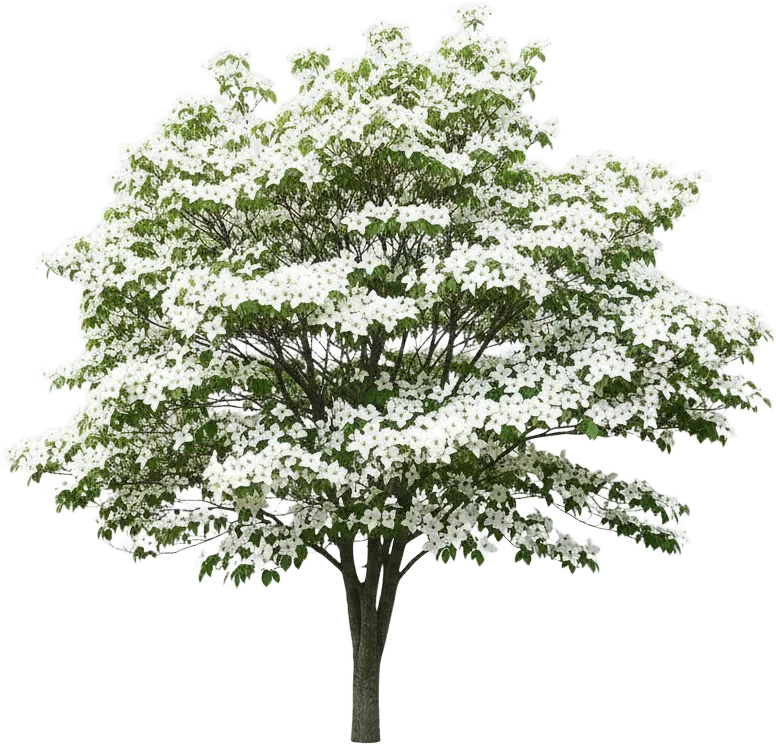 Kousa Dogwood
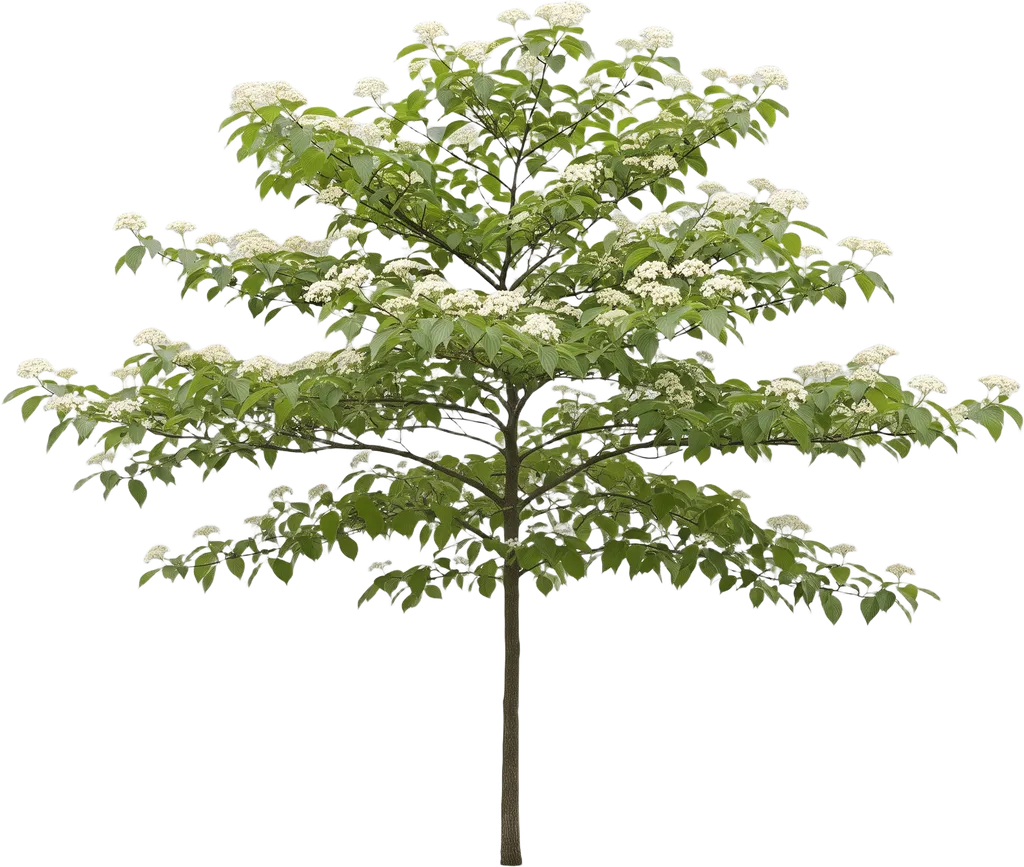 Pagoda Dogwood
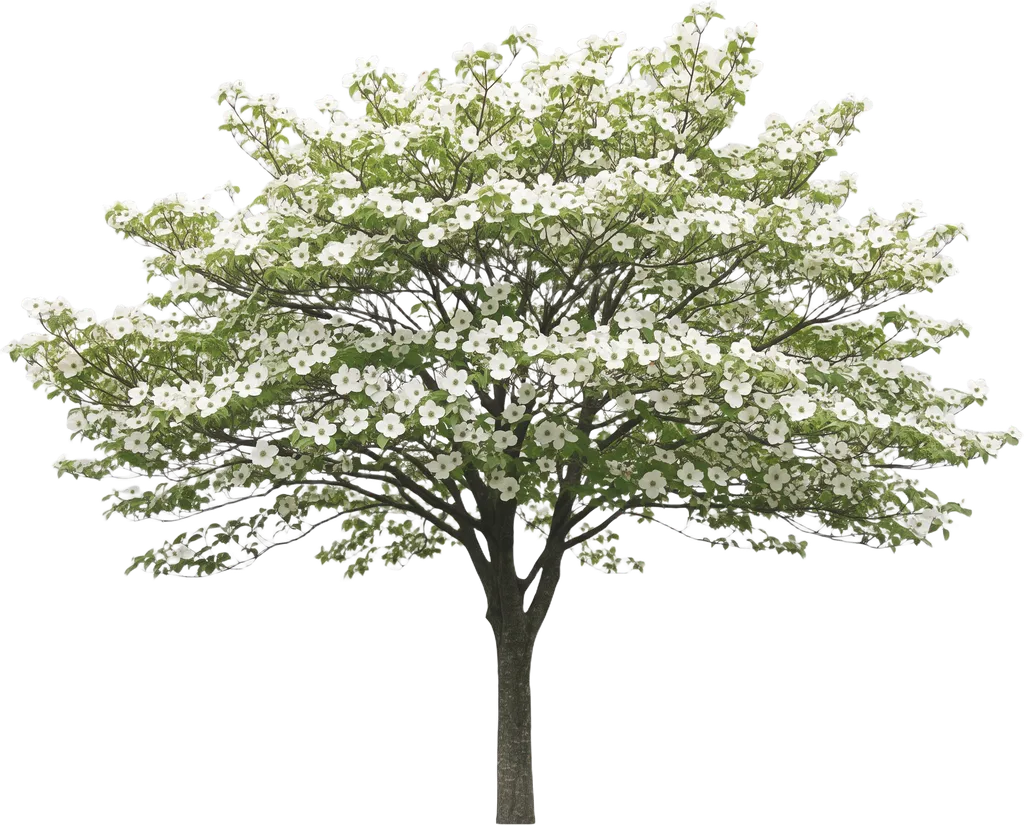 Flowering Dogwood
All drawn to the same scale.