Summer Wine Ninebark
Physocarpus opulifolius ‘Seward’ · a purple-leaf ninebark
A compact ninebark with deeply cut, wine-red leaves, pinkish-white flower clusters in late spring and peeling bark for winter. It's a tough native that handles drought, clay and rocky soil, and it suckers less than the species. The colour greens up in hot summers; prune right after bloom.
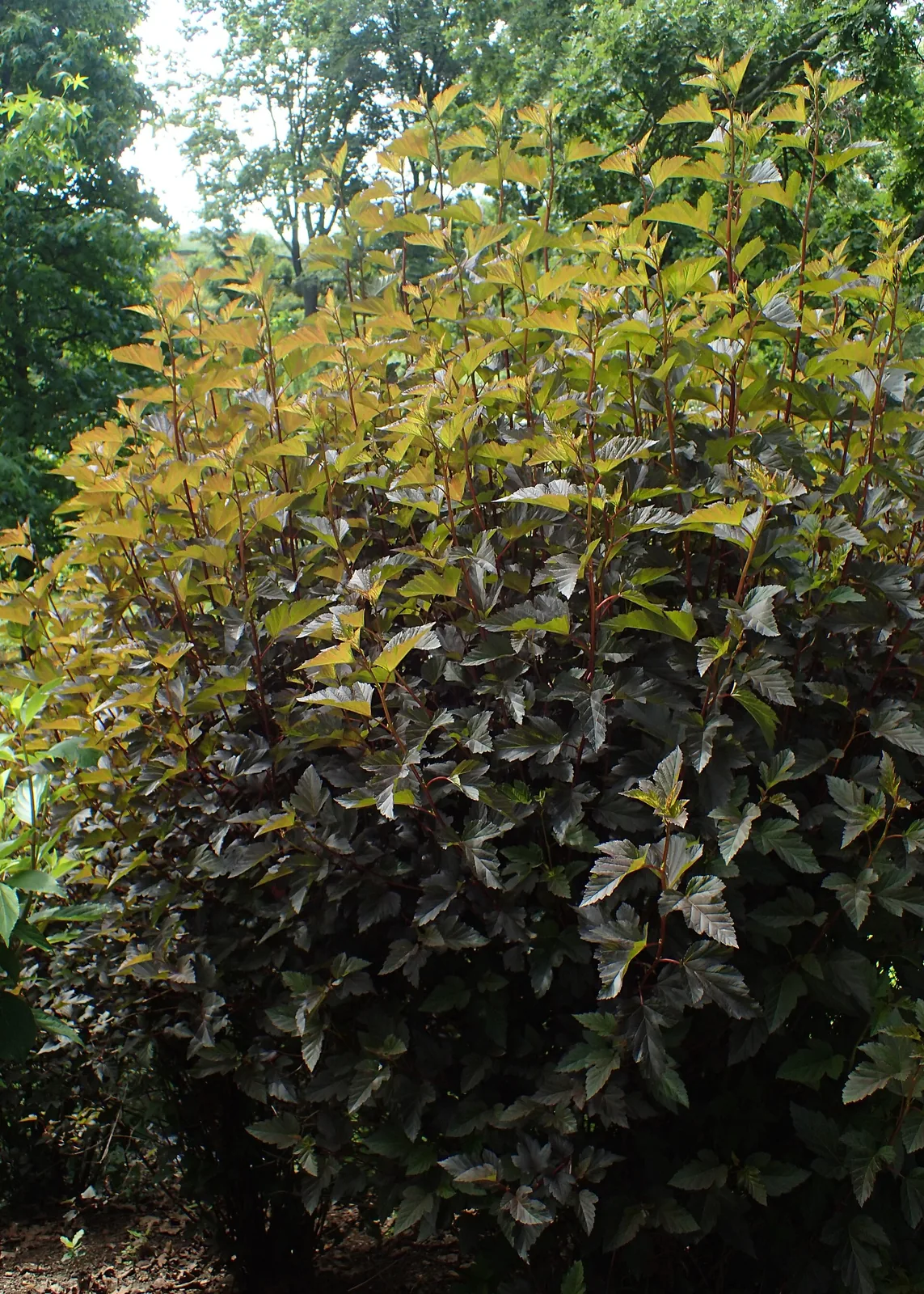

- Mature size
- 5 × 5 ft
- 1.5 × 1.5 m, tall × wide
- Hardiness
- Zones 3a–8b
- USDA
- Sun
- Full sun to part shade
- Water
- Dry to moist
- Blooms
- Apr–May
- Fall color Oct–Nov
Summer Wine Ninebark at its mature size
A mature Summer Wine Ninebark grows 4 to 6 feet tall and just as wide.
Drawn to scale beside a 5 ft 9 in person. With VeraScape, you see it at this size in your own yard.
Typical mature size, unpruned. Sources: Missouri Botanical Garden.
Through the year
What Summer Wine Ninebark looks like month by month in a typical zone 6–7 garden.
Dormant · Dec–Mar
Bare upright-arching stems with peeling bark.
In leaf · Apr–Sep
Compact mound of small finely cut wine-red leaves, a few pale pink flower clusters.
Fall · Oct–Nov
Leaves deepened to dark red-bronze.
Photos
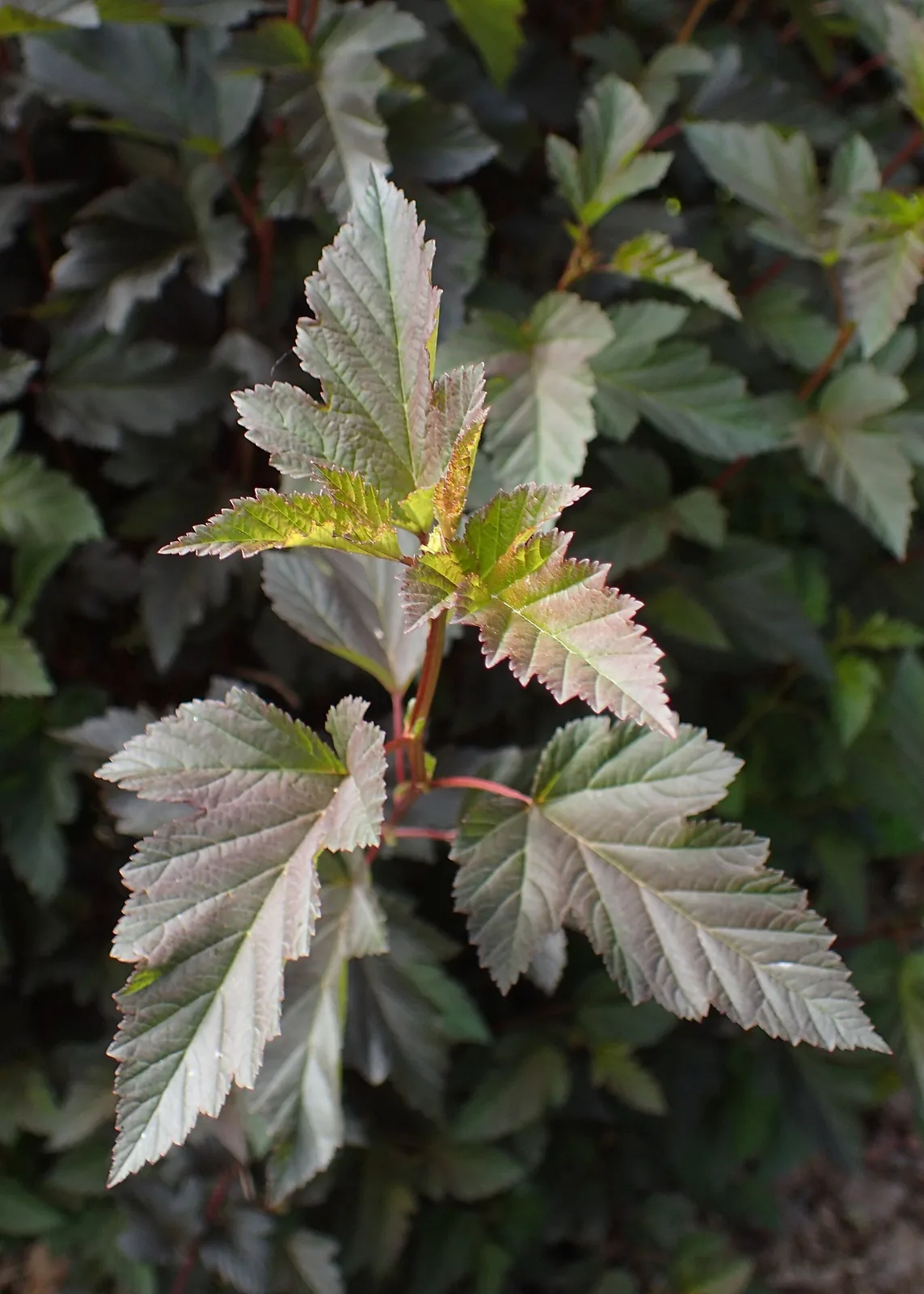

Growing Summer Wine Ninebark
- Grows well in
- The Northeast, the Midwest, the Plains and Mountain West, and the Pacific Northwest.
- Growth rate
- Fast
- Good for
- Hedge, small space, foundation planting, drought tolerant, rain garden, slopes, pollinators, fall color, winter interest, and fast growing
- Leaves
- Drops its leaves in winter
- Native to
- Central and Eastern North America
Spacing for a hedge
VeraScape spaces plants so their grown canopies just touch. For Summer Wine Ninebark, that’s about 5 ft apart, center to center.
Place a row in your own yard and VeraScape spaces them at their mature width, so you can see whether they’ll crowd the walk.
See Summer Wine Ninebark in your yard before you dig
Visualize it at its true size, alongside the rest of your design.
Other ninebarks
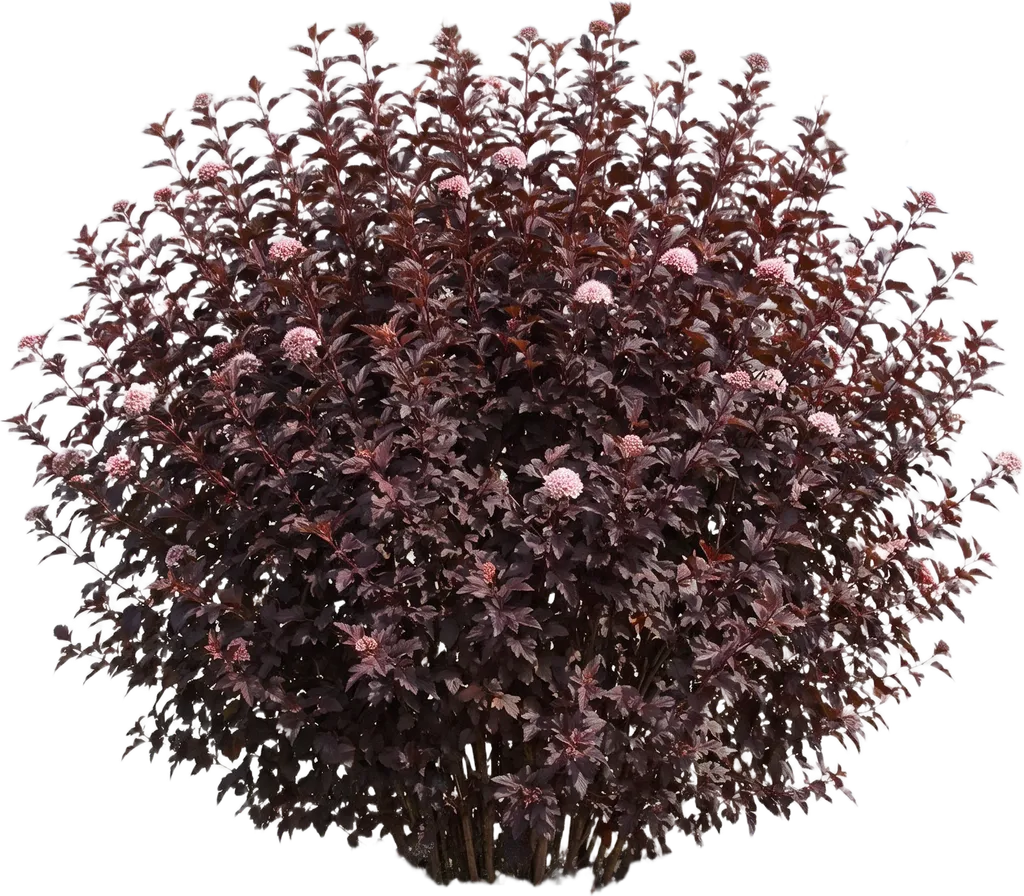 Summer Wine Ninebark
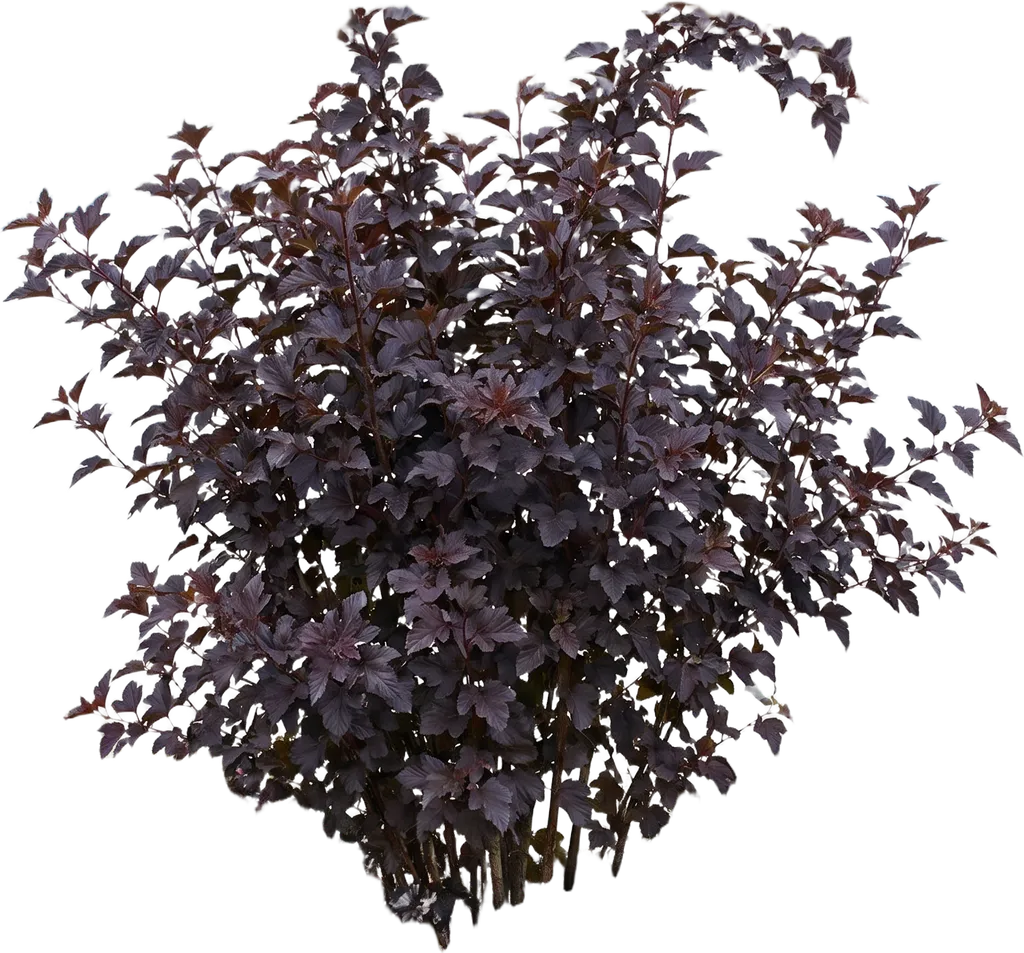 Diabolo Ninebark
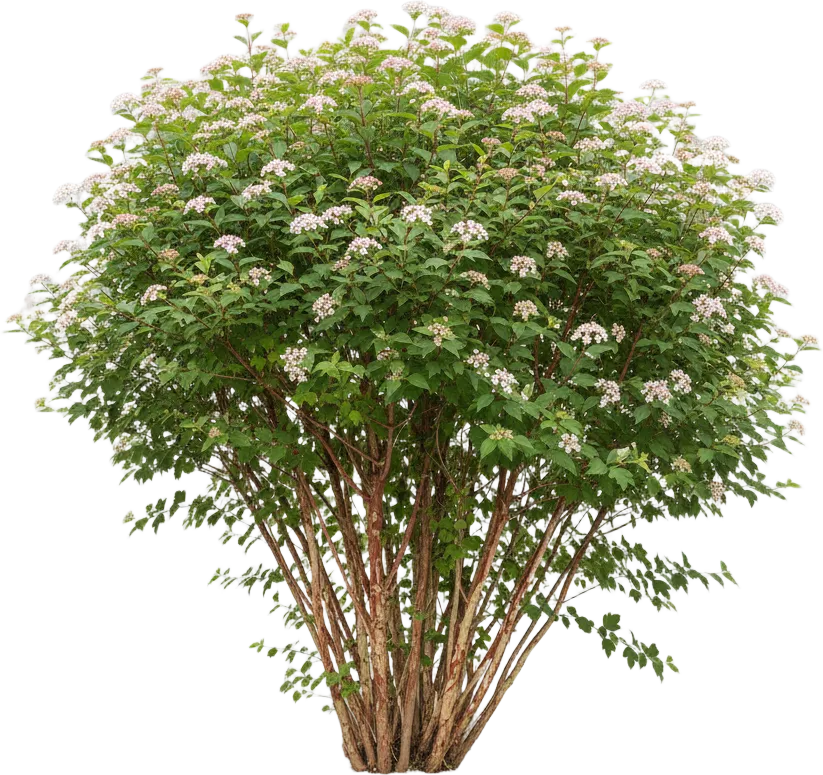 Ninebark
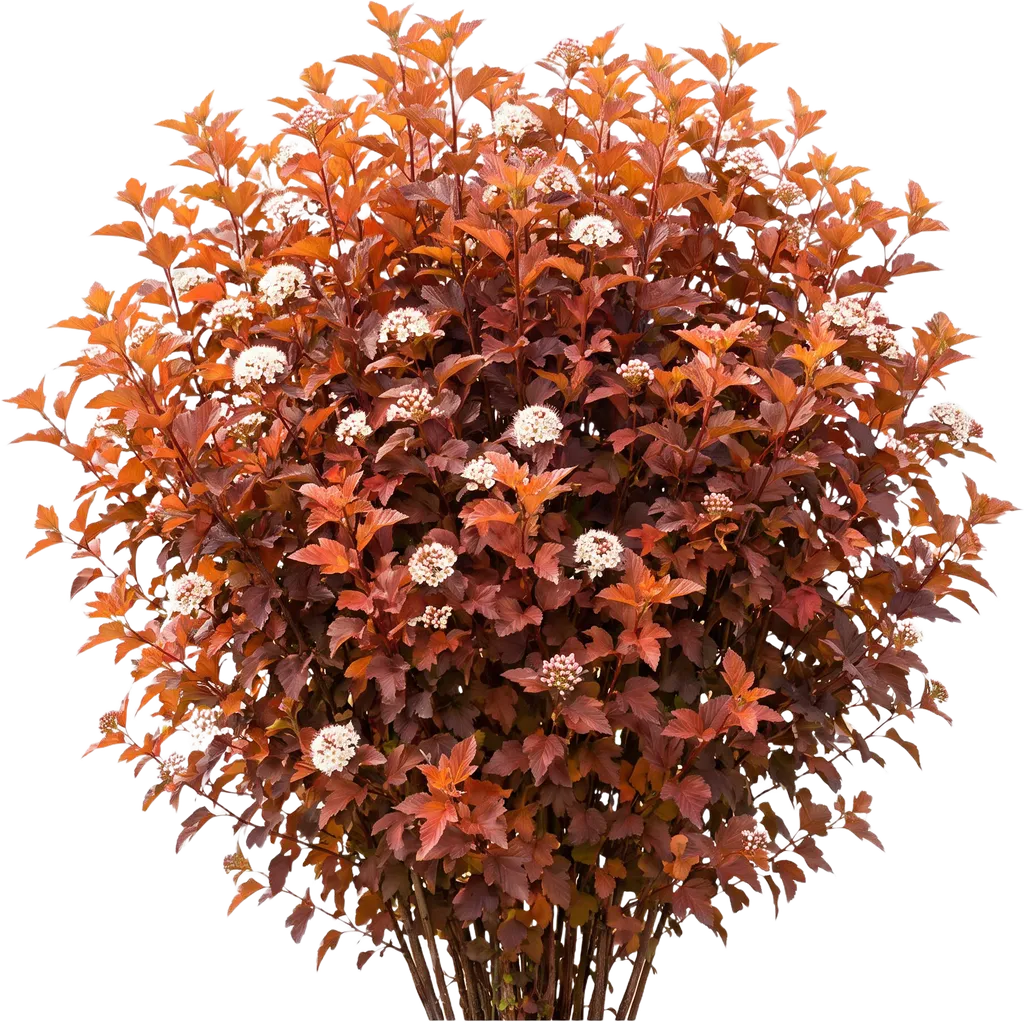 Coppertina Ninebark
All drawn to the same scale.