Red-flowering Currant
Ribes sanguineum
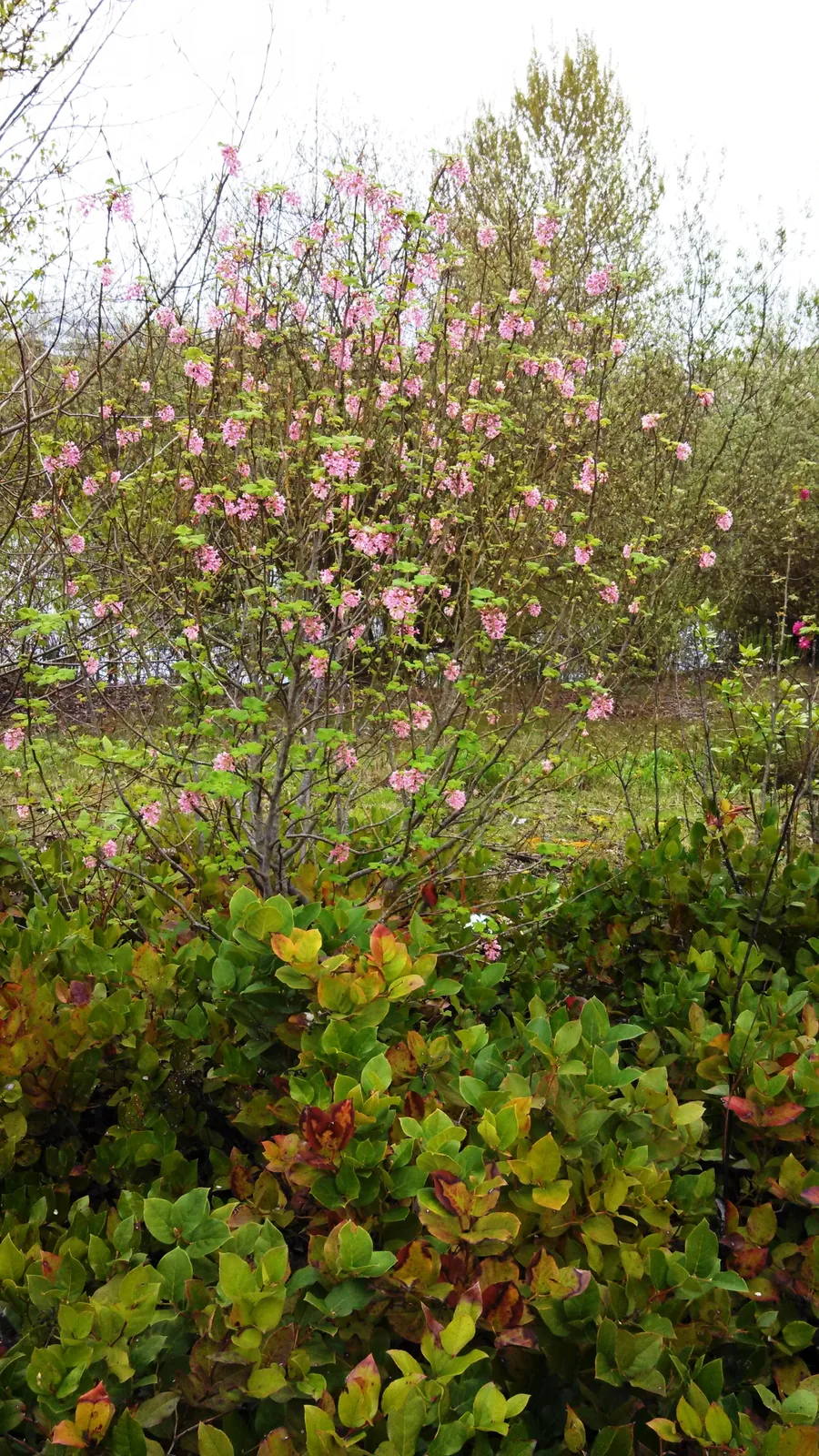
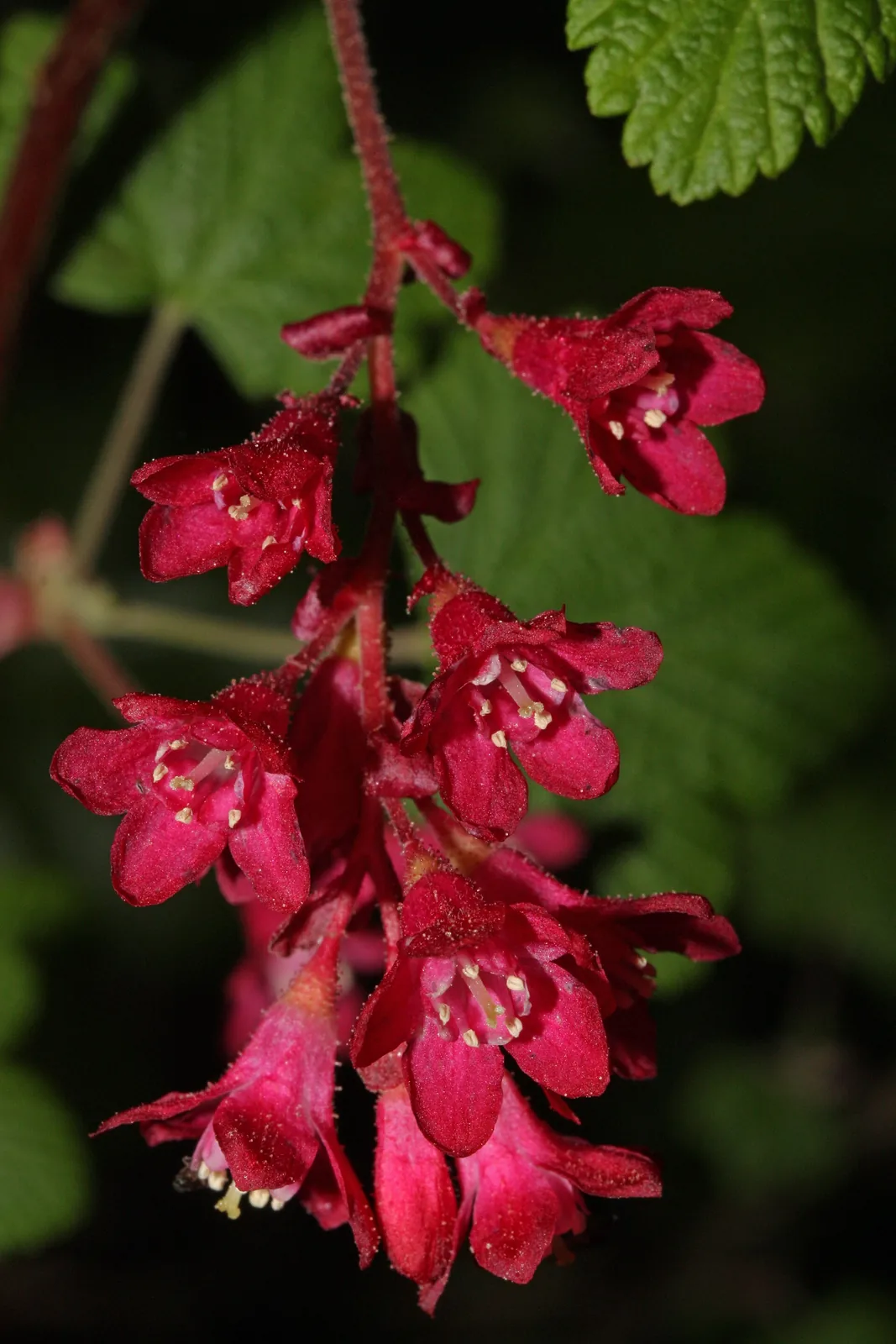
A western native shrub with dangling clusters of spicy-scented pink to red flowers in late winter and spring, one of the first nectar sources for hummingbirds. Deer leave it alone. It hosts white pine blister rust, so North Carolina bans all currants. Inland it needs more shade and water.
- Mature size
- 9 × 8.5 ft
- 2.7 × 2.6 m, tall × wide
- Hardiness
- Zones 6a–8b
- USDA
- Sun
- Full sun to part shade
- Water
- Dry to moist
- Blooms
- Mar–Apr
- Fall color Oct–Nov
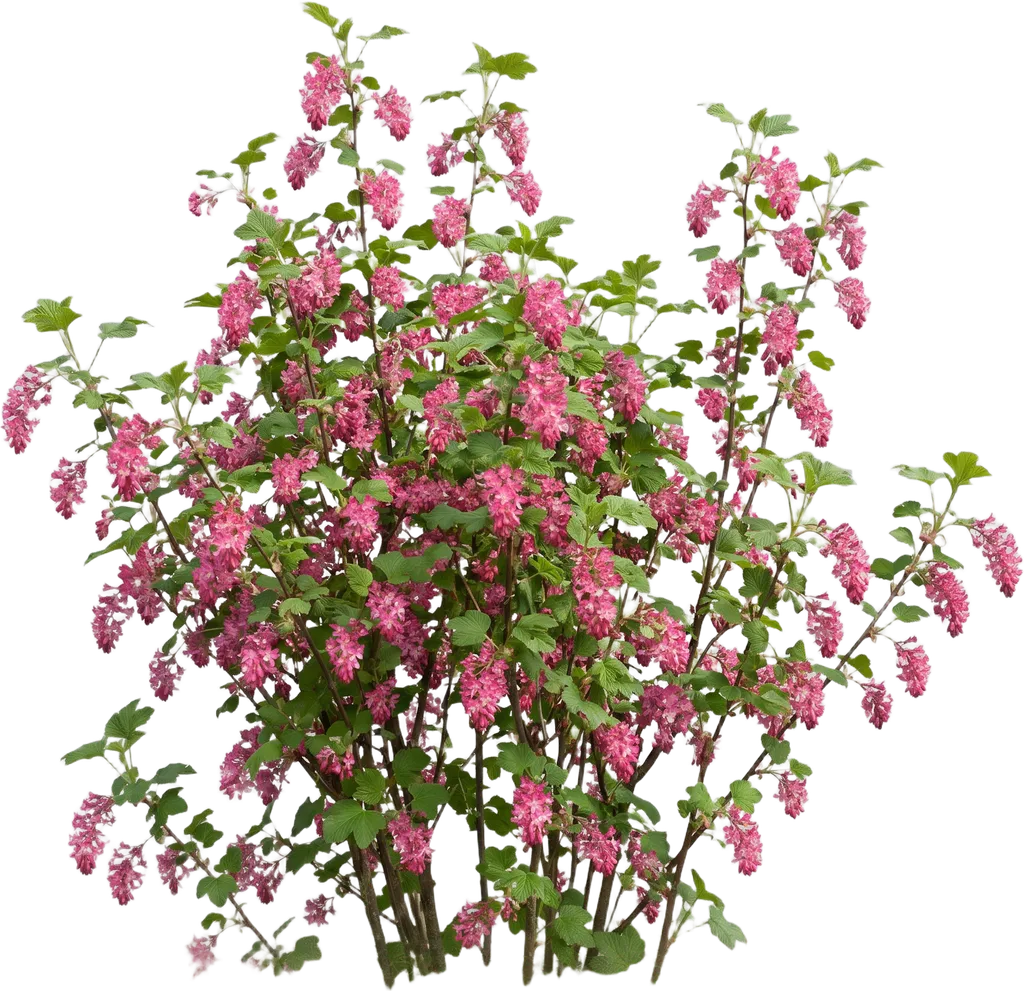
Red-flowering Currant at its mature size
A mature Red-flowering Currant grows 5 to 13 feet tall and 5 to 12 feet wide, taller than most people.
Drawn to scale beside a 5 ft 9 in person. With VeraScape, you see it at this size in your own yard.
Typical mature size, unpruned. Sources: NC State Extension, Calscape.

Through the year
What Red-flowering Currant looks like month by month in a typical zone 6–7 garden.
Dormant · Dec–Feb
Bare upright gray-brown stems.
In flower · Mar–Apr
Hanging rose-pink flower clusters among fresh lobed leaves.
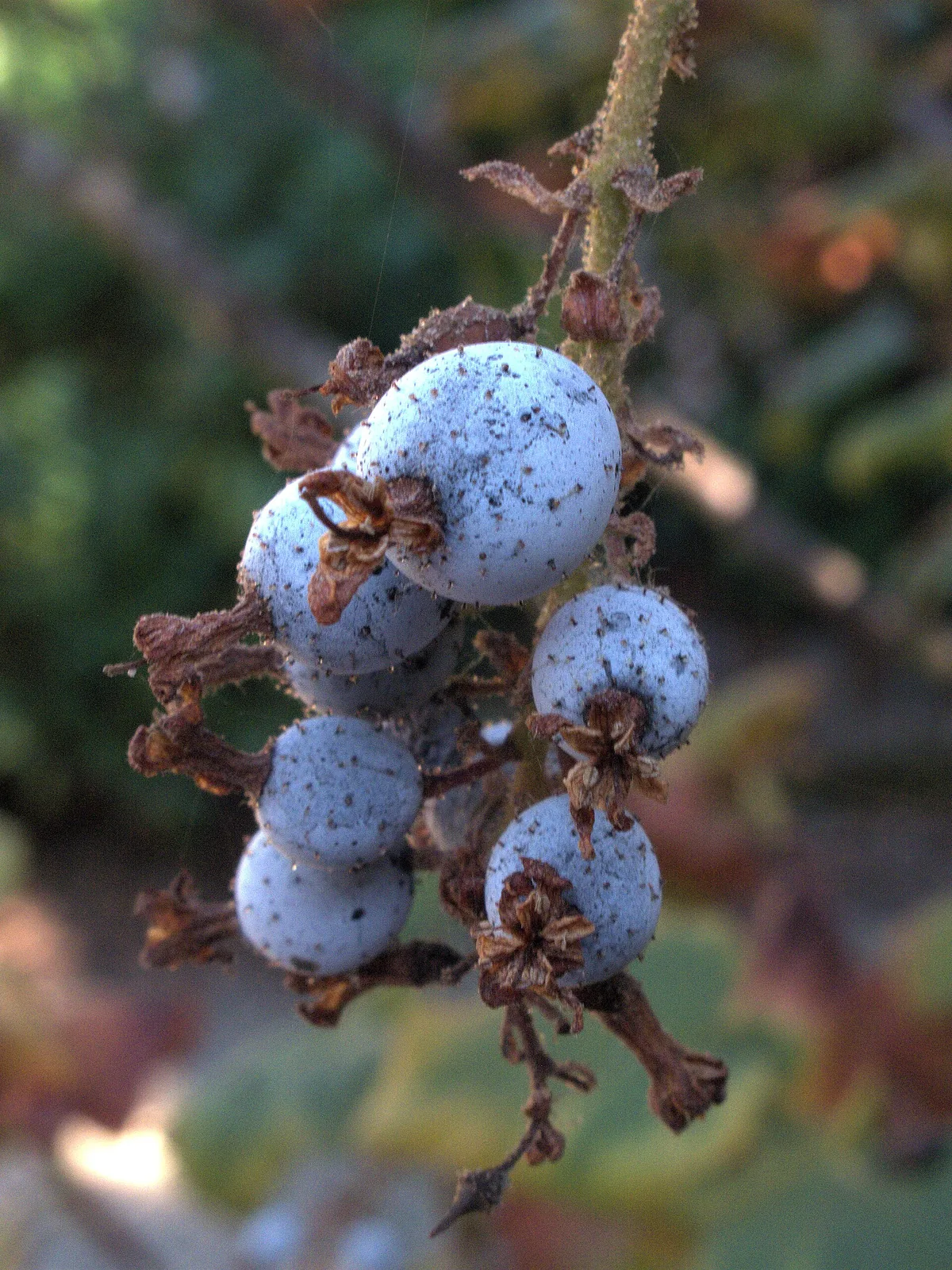
In leaf · May–Sep
Lobed green leaves, dusky blue berries.
Fall · Oct–Nov
Leaves turned yellow-orange.
Photos


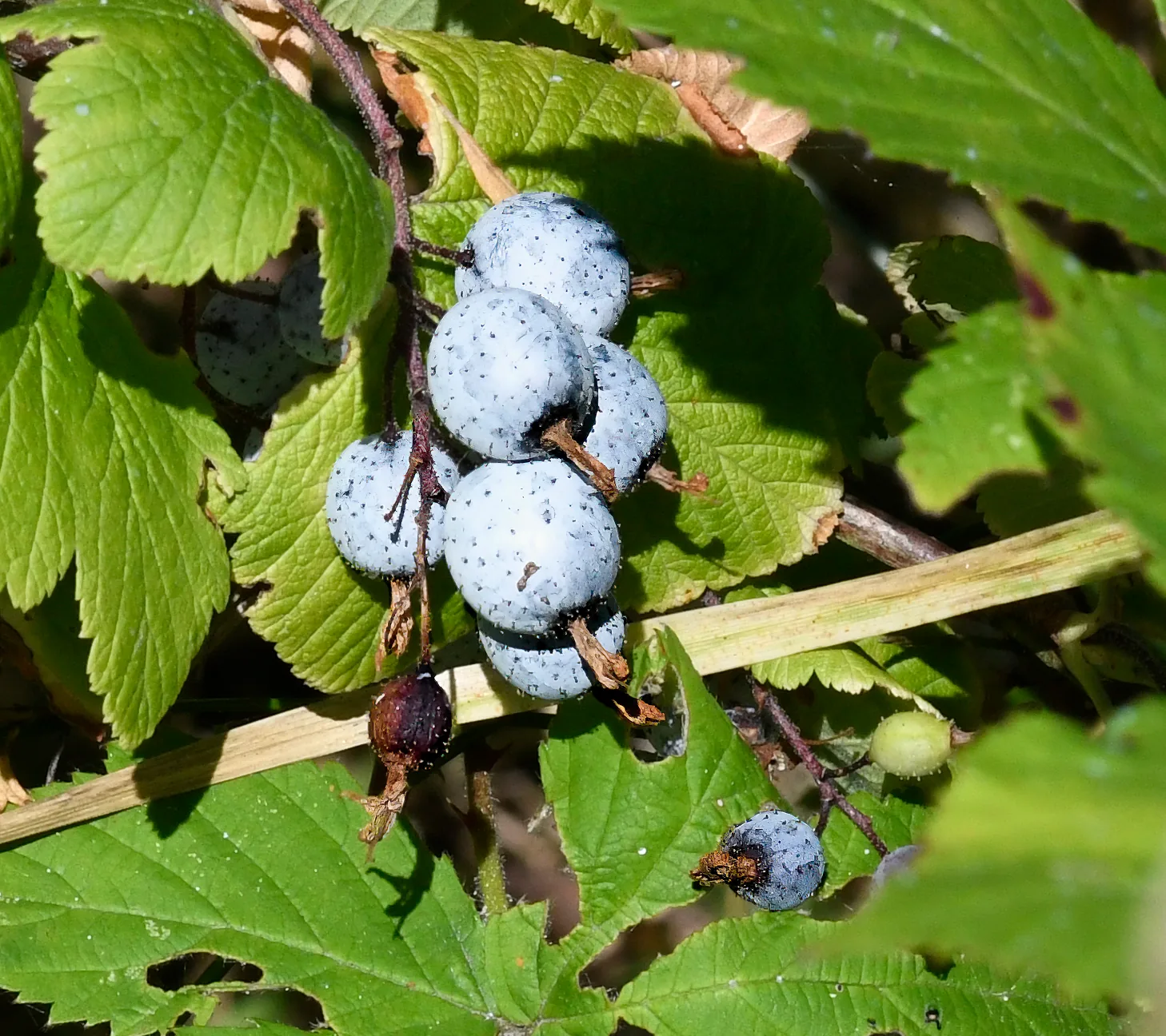

Growing Red-flowering Currant
- Grows well in
- The Pacific Northwest and California.
- Good for
- Drought tolerant, deer resistant, pollinators, fall color, and fragrant
- Leaves
- Drops its leaves in winter
- Native to
- Pacific Northwest and California
Spacing
VeraScape spaces plants so their grown canopies just touch. For Red-flowering Currant, that’s about 8.5 ft apart, center to center.
Place a row in your own yard and VeraScape spaces them at their mature width, so you can see whether they’ll crowd the walk.
See Red-flowering Currant in your yard before you dig
Visualize it at its true size, alongside the rest of your design.