Lindheimer Muhly
Muhlenbergia lindheimeri
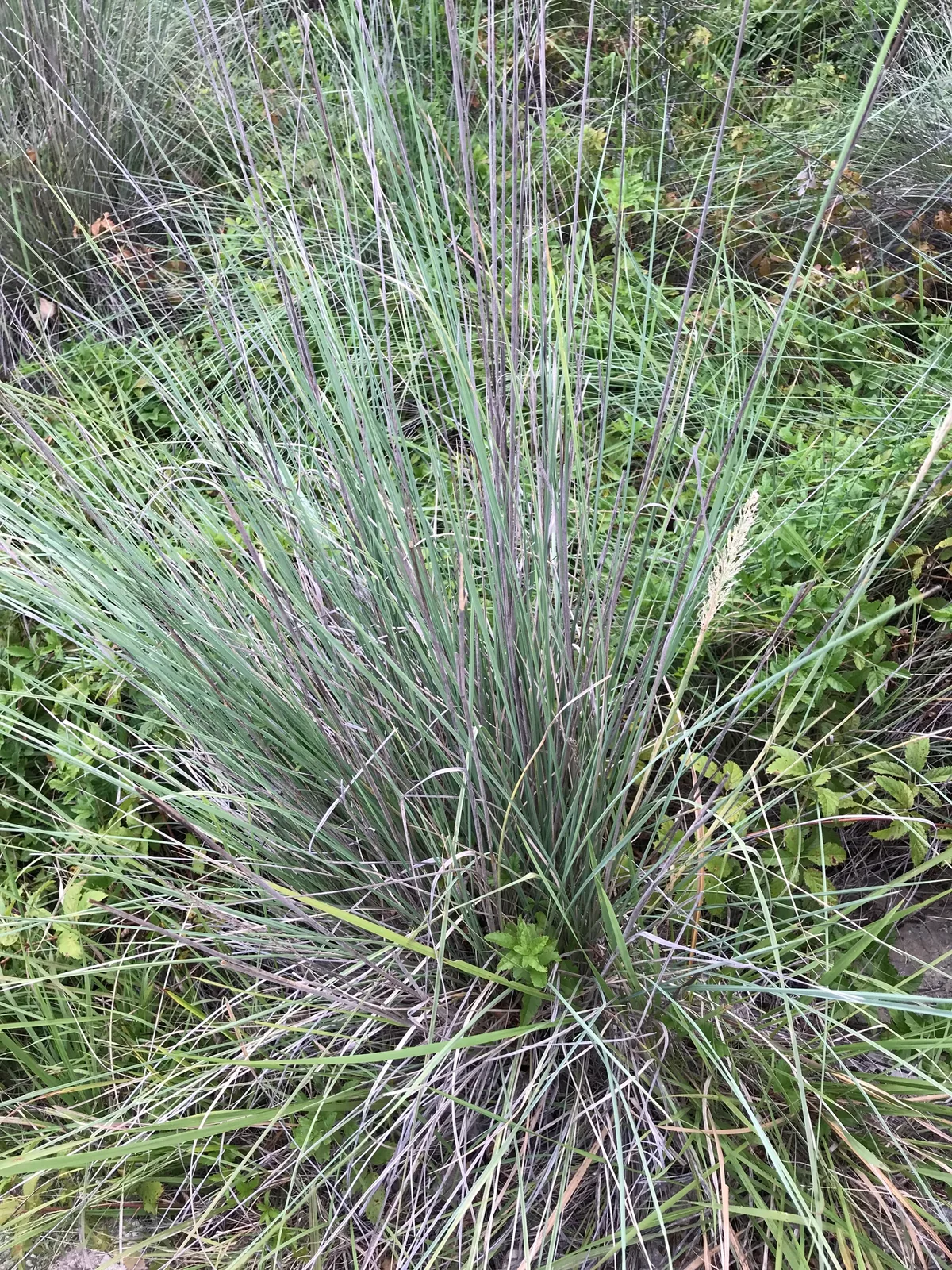
A Texas native grass with soft blue-green leaves in a fountain-shaped clump and silvery plumes from late spring into fall, a fine specimen or screen and a native stand-in for pampas grass. It takes heat, drought, clay and limestone, and deer leave it alone. Shade, rich soil or overwatering make it flop and rot.

- Mature size
- 3.5 × 3.5 ft
- 1.1 × 1.1 m, tall × wide
- Hardiness
- Zones 6a–9b
- USDA
- Sun
- Full sun
- Water
- Dry to medium
- Blooms
- Sep–Nov
Lindheimer Muhly at its mature size
A mature Lindheimer Muhly grows 2 to 5 feet tall and 3 to 4 feet wide.
Drawn to scale beside a 5 ft 9 in person. With VeraScape, you see it at this size in your own yard.
Typical mature size, unpruned. Sources: NC State Extension, Lady Bird Johnson Wildflower Center.
Through the year
What Lindheimer Muhly looks like month by month in a typical zone 6–7 garden.
Winter · Dec–Aug
Blue-gray blade fountain, no plumes.
In flower · Sep–Nov
Fine blue-gray blades with tall silvery plumes.
Photos
Growing Lindheimer Muhly
- Grows well in
- The Plains and Mountain West and the desert Southwest.
- Good for
- Foundation planting, specimen, drought tolerant, and deer resistant
- Leaves
- Dies back in winter
- Native to
- Texas and Northern Mexico
Spacing
VeraScape spaces plants so their grown canopies just touch. For Lindheimer Muhly, that’s about 3.5 ft apart, center to center.
Place a row in your own yard and VeraScape spaces them at their mature width, so you can see whether they’ll crowd the walk.
See Lindheimer Muhly in your yard before you dig
Visualize it at its true size, alongside the rest of your design.
Other muhly grasses
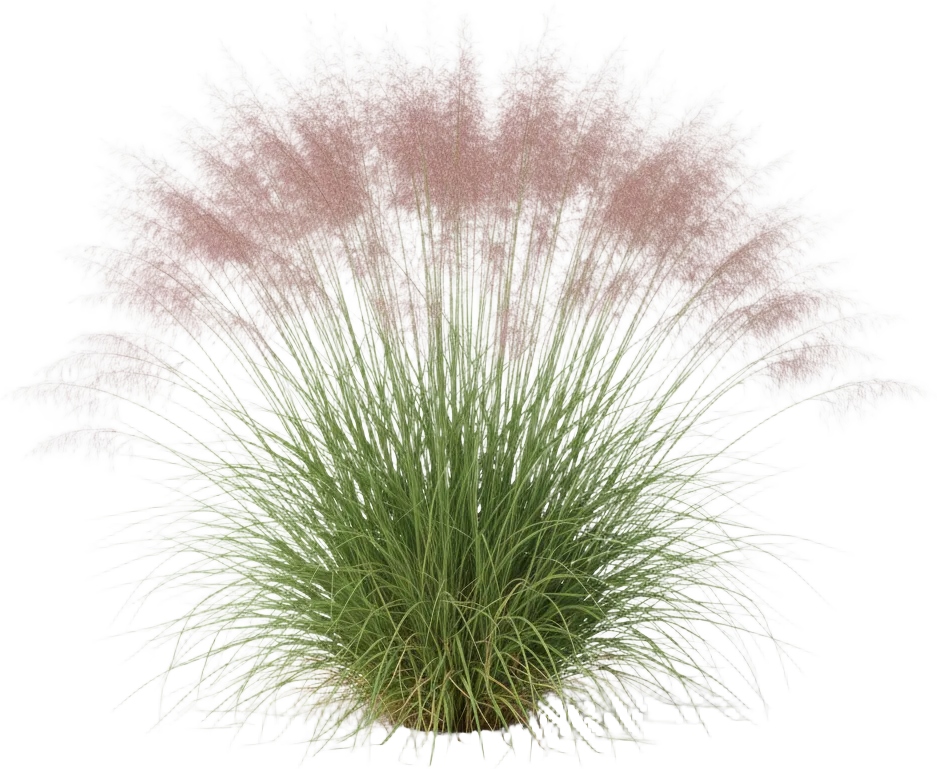 Pink Muhly Grass
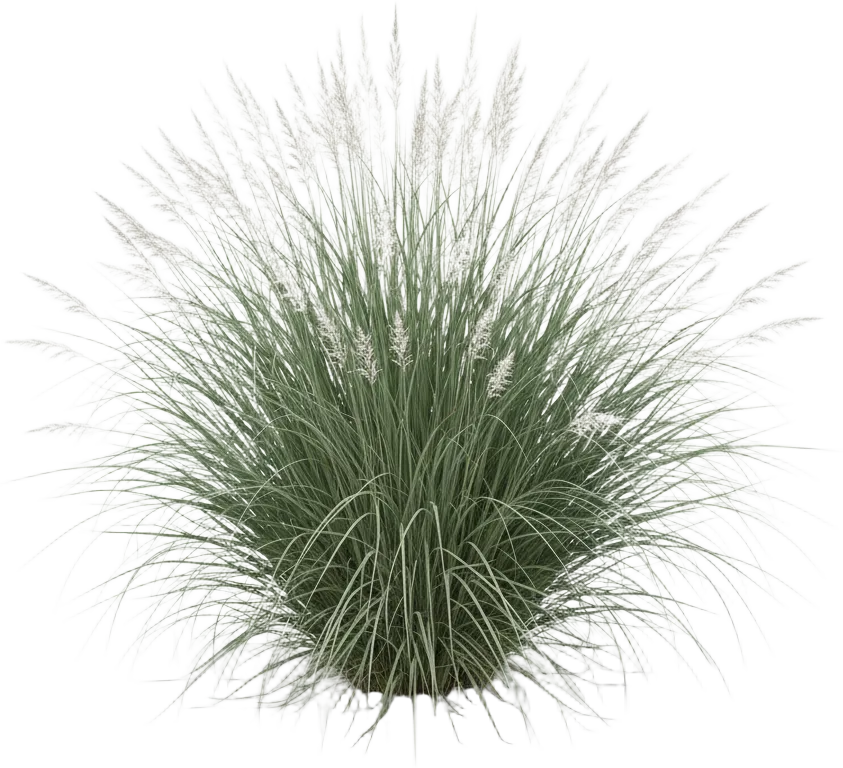 Lindheimer Muhly
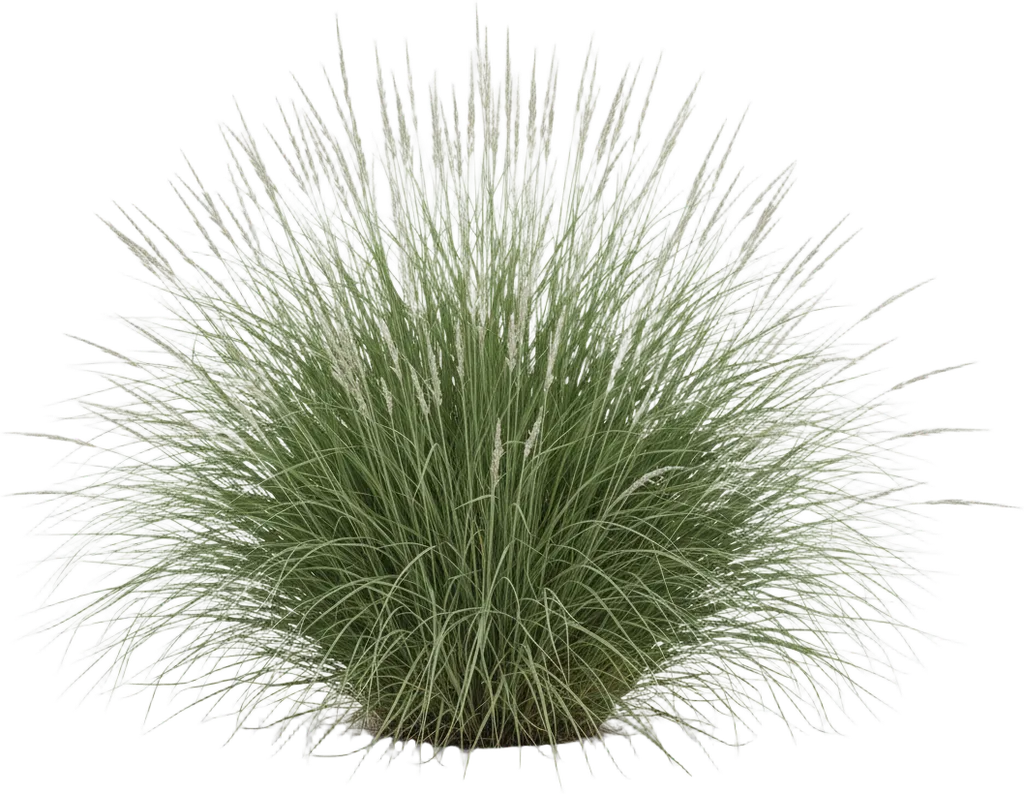 Deer Grass
All drawn to the same scale.