Lavender
Lavandula angustifolia
Loved for fragrant summer flower spikes and silvery, aromatic leaves, lovely as a low hedge or edging, in pots or an herb garden, and the flowers dry beautifully. It needs full sun and lean, perfectly drained soil; soggy ground and heavy clay kill it, which can make it a struggle in humid gardens.
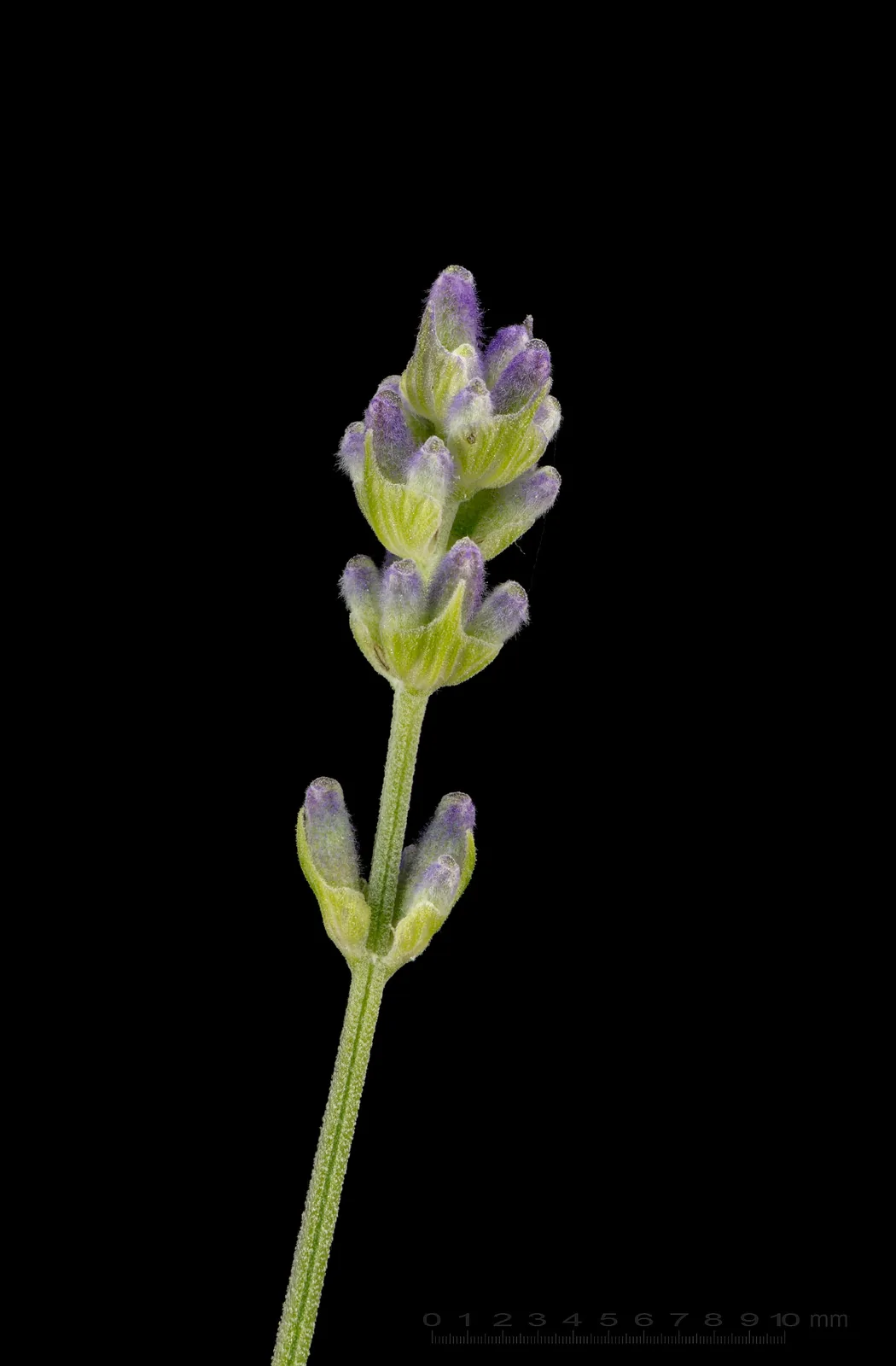
- Mature size
- 1.5 × 2.5 ft
- 0.5 × 0.8 m, tall × wide
- Hardiness
- Zones 5a–8b
- USDA
- Sun
- Full sun
- Water
- Dry to medium
- Blooms
- Jun–Aug
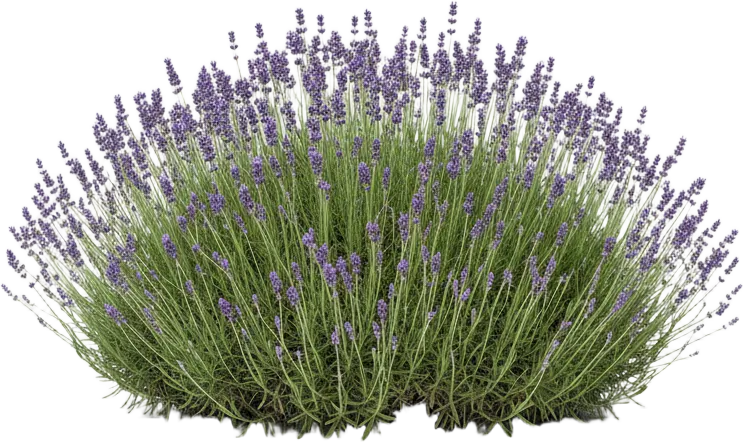
Lavender at its mature size
A mature Lavender grows 20 inches tall and 2 to 3 feet wide.
Drawn to scale beside a 5 ft 9 in person. With VeraScape, you see it at this size in your own yard.
Typical mature size, unpruned. Sources: NC State Extension.

Through the year
What Lavender looks like month by month in a typical zone 6–7 garden.
Winter · Dec–Mar
Still a living silvery-green mound, slightly sparser, with a slight duller gray cast; not dead gray or brown.
In leaf · Apr–May, Aug–Nov
Dense mound of narrow silvery gray-green leaves, no flower spikes.
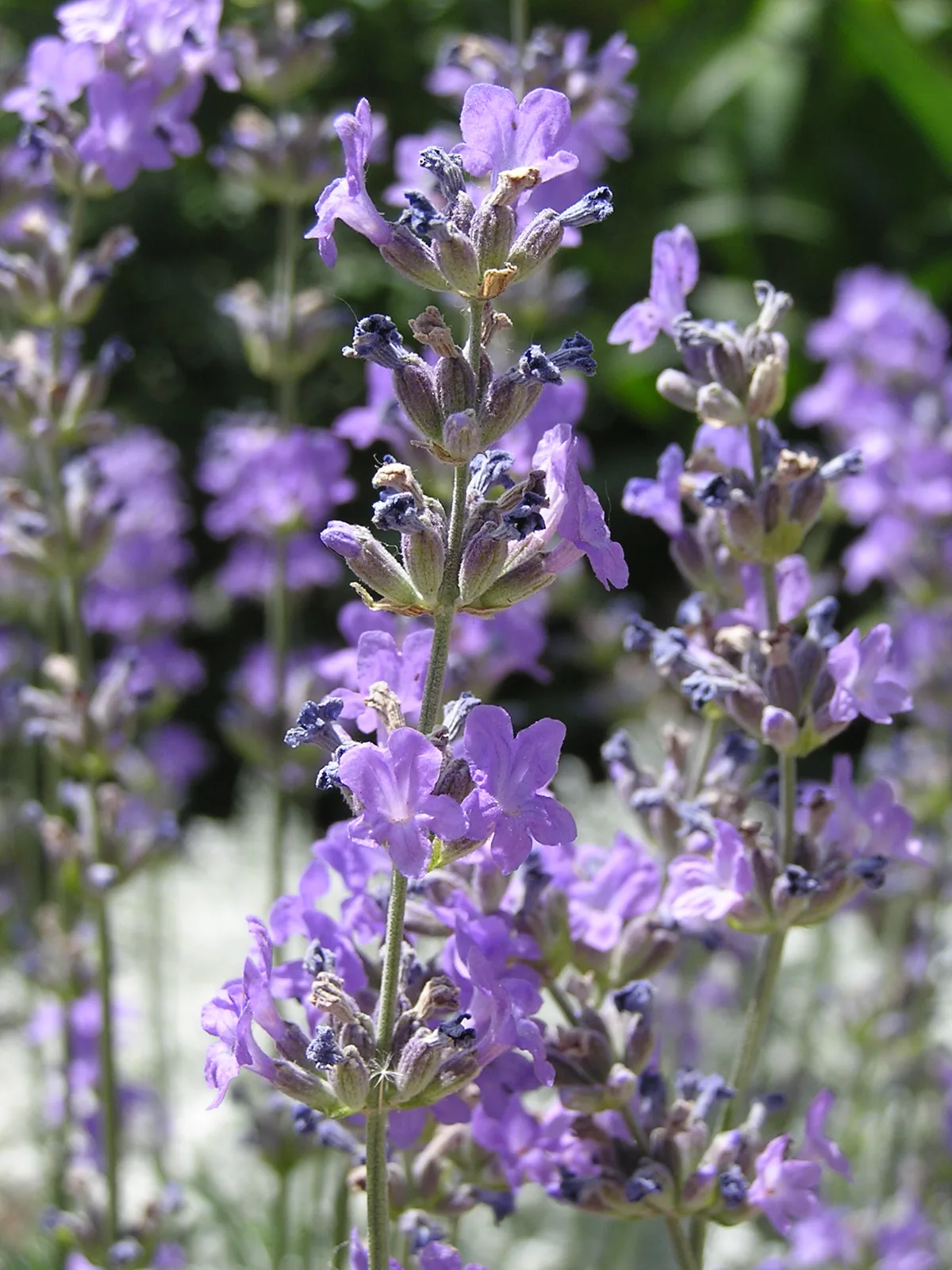
In flower · Jun–Jul
Slender stems topped with deep violet-purple flower spikes.
Photos


Growing Lavender
- Grows well in
- The Northeast, the Midwest, the Plains and Mountain West, the Pacific Northwest, and California.
- Growth rate
- Medium
- Good for
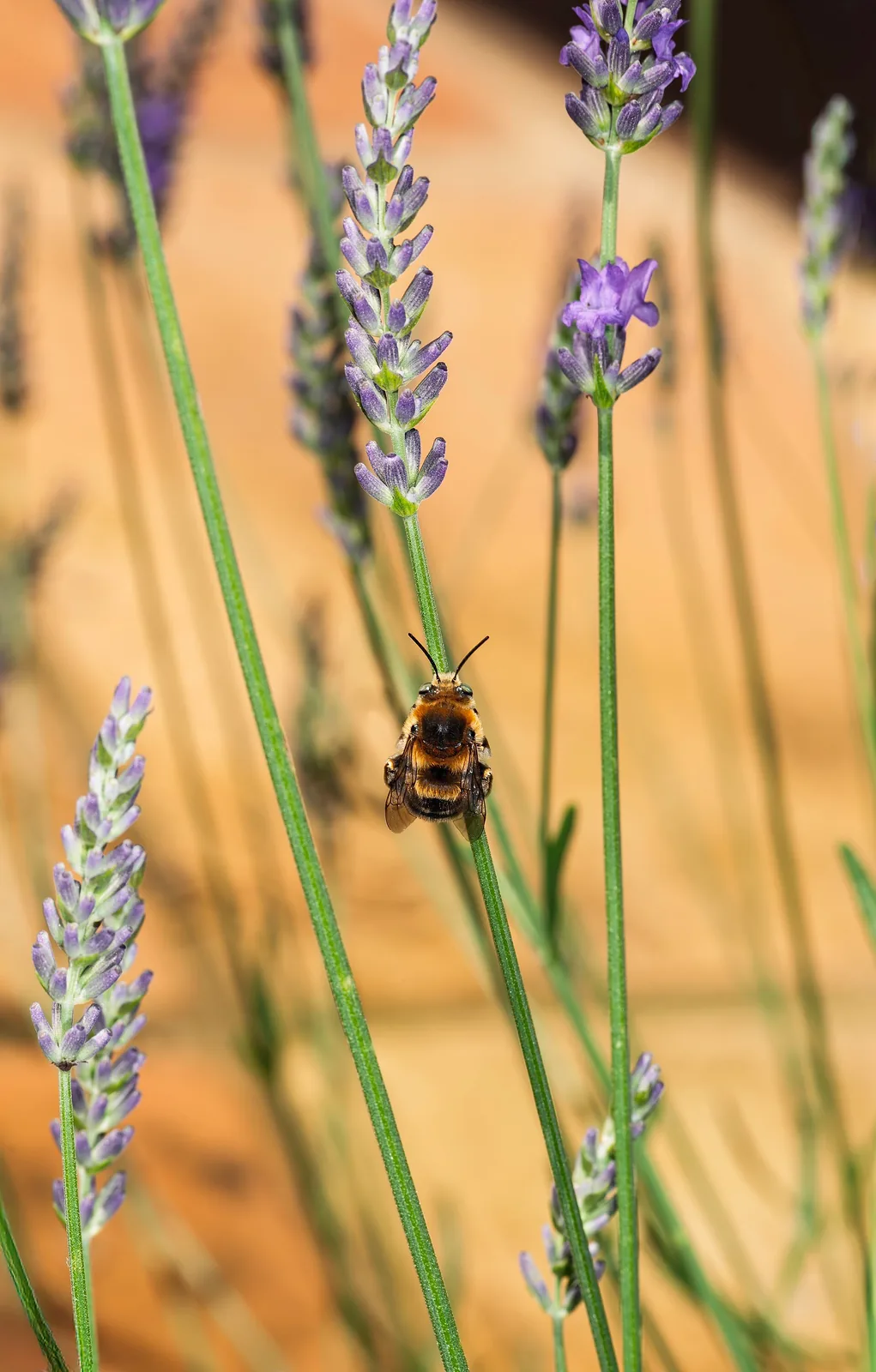
- Hedge, small space, foundation planting, drought tolerant, pollinators, and fragrant
- Leaves
- Evergreen
- Native to
- Mediterranean
Spacing for a hedge
VeraScape spaces plants so their grown canopies just touch. For Lavender, that’s about 2.5 ft apart, center to center.
Place a row in your own yard and VeraScape spaces them at their mature width, so you can see whether they’ll crowd the walk.
See Lavender in your yard before you dig
Visualize it at its true size, alongside the rest of your design.