Japanese Forest Grass
Hakonechloa macra
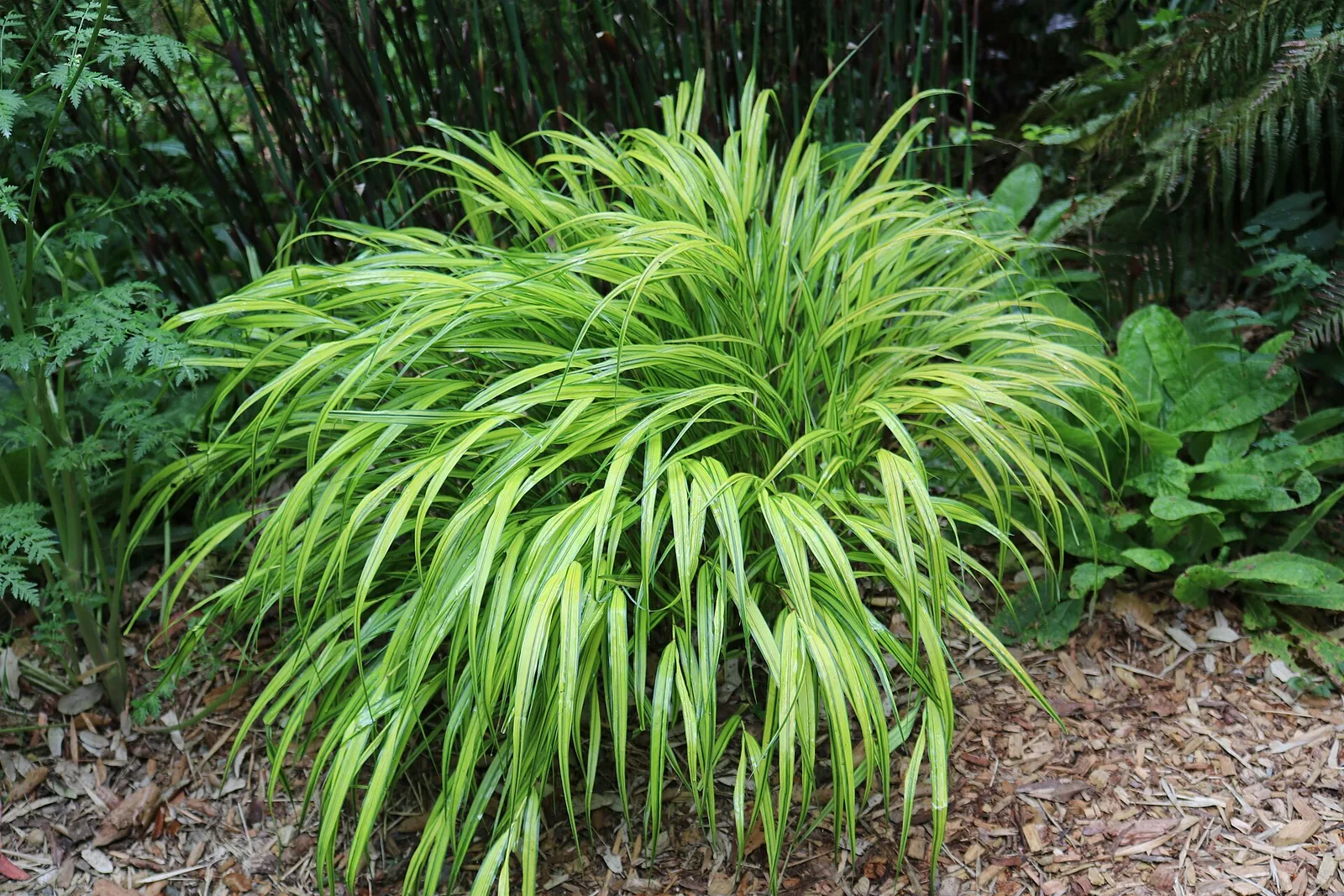
A graceful, cascading grass whose arching, bamboo-like leaves bring soft texture to shade, edging a path or massed as a groundcover, and deer avoid it. It spreads slowly without being invasive. It needs rich, steadily moist, well-drained soil out of hot sun, and it's happiest where summers are cool.

- Mature size
- 1.5 × 1.5 ft
- 0.5 × 0.5 m, tall × wide
- Hardiness
- Zones 5a–9b
- USDA
- Sun
- Part sun to full shade
- Water
- Medium to moist
Japanese Forest Grass at its mature size
A mature Japanese Forest Grass grows 12 to 18 inches tall and 12 to 24 inches wide.
Drawn to scale beside a 5 ft 9 in person. With VeraScape, you see it at this size in your own yard.
Typical mature size, unpruned. Sources: NC State Extension, Missouri Botanical Garden.
Through the year
What Japanese Forest Grass looks like month by month in a typical zone 6–7 garden.
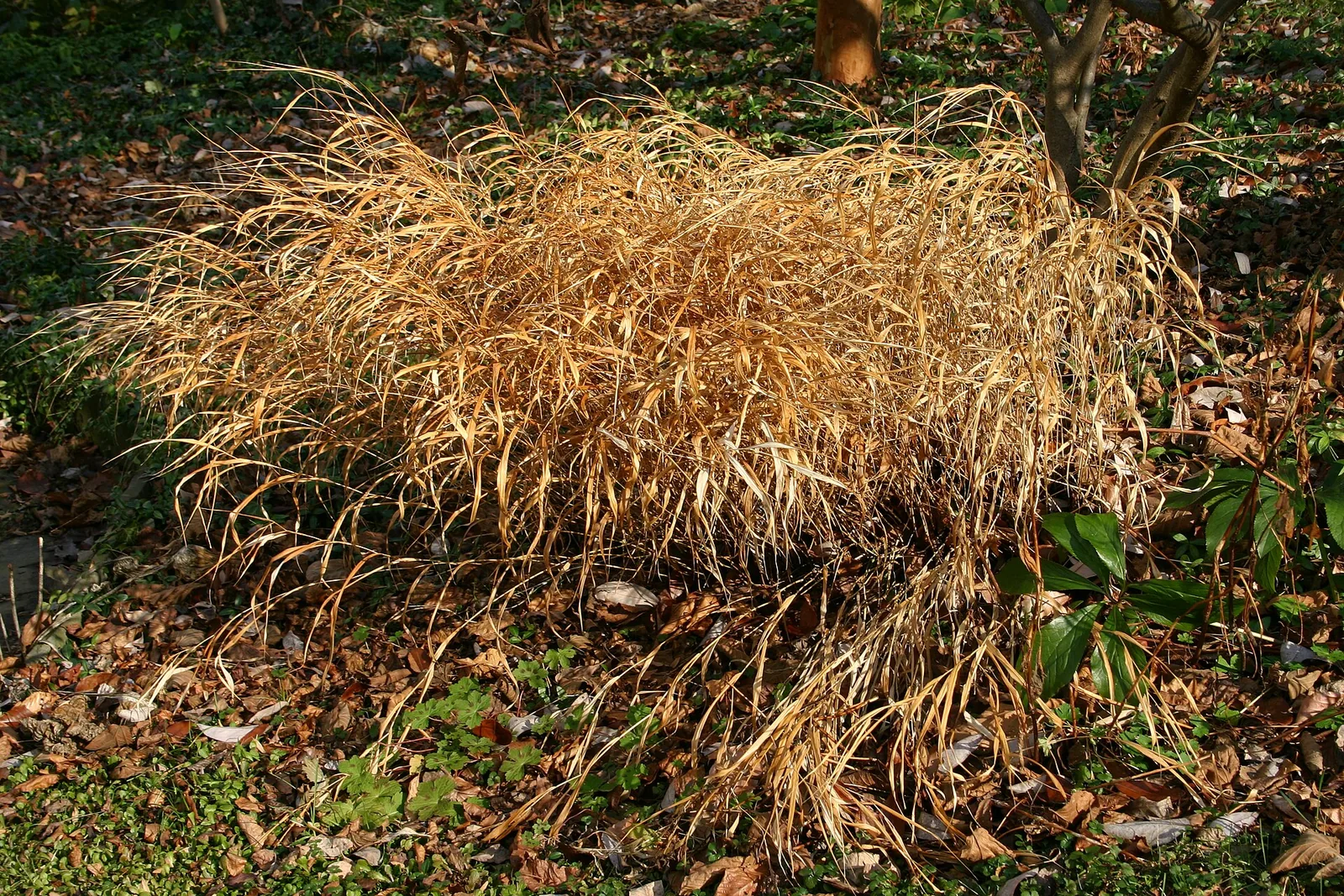
Dormant · Dec–Feb
Dried pale straw-tan leaves, still arching but partly collapsed, no green left.
Below ground · Mar–Apr
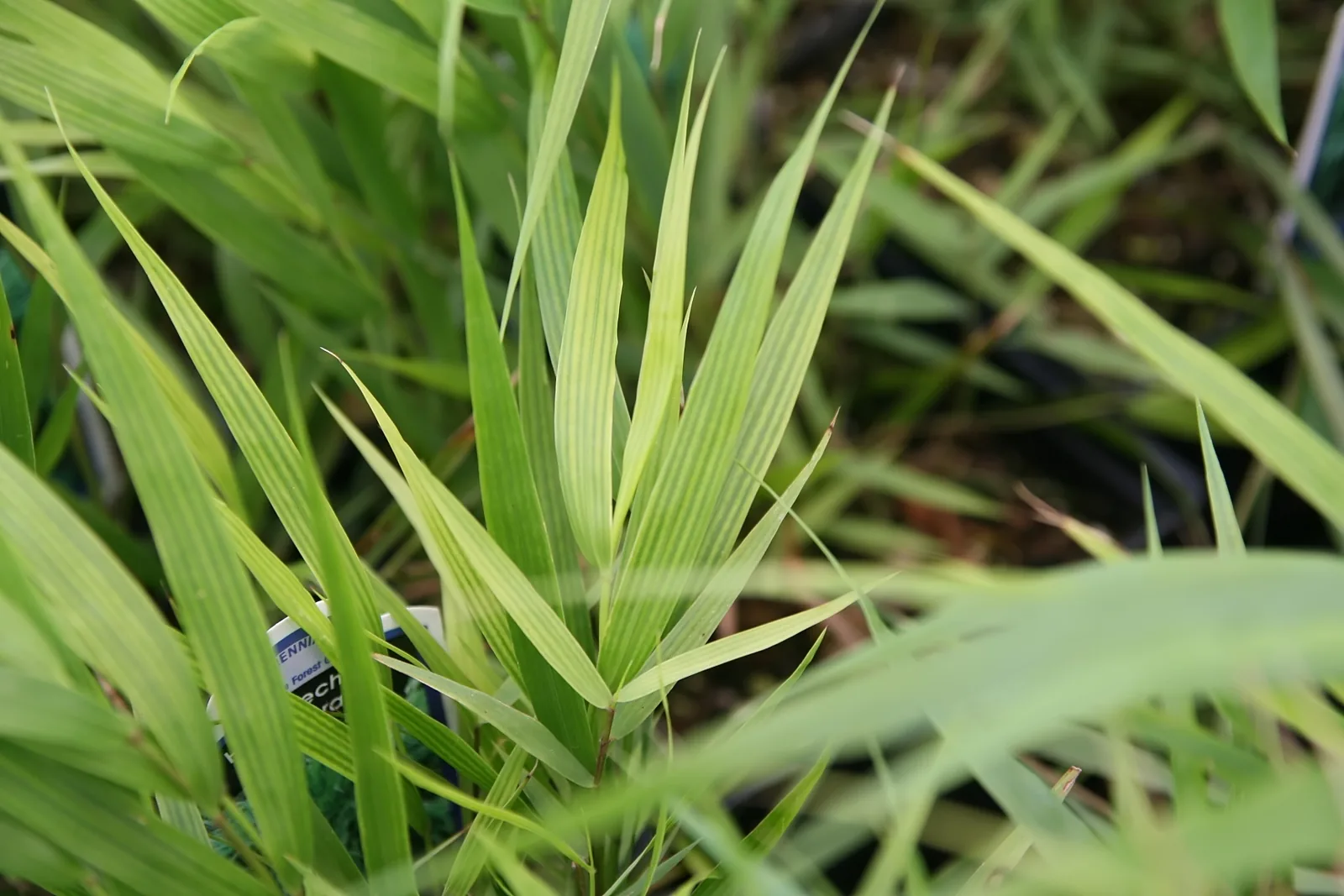
Cut back; new shoots barely out of the ground.
In leaf · May–Oct
Cascading mound of arching plain bright green leaves.
Fall · Nov
Early fall: the mound still mostly the same fresh green it has now, with a coppery orange and pink-red blush only on the blade tips and outer blades, about a third of the colour; reads green with copper highlights from a distance, not solid orange, not dry or brown.
Photos


Growing Japanese Forest Grass
- Grows well in
- The Northeast, the Southeast, the Midwest, and the Pacific Northwest.
- Growth rate
- Slow
- Good for
- Groundcover, specimen, shade garden, and deer resistant
- Leaves
- Dies back in winter
- Native to
- Japan
Spacing
VeraScape spaces plants so their grown canopies just touch. For Japanese Forest Grass, that’s about 1.5 ft apart, center to center.
Place a row in your own yard and VeraScape spaces them at their mature width, so you can see whether they’ll crowd the walk.
See Japanese Forest Grass in your yard before you dig
Visualize it at its true size, alongside the rest of your design.
Other hakone grasses
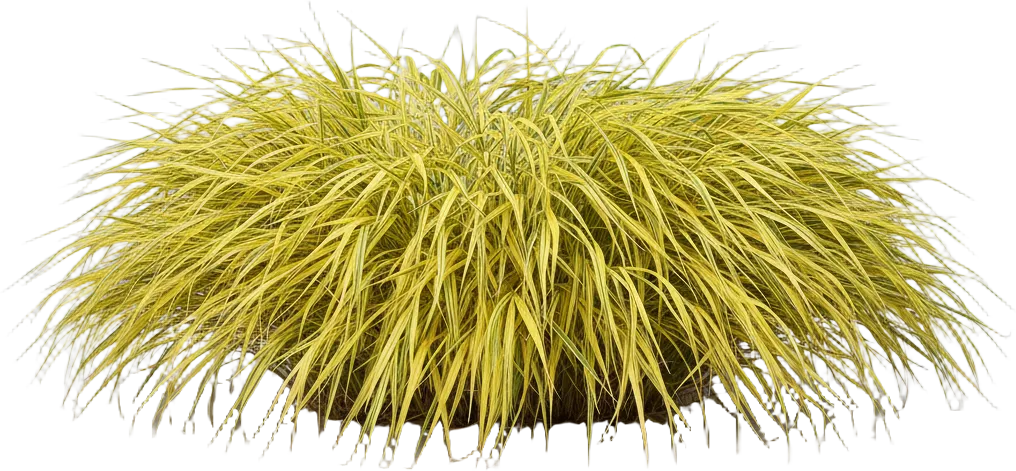 Golden Hakone Grass 'Aureola'
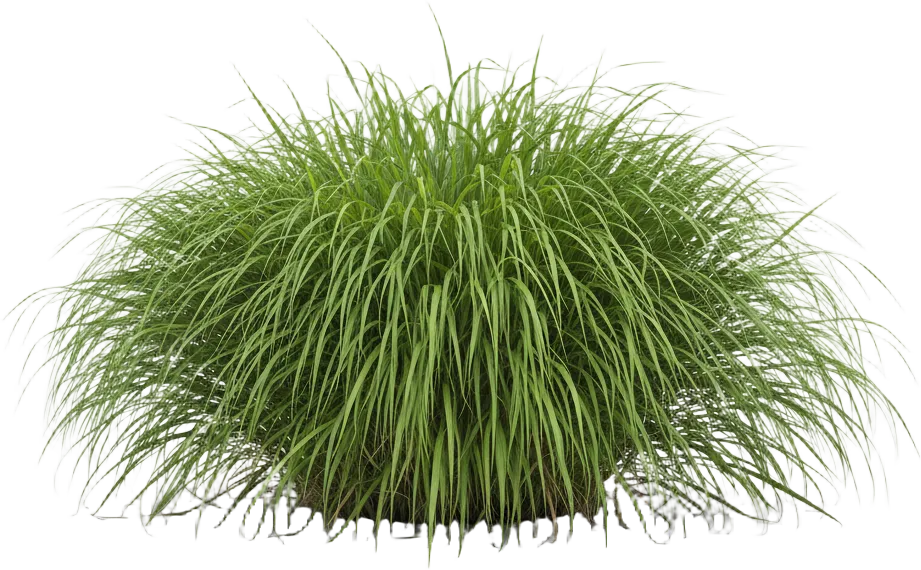 Japanese Forest Grass
All drawn to the same scale.