Hydrangea
Hydrangea macrophylla
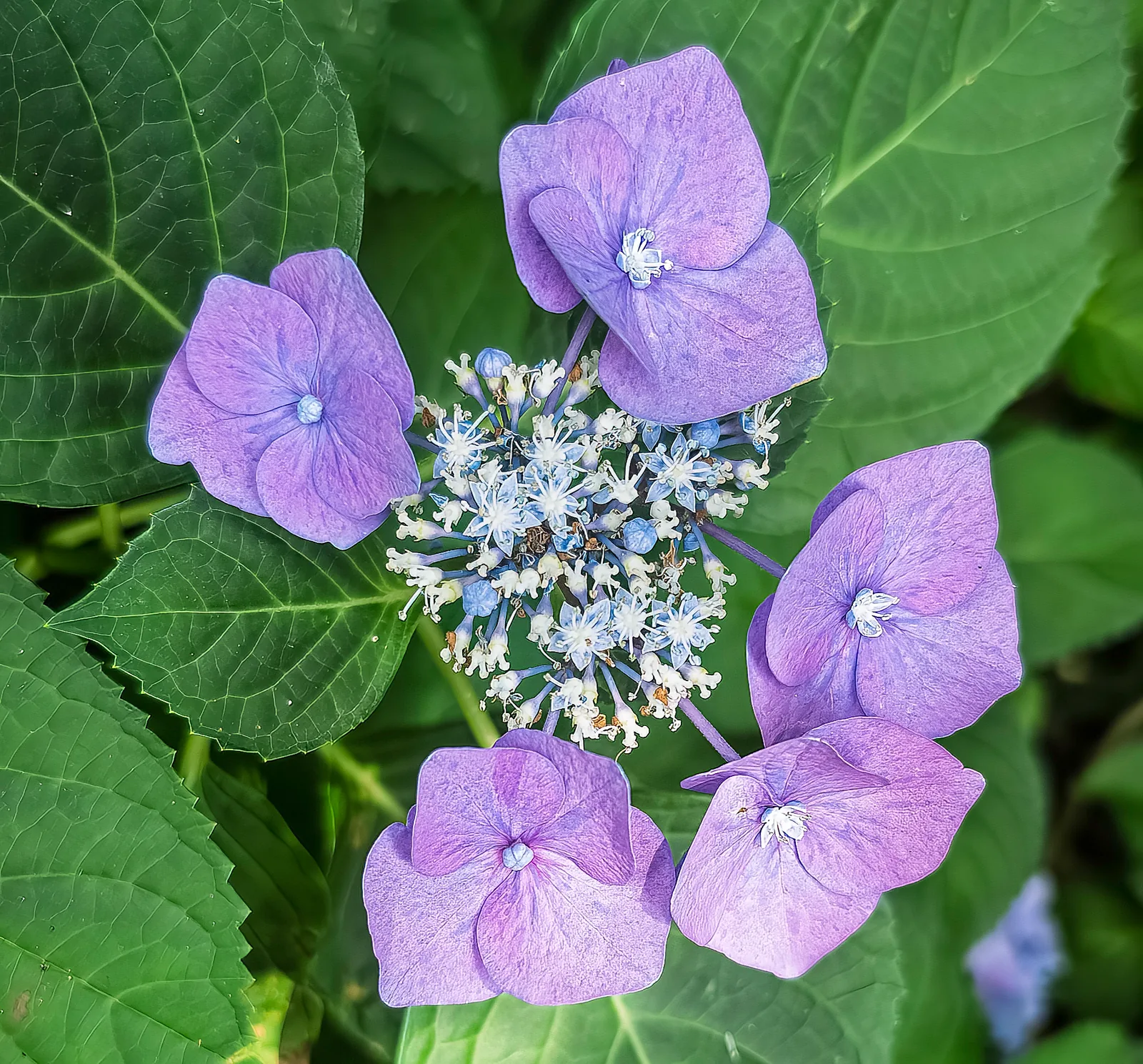
Grown for big mophead or lacecap flowers in blue, pink or white, the colour shifting with soil acidity, lovely massed, as a hedge or in a pot. Give it morning sun, afternoon shade and well-drained soil. Most kinds bloom on last year's stems, so prune before August or lose next year's flowers; deer browse it.

- Mature size
- 4 × 4 ft
- 1.2 × 1.2 m, tall × wide
- Hardiness
- Zones 6a–9b
- USDA
- Sun
- Part sun to full shade
- Water
- Medium to wet
- Blooms
- Jun–Sep
Hydrangea at its mature size
A mature Hydrangea grows 3 to 5 feet tall and just as wide.
Drawn to scale beside a 5 ft 9 in person. With VeraScape, you see it at this size in your own yard.
Typical mature size, unpruned. Sources: endlesssummerhydrangeas.com.
Through the year
What Hydrangea looks like month by month in a typical zone 6–7 garden.
Dormant · Dec–Apr
Thick bare tan stems with dried brown mopheads.
In leaf · May
Mound of large glossy bright green leaves, no flowers.
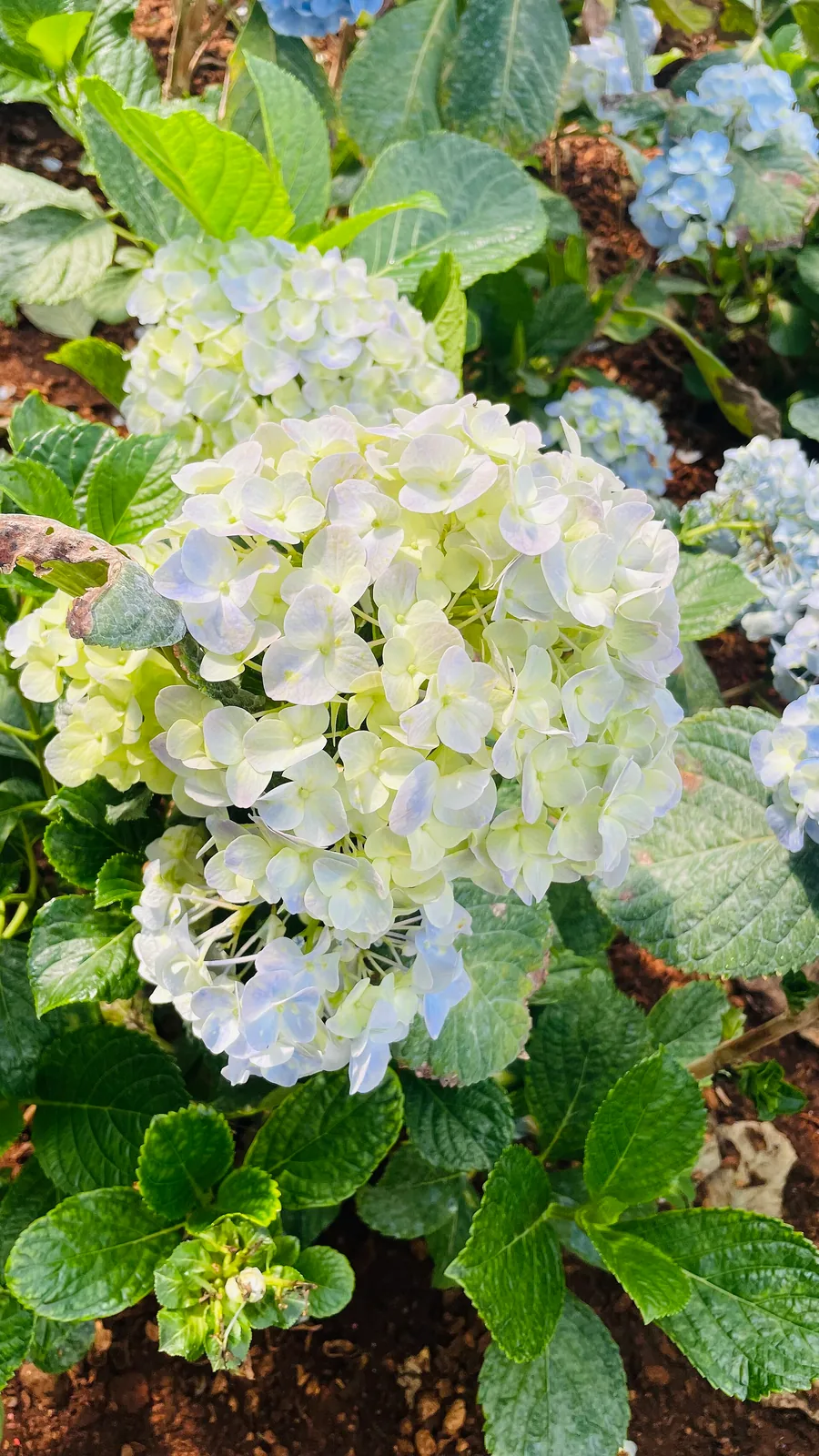
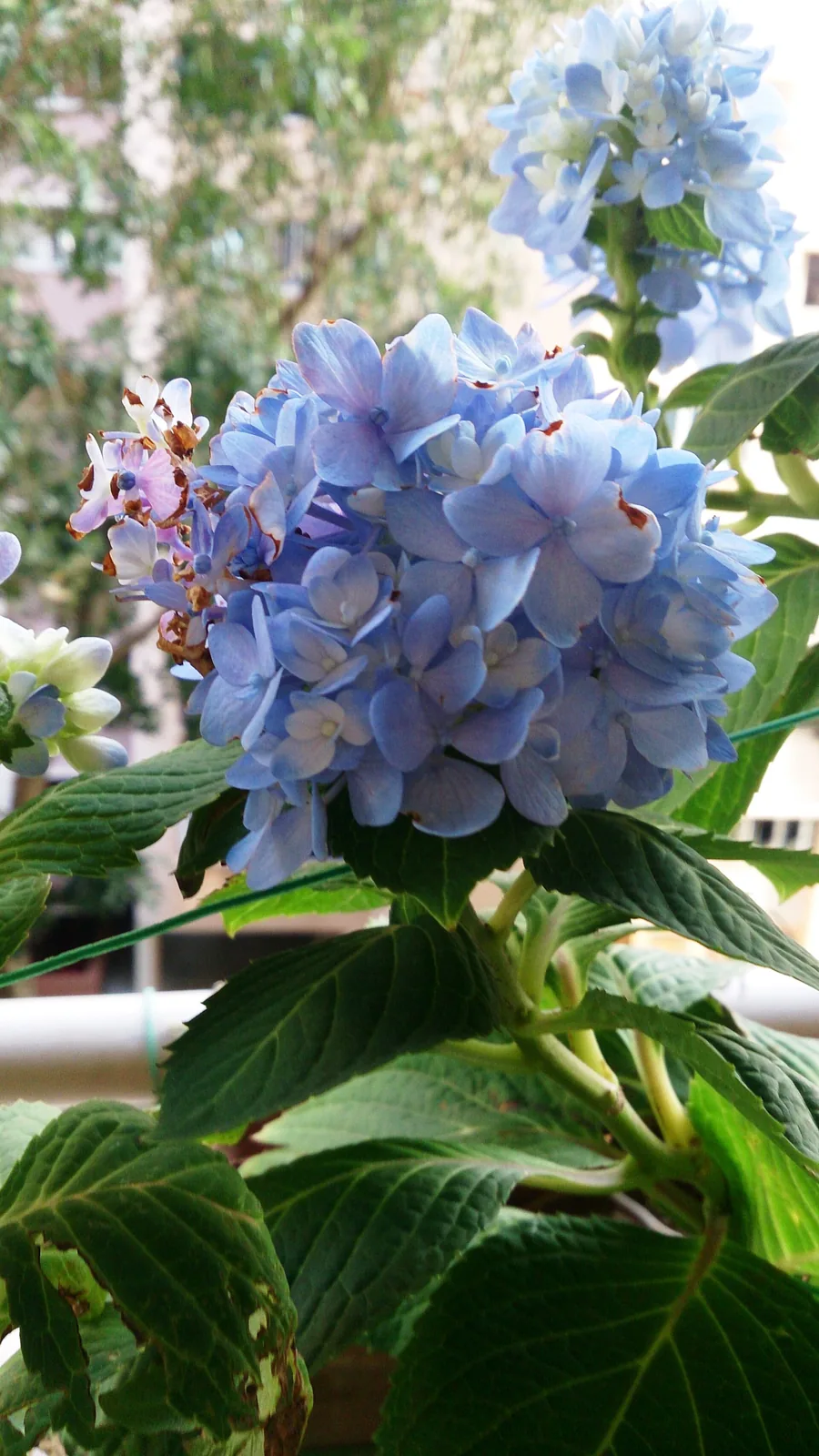
In flower · Jun–Sep
Round mophead flower clusters in blue and pink.
Fall · Oct–Nov
Leaves mostly green, some yellowing; mopheads aged to muted antique green, dusty rose and burgundy.
Photos


Growing Hydrangea
- Grows well in
- The Northeast, the Southeast, the Pacific Northwest, and California.
- Growth rate
- Fast
- Good for
- Hedge, small space, foundation planting, shade garden, rain garden, and fast growing
- Leaves
- Drops its leaves in winter
- Native to
- Japan and China
Spacing for a hedge
VeraScape spaces plants so their grown canopies just touch. For Hydrangea, that’s about 4 ft apart, center to center.
Place a row in your own yard and VeraScape spaces them at their mature width, so you can see whether they’ll crowd the walk.
See Hydrangea in your yard before you dig
Visualize it at its true size, alongside the rest of your design.
Other hydrangeas
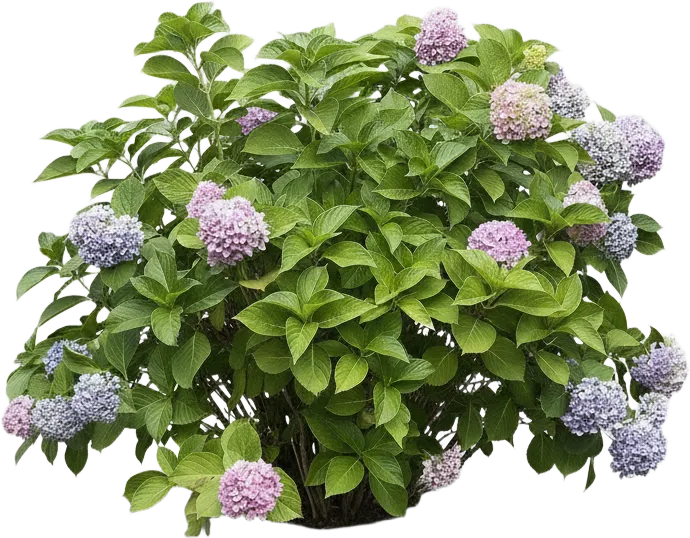 Hydrangea
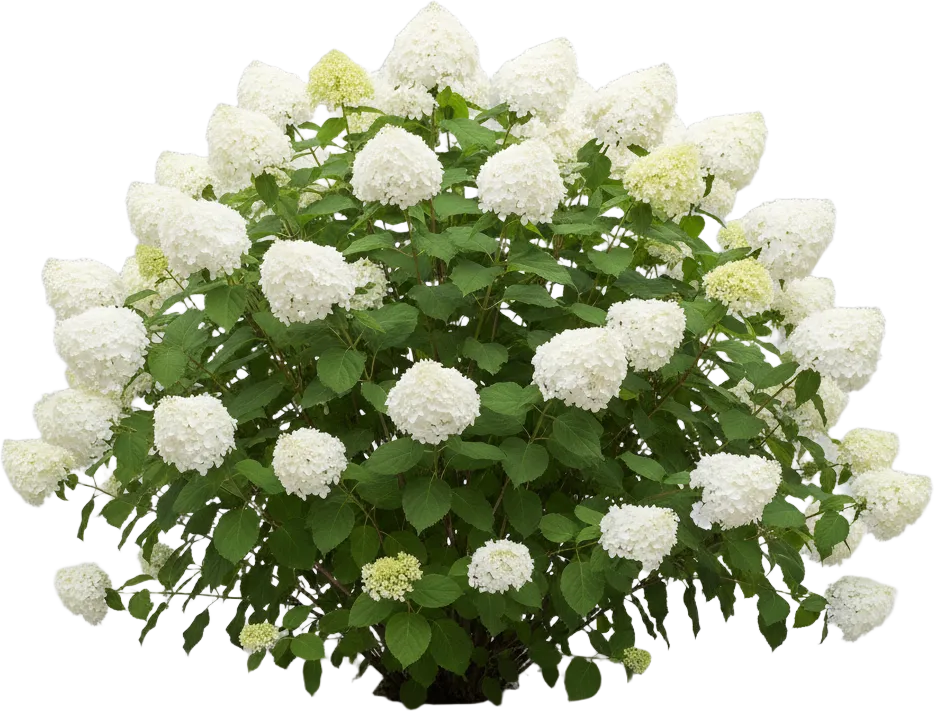 Annabelle Hydrangea
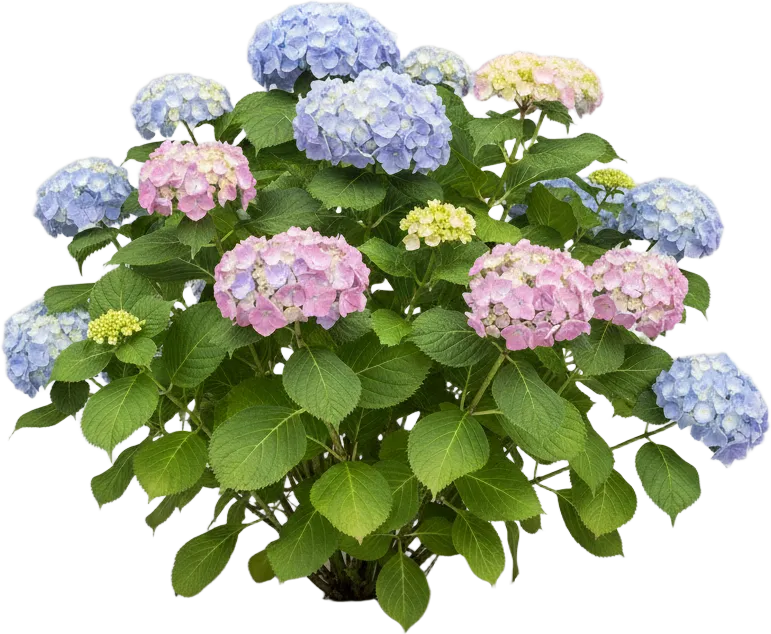 Endless Summer Hydrangea
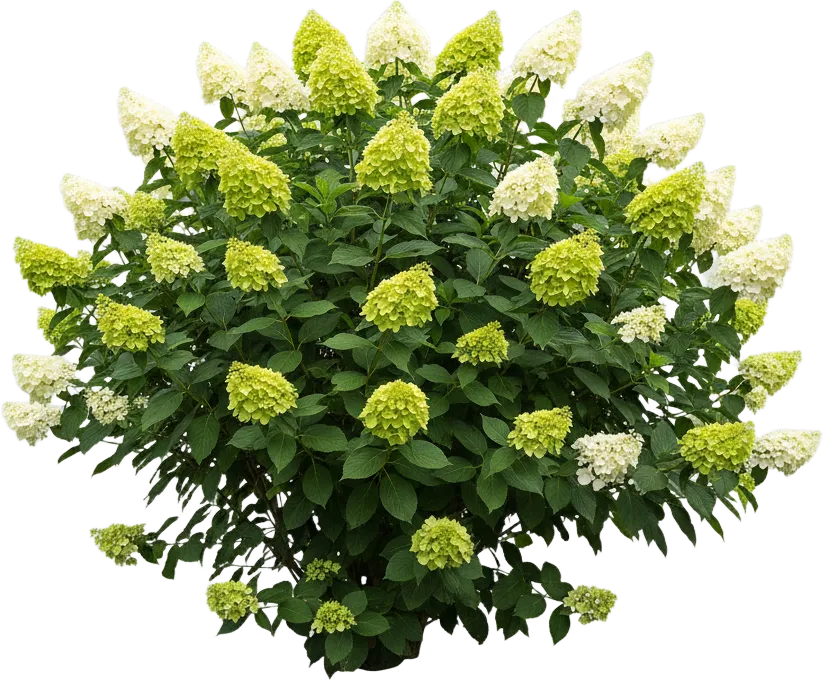 Little Lime Hydrangea
All drawn to the same scale.