Honey Mesquite
Prosopis glandulosa
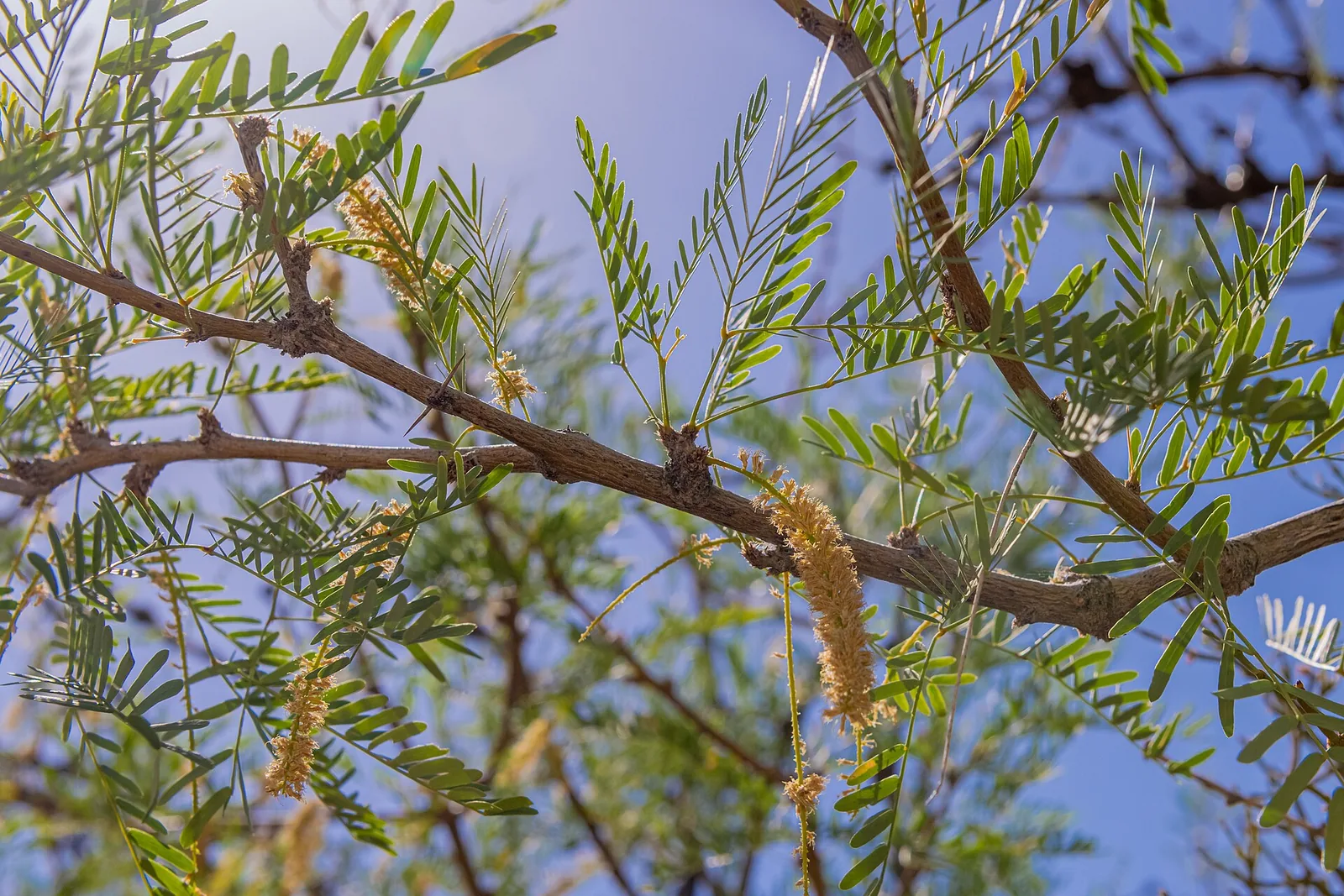
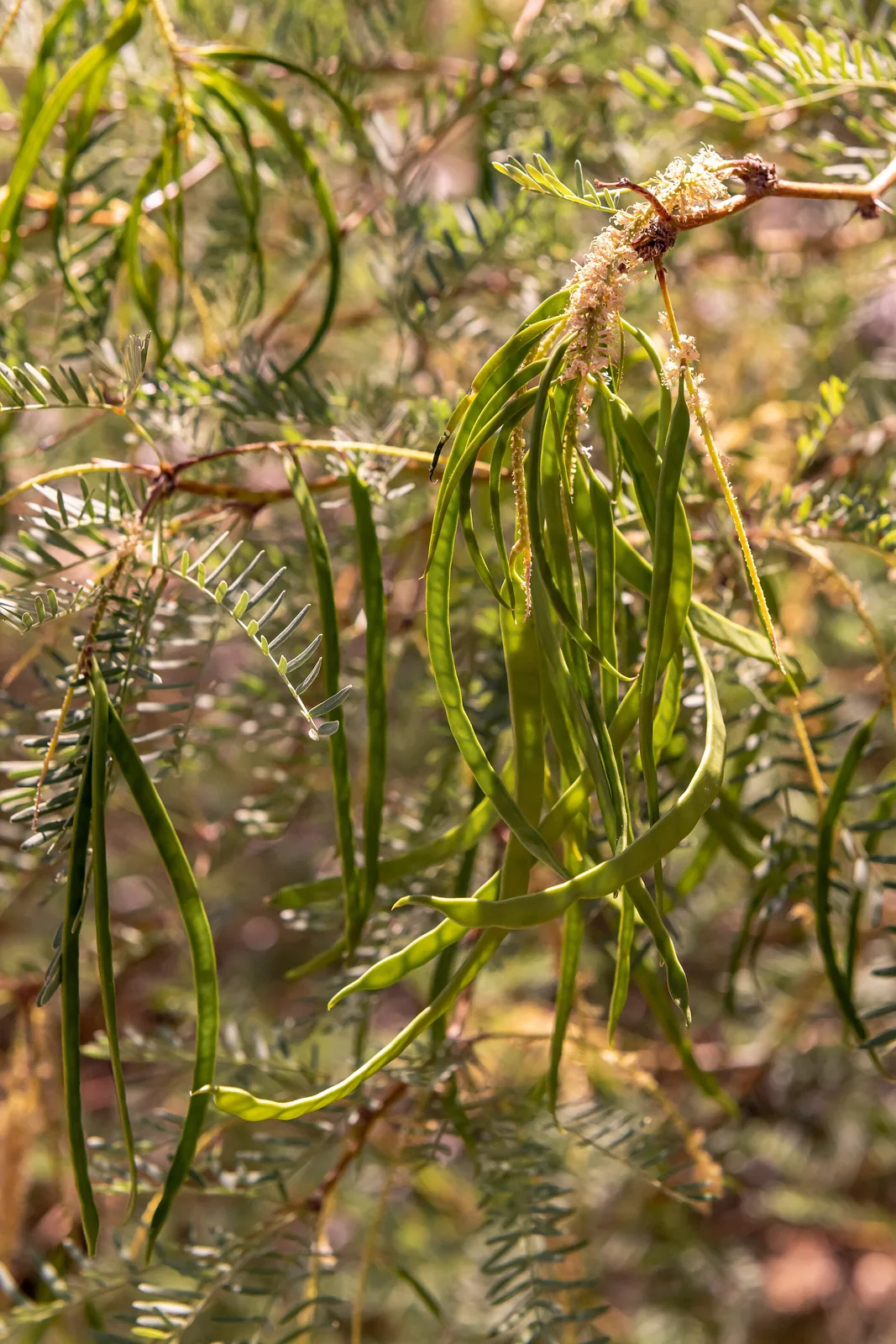
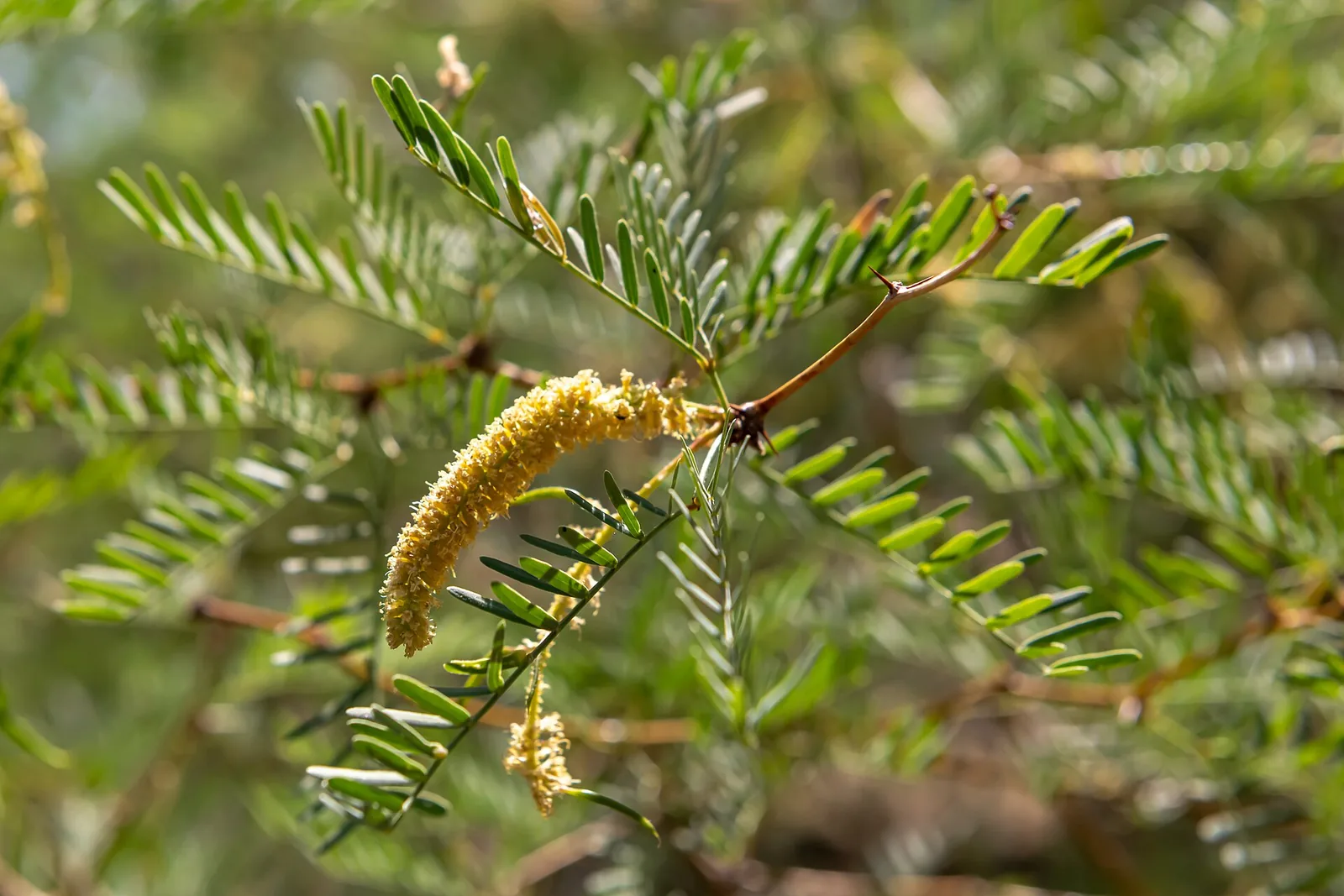
A native shade tree with feathery leaves and yellow flower spikes that make it an excellent bee tree, and its pods feed birds and mammals. Water it deeply while young if you want a tree rather than a shrub, then it handles drought. Its twigs carry sharp thorns, so keep it off paths; it also spreads aggressively.
- Mature size
- 25 × 25 ft
- 7.5 × 7.5 m, tall × wide
- Hardiness
- Zones 6b–10b
- USDA
- Sun
- Full sun
- Water
- Dry
- Blooms
- Apr–Jun
Honey Mesquite at its mature size
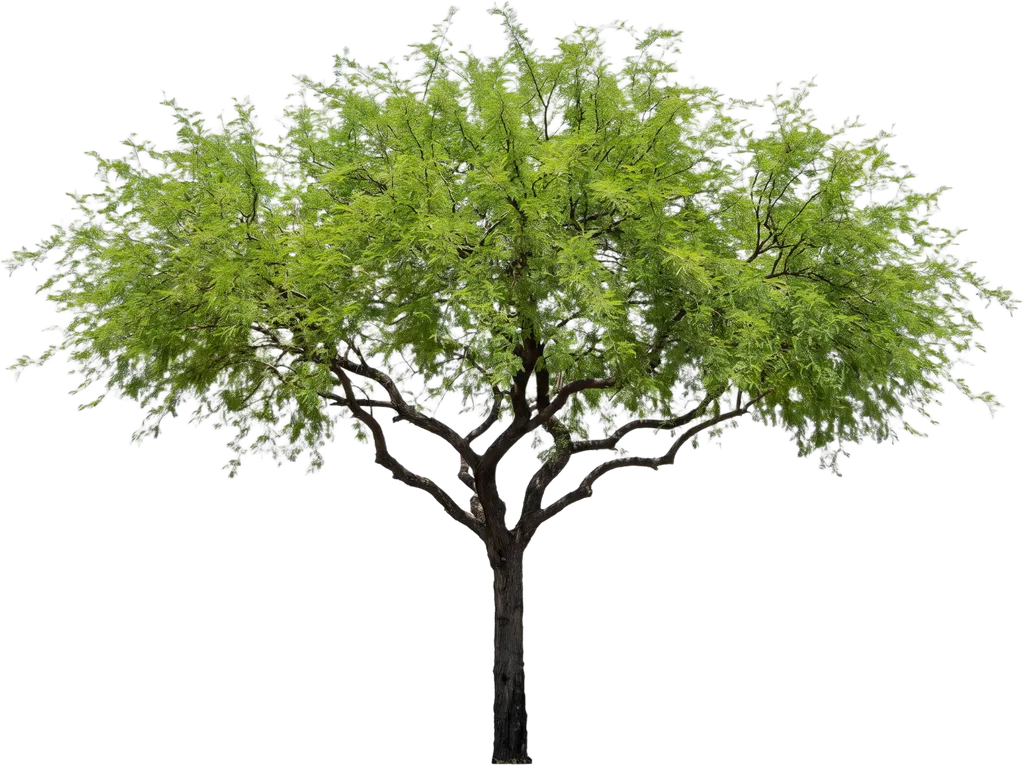
A mature Honey Mesquite grows 25 to 30 feet tall and just as wide, taller than most people.
Drawn to scale beside a 5 ft 9 in person. With VeraScape, you see it at this size in your own yard.
Typical mature size, unpruned. Sources: npsot.org, Lady Bird Johnson Wildflower Center.

Through the year
What Honey Mesquite looks like month by month in a typical zone 6–7 garden.
Dormant · Dec–Feb
Bare dark twisting branches.
New growth · Mar–Apr
Fresh bright green feathery leaves with pale yellow flower catkins.
In leaf · May–Nov
Airy crown of fine feathery bright green leaflets.
Photos


Growing Honey Mesquite
- Grows well in
- The Plains and Mountain West and the desert Southwest.
- Growth rate
- Fast
- Good for
- Drought tolerant, pollinators, and fast growing
- Leaves
- Drops its leaves in winter
- Native to
- Southwestern and south-central United States and Northern Mexico
Spacing
VeraScape spaces plants so their grown canopies just touch. For Honey Mesquite, that’s about 25 ft apart, center to center.
Place a row in your own yard and VeraScape spaces them at their mature width, so you can see whether they’ll crowd the walk.
See Honey Mesquite in your yard before you dig
Visualize it at its true size, alongside the rest of your design.