Ginkgo
Ginkgo biloba
An ancient, long-lived tree with fan-shaped leaves that turn clear gold in fall, then drop and carpet the ground. It shrugs off drought, heat, salt and city pollution, so it makes a fine street or lawn tree. Female trees drop messy, foul-smelling seeds, so choose a grafted male.
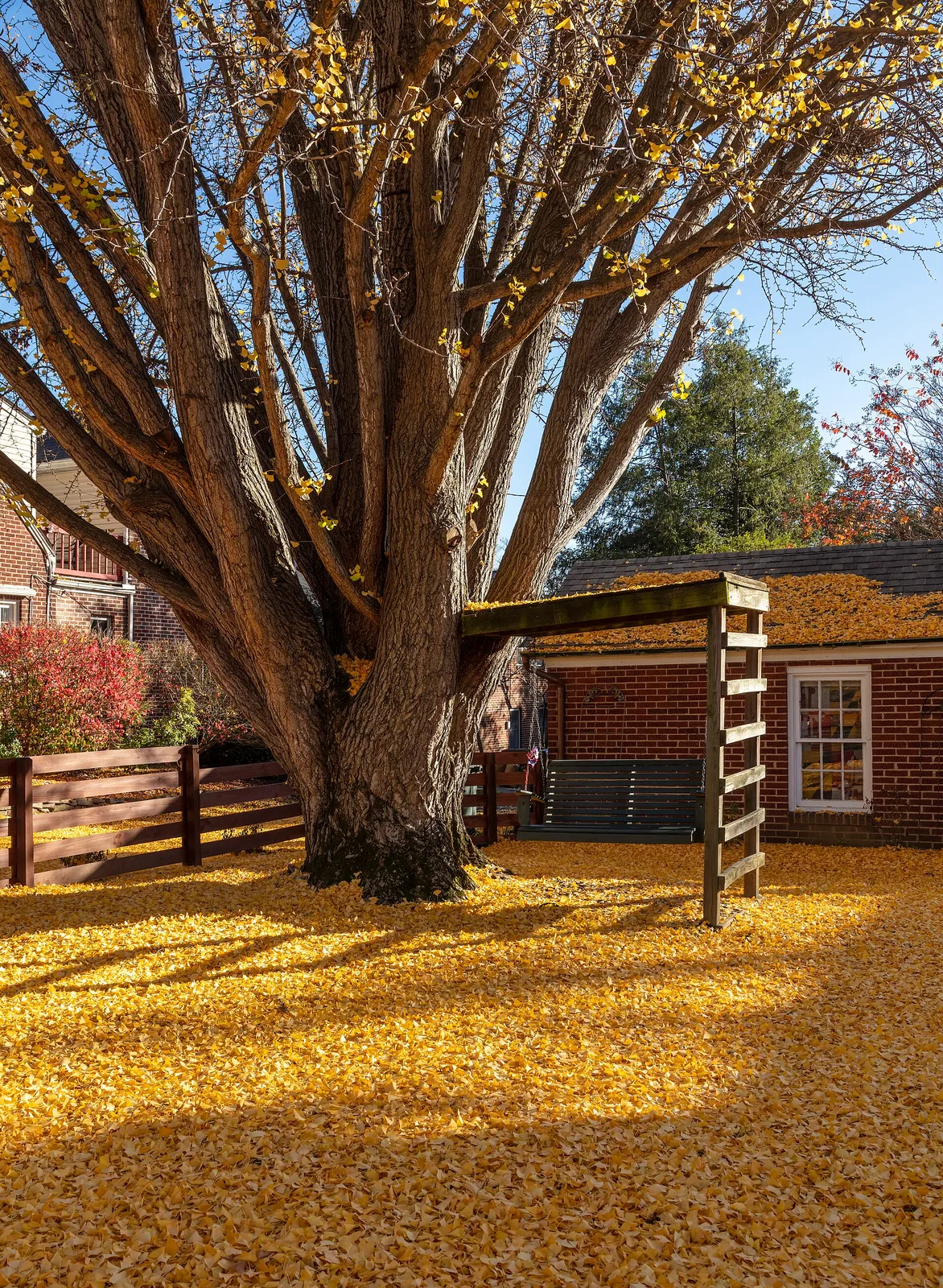
- Mature size
- 43 × 43 ft
- 13 × 13 m, tall × wide
- Hardiness
- Zones 4a–9b
- USDA
- Sun
- Full sun
- Water
- Dry to moist
- Fall color
- Nov
Ginkgo at its mature size
A mature Ginkgo grows 35 to 50 feet tall and just as wide, taller than most people.
Drawn to scale beside a 5 ft 9 in person. With VeraScape, you see it at this size in your own yard.
Typical mature size, unpruned. Sources: Monrovia.

Through the year
What Ginkgo looks like month by month in a typical zone 6–7 garden.
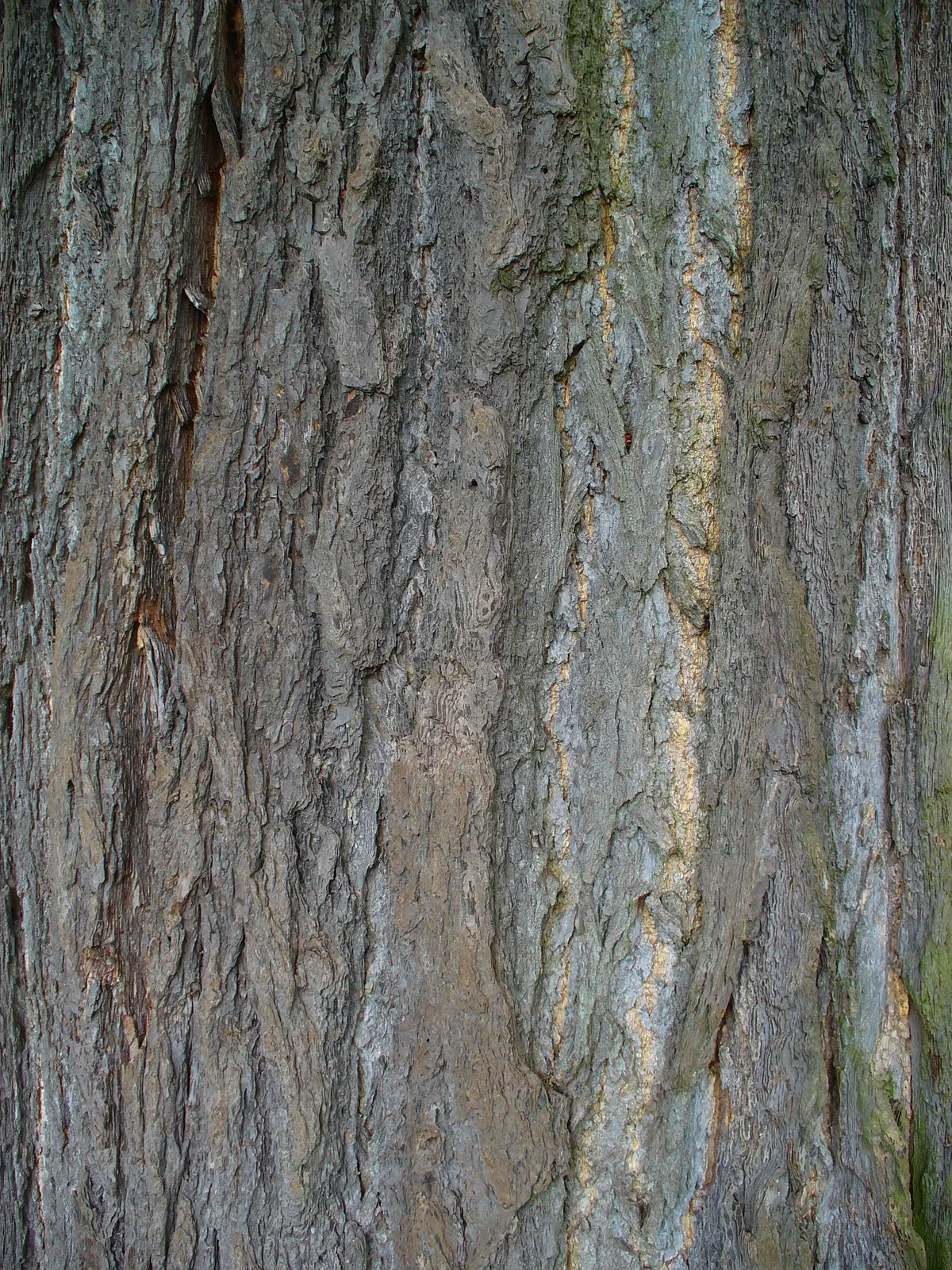
Dormant · Dec–Mar
Bare: upright symmetrical branches with stubby spur shoots, gray-brown ridged bark.
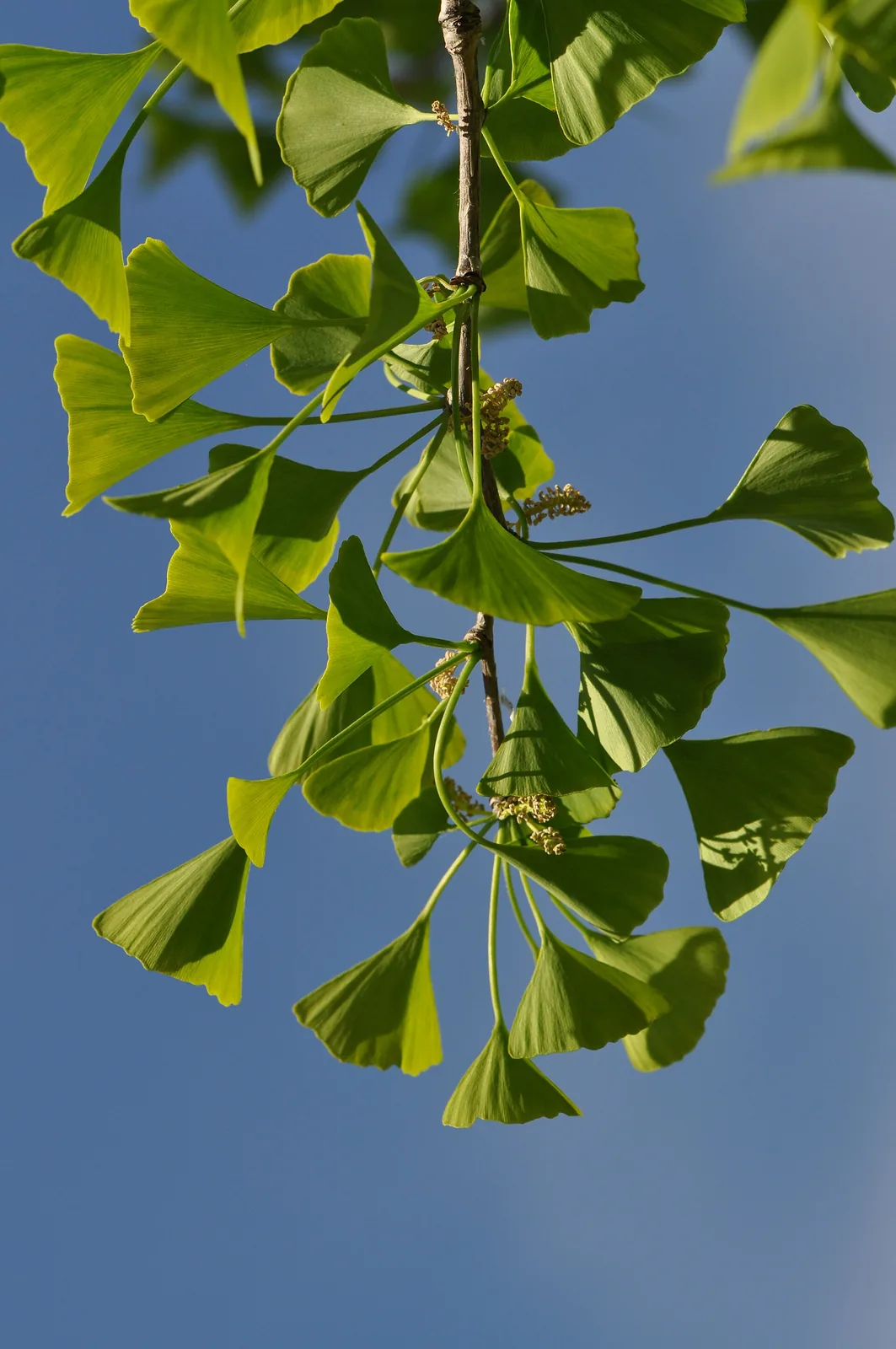
In leaf · Apr–Oct
Bright green fan-shaped leaves in clusters on spur shoots.
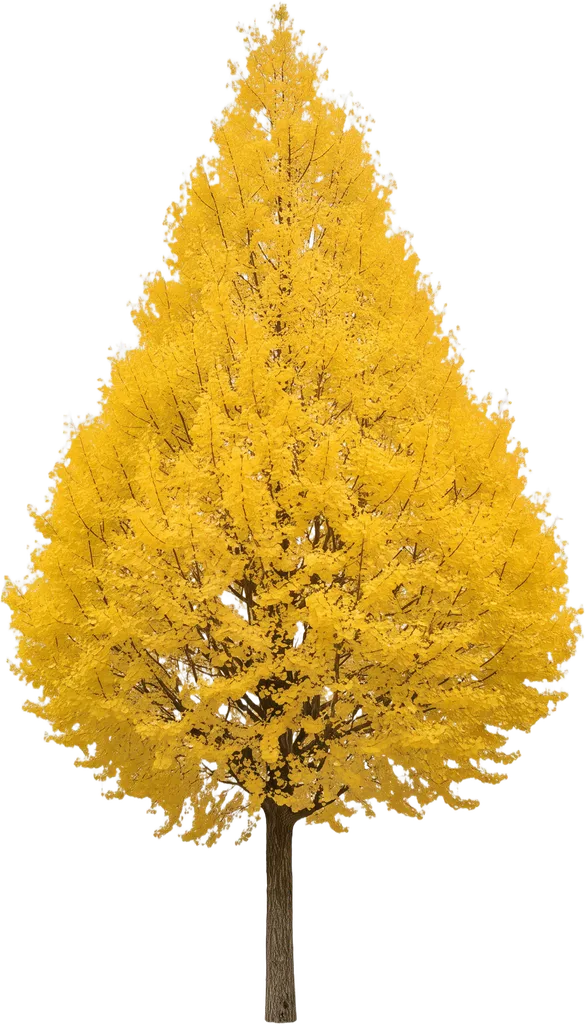
Fall · Nov
Every fan-shaped leaf brilliant clear golden yellow, uniform and glowing.
Photos


Growing Ginkgo
- Grows well in
- The Northeast, the Southeast, the Midwest, the Plains and Mountain West, the Pacific Northwest, and California.
- Growth rate
- Slow
- Good for
- Specimen, drought tolerant, deer resistant, and fall color
- Leaves
- Drops its leaves in winter
- Native to
- China
Spacing
VeraScape spaces plants so their grown canopies just touch. For Ginkgo, that’s about 43 ft apart, center to center.
Place a row in your own yard and VeraScape spaces them at their mature width, so you can see whether they’ll crowd the walk.
See Ginkgo in your yard before you dig
Visualize it at its true size, alongside the rest of your design.