Foamflower
Tiarella cordifolia
A dainty native groundcover for shade, with neat, heart-shaped leaves and airy spikes of creamy white flowers in spring that draw pollinators, spreading slowly by runners into colonies. It's lovely edging a woodland path or under shrubs, and deer usually pass it by. It needs moist, rich soil and won't take drought.
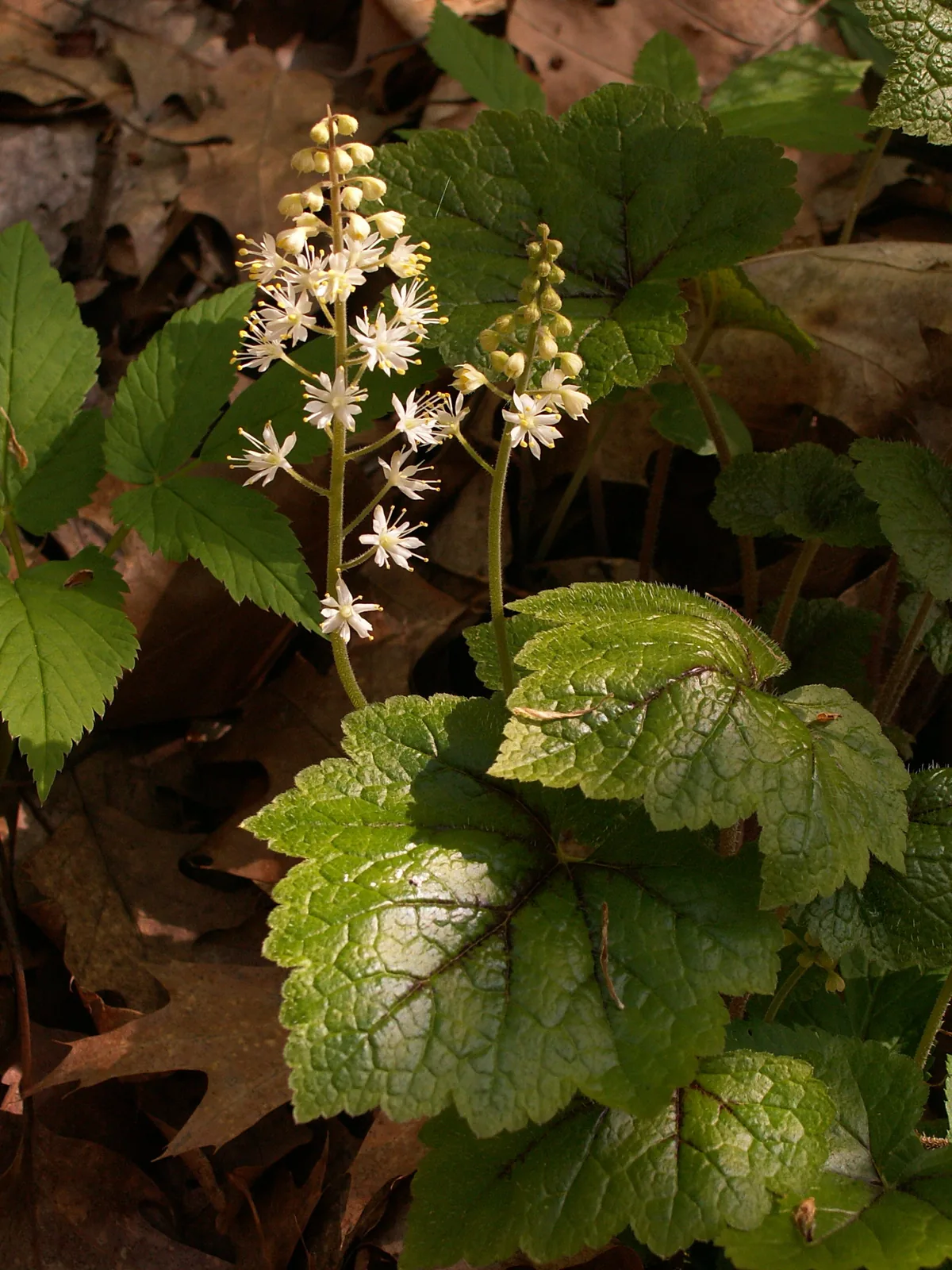
- Mature size
- 10 in × 1.5 ft
- 0.3 × 0.4 m, tall × wide
- Hardiness
- Zones 3a–8b
- USDA
- Sun
- Part sun to full shade
- Water
- Medium to moist
- Blooms
- Apr–Jun
Foamflower at its mature size
A mature Foamflower grows to about 10 in tall and 1.5 ft wide.
Drawn to scale beside a 5 ft 9 in person. With VeraScape, you see it at this size in your own yard.
Typical mature size, unpruned. Sources: NC State Extension.
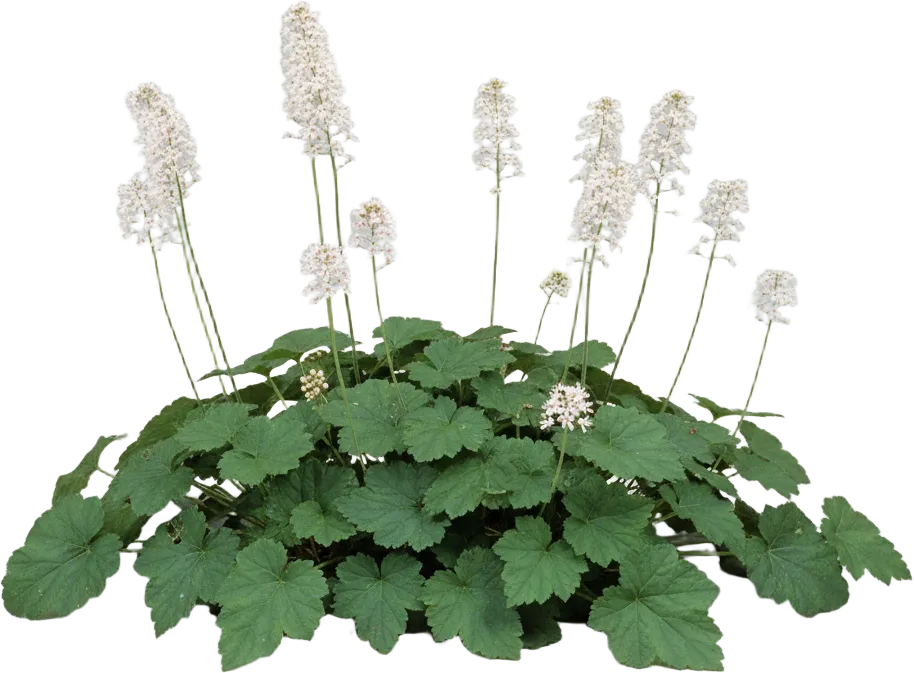

Through the year
What Foamflower looks like month by month in a typical zone 6–7 garden.
Winter · Dec–Mar
Leaves still green, with a reddish-bronze to maroon cast along the veins and edges; living leaves, not dead brown.
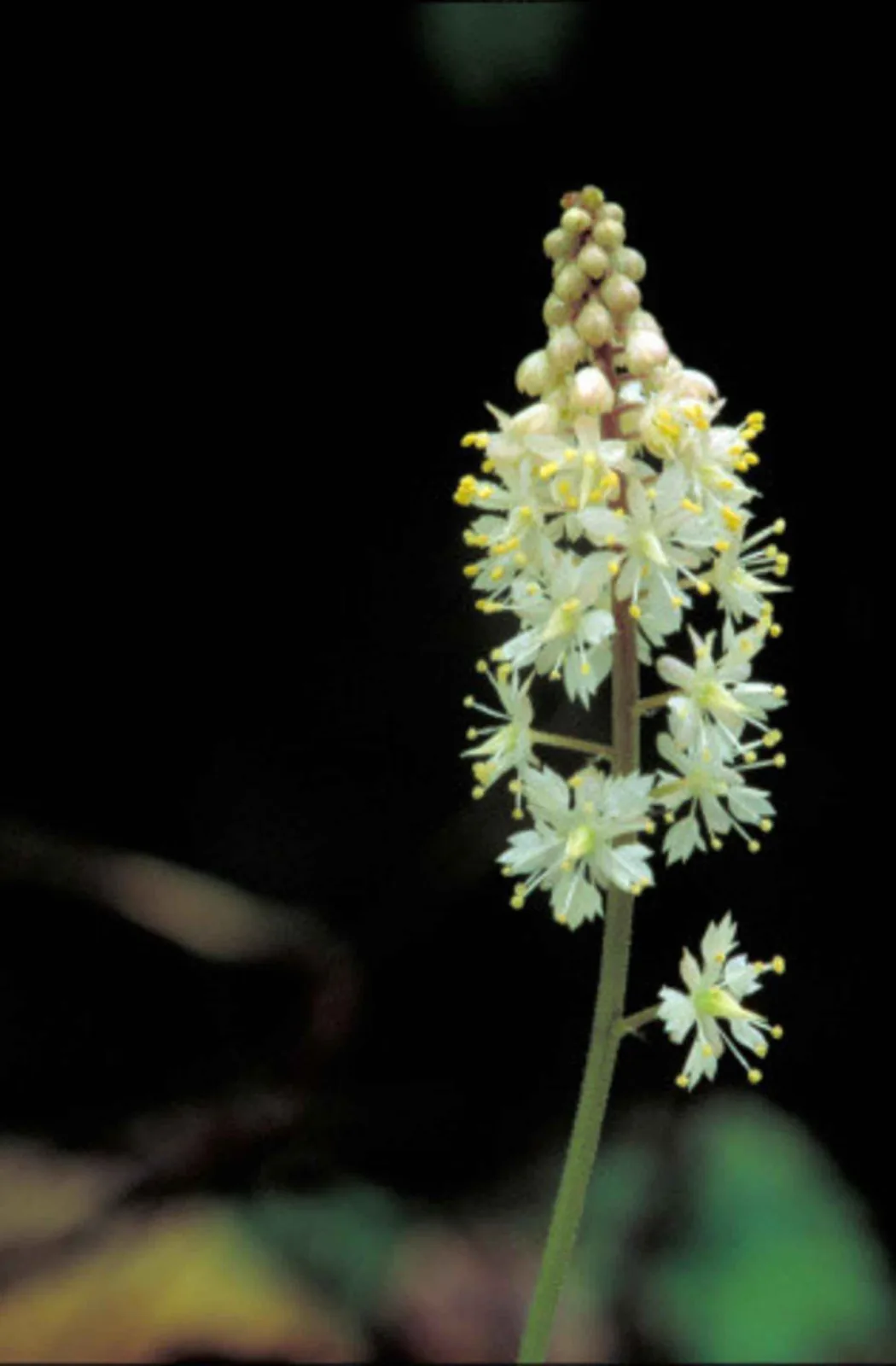
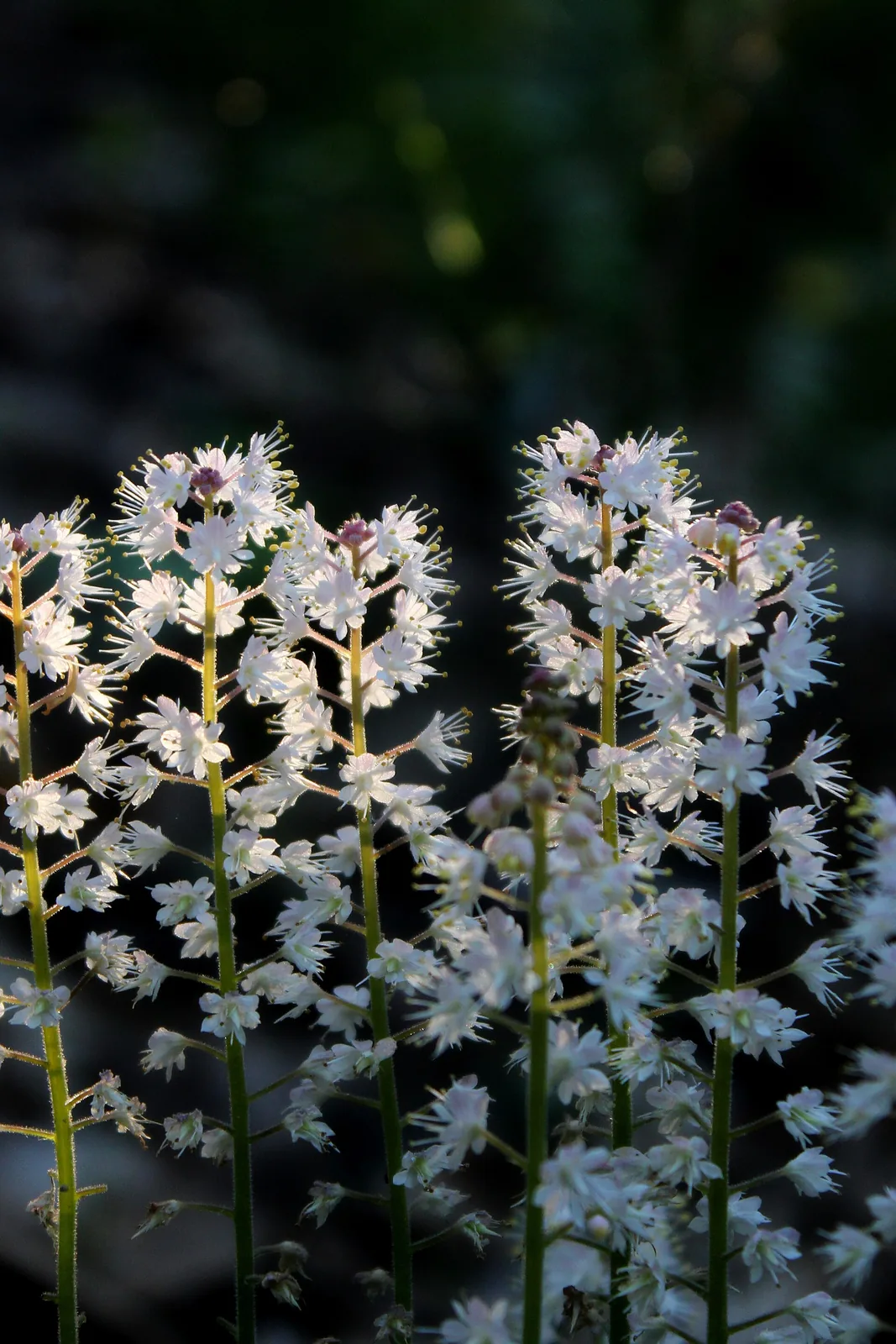
In flower · Apr–May
Foamy spikes of small white flowers above the leaves.
In leaf · Jun–Nov
Low mound of maple-like green leaves, no flowers.
Photos


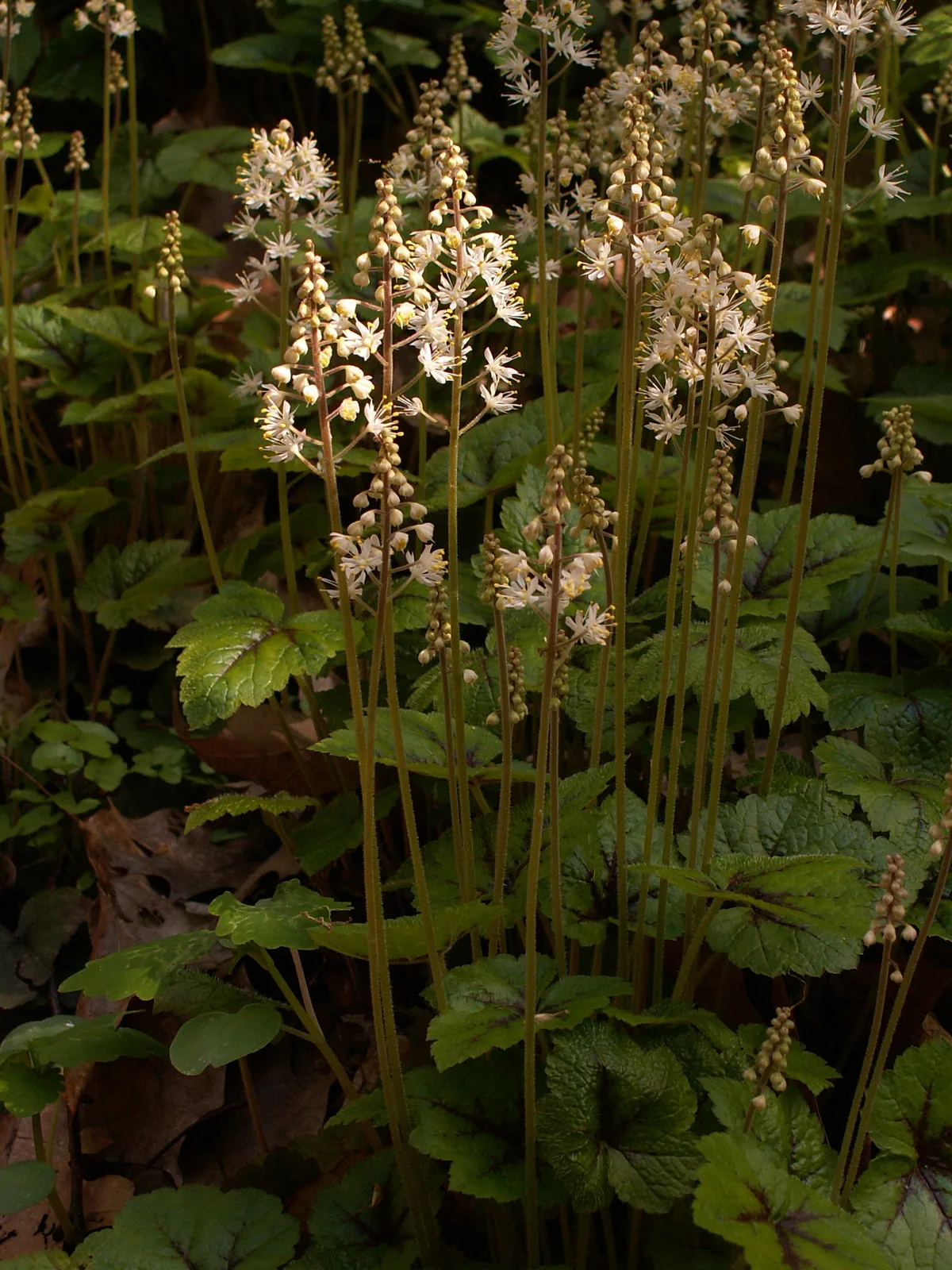

Growing Foamflower
- Grows well in
- The Northeast, the Southeast, and the Midwest.
- Growth rate
- Slow
- Good for
- Groundcover, shade garden, deer resistant, and pollinators
- Leaves
- Dies back in winter
- Native to
- Eastern North America
Spacing
VeraScape spaces plants so their grown canopies just touch. For Foamflower, that’s about 1.5 ft apart, center to center.
Place a row in your own yard and VeraScape spaces them at their mature width, so you can see whether they’ll crowd the walk.
See Foamflower in your yard before you dig
Visualize it at its true size, alongside the rest of your design.