False Indigo
Baptisia australis
A long-lived native with spikes of indigo-blue, lupine-like flowers in late spring over a shrubby mound of blue-green leaves, then black seed pods that stand into winter. Deep roots make it tough in drought, clay and poor soil once settled. It blooms best in full sun, and it resents being moved, so plant it for keeps.
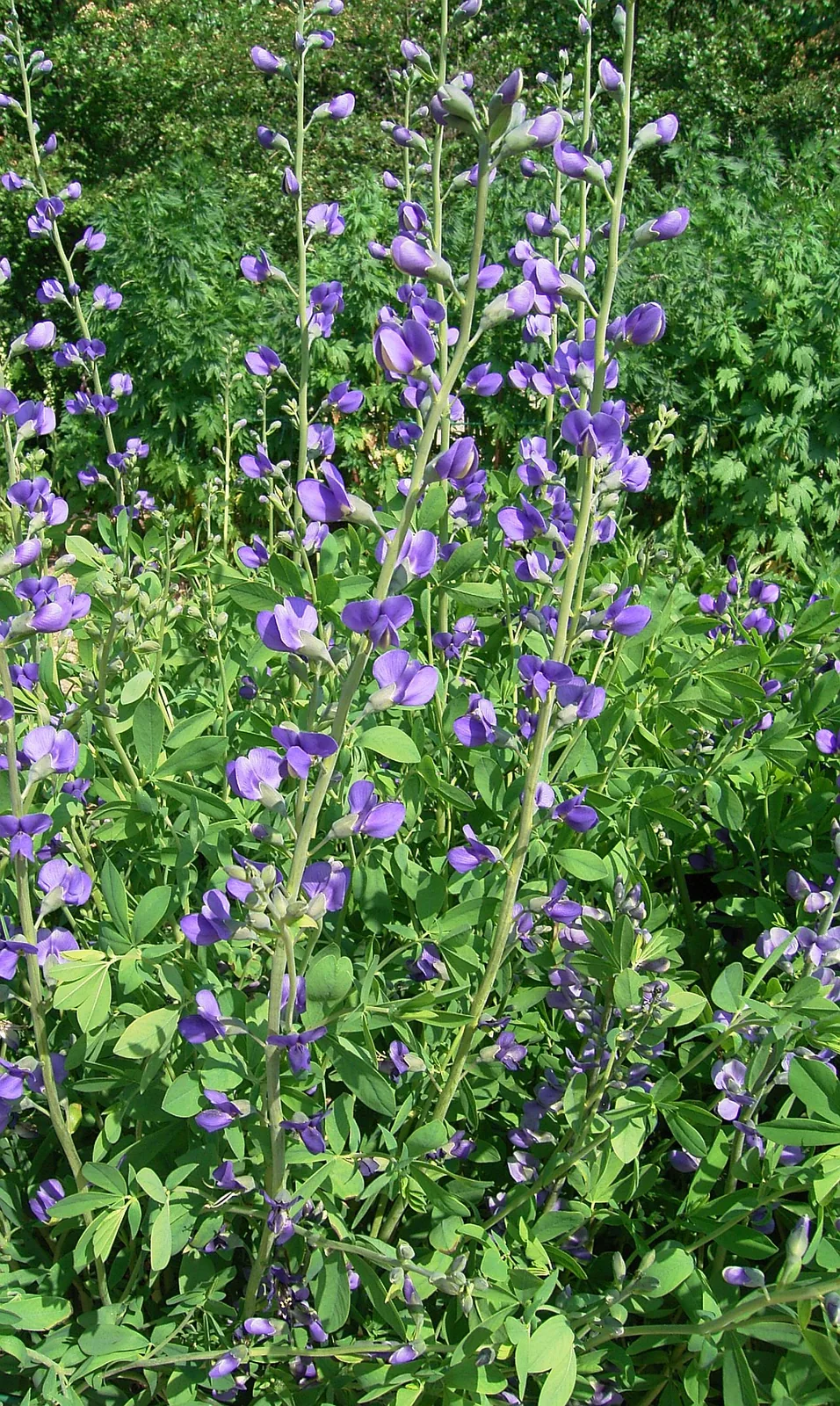
- Mature size
- 3.5 × 3.5 ft
- 1.1 × 1.1 m, tall × wide
- Hardiness
- Zones 3a–9b
- USDA
- Sun
- Full sun
- Water
- Medium to moist
- Blooms
- May–Jun
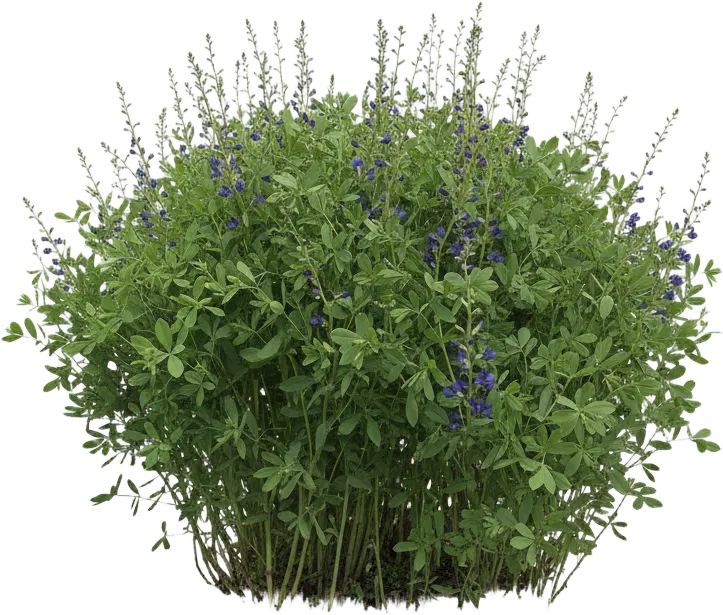
False Indigo at its mature size
A mature False Indigo grows 3 to 4 feet tall and just as wide.
Drawn to scale beside a 5 ft 9 in person. With VeraScape, you see it at this size in your own yard.
Typical mature size, unpruned. Sources: Missouri Botanical Garden.

Through the year
What False Indigo looks like month by month in a typical zone 6–7 garden.
Below ground · Dec–Mar
Cut back to the ground.
In leaf · Apr, Jul–Sep
Dense rounded clump of blue-green clover-like leaves, no flowers.
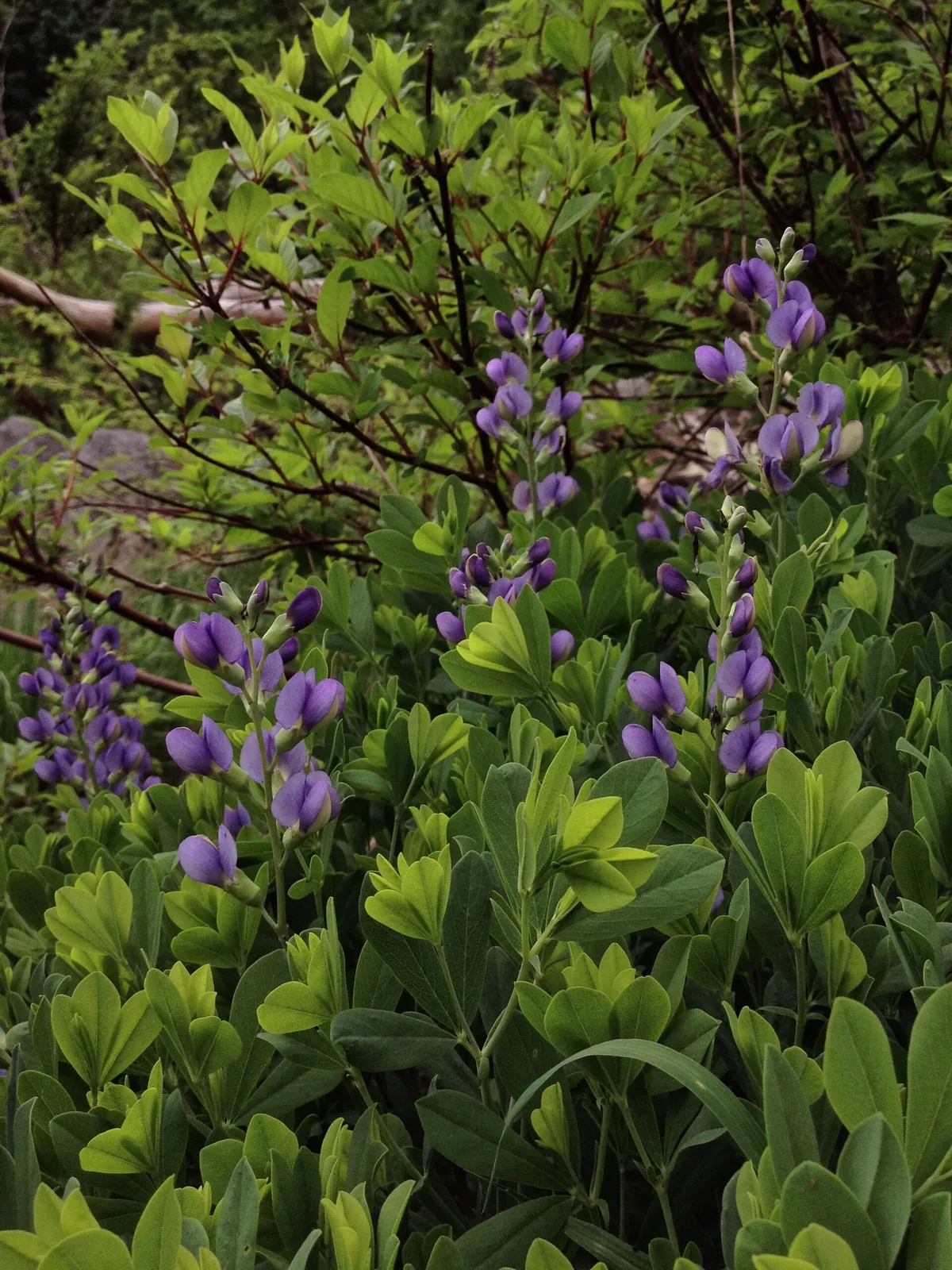
In flower · May–Jun
Upright spikes of indigo-blue pea flowers above the blue-green leaves.
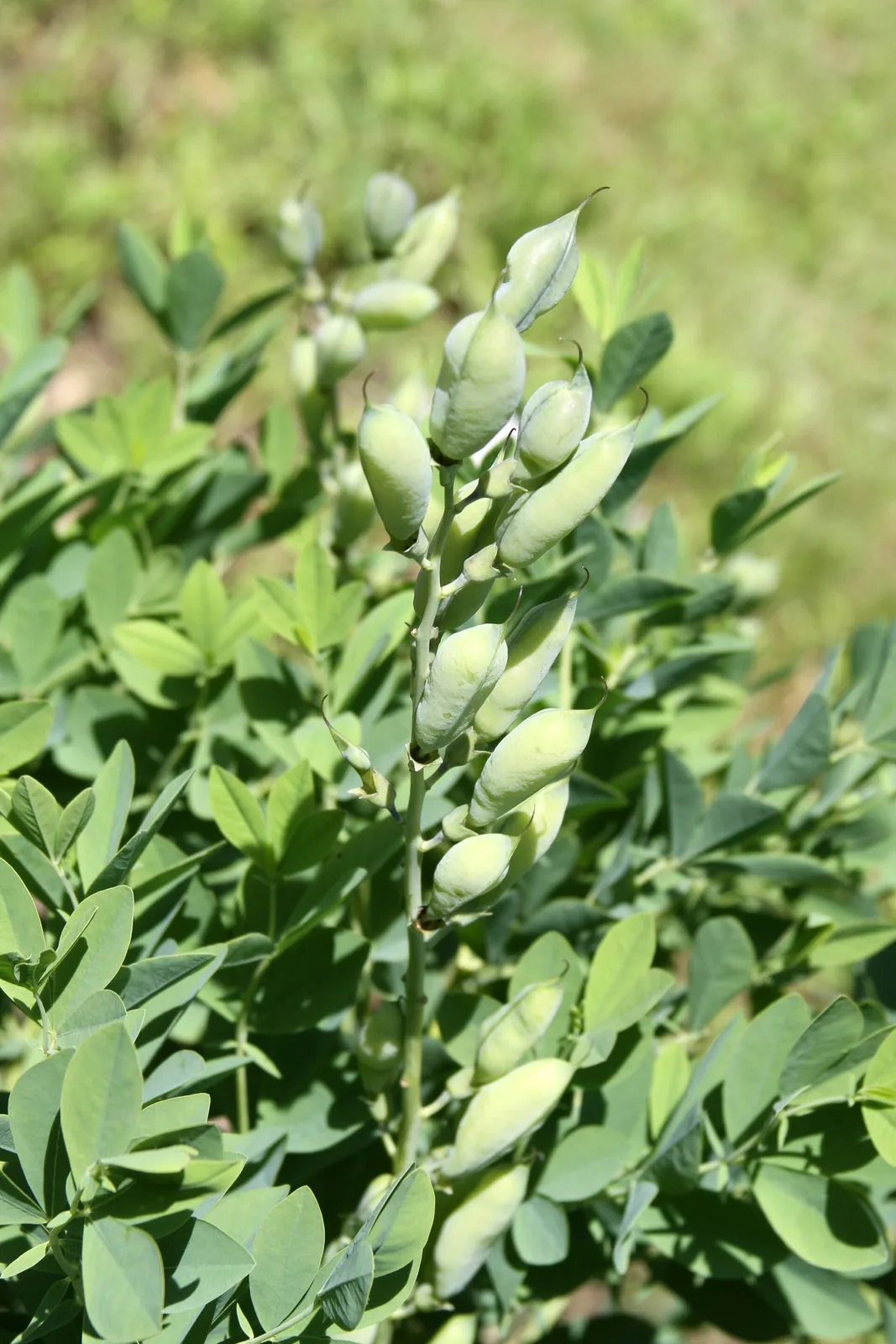
Fall · Oct–Nov
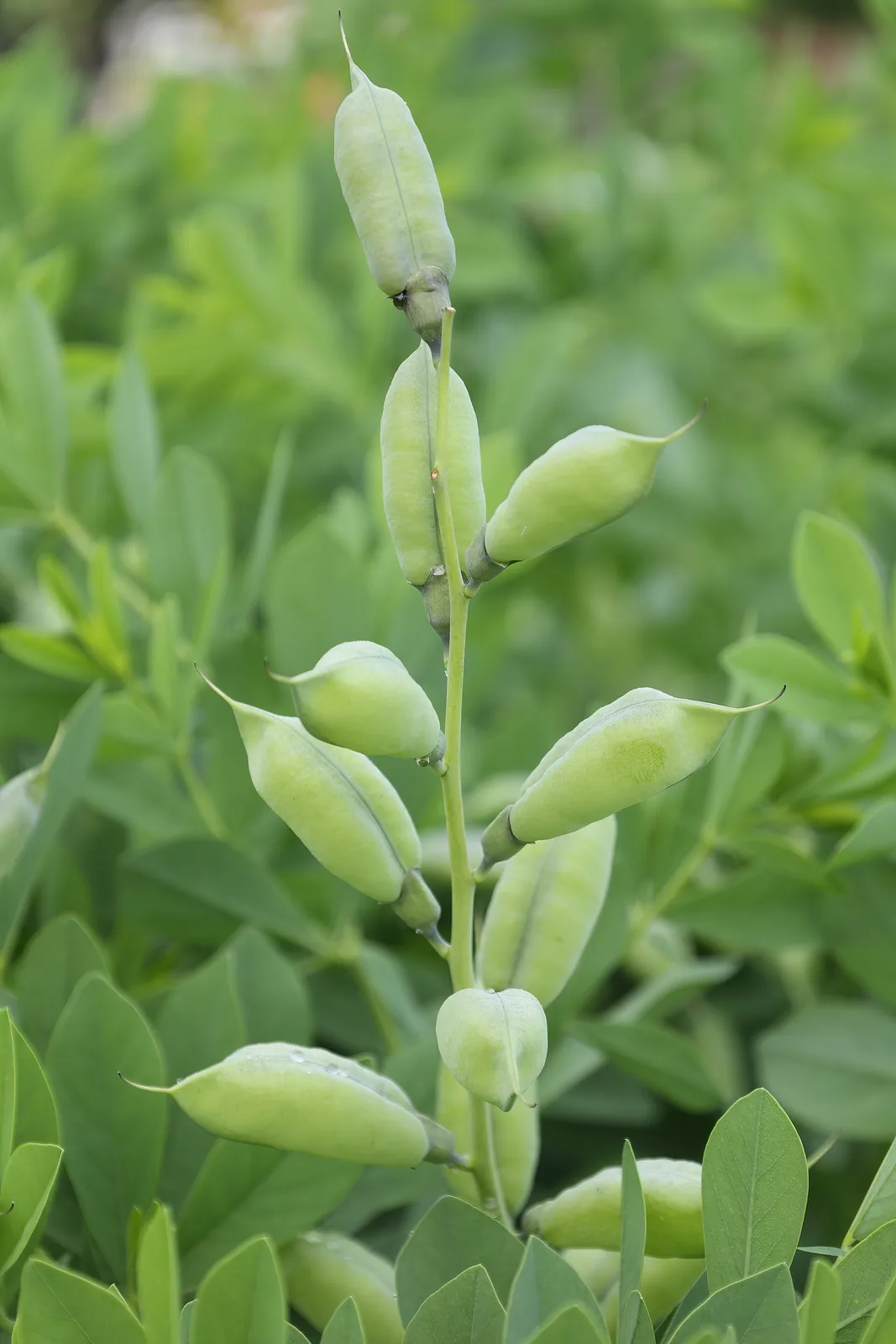
Leaves turned charcoal-gray to black after frost, puffy black seed pods on the stems.
Photos



Growing False Indigo
- Grows well in
- The Northeast, the Southeast, the Midwest, and the Plains and Mountain West.
- Good for
- Drought tolerant, deer resistant, and pollinators
- Leaves
- Dies back in winter
- Native to
- Eastern United States
Spacing
VeraScape spaces plants so their grown canopies just touch. For False Indigo, that’s about 3.5 ft apart, center to center.
Place a row in your own yard and VeraScape spaces them at their mature width, so you can see whether they’ll crowd the walk.
See False Indigo in your yard before you dig
Visualize it at its true size, alongside the rest of your design.