Desert Globe Mallow
Sphaeralcea ambigua
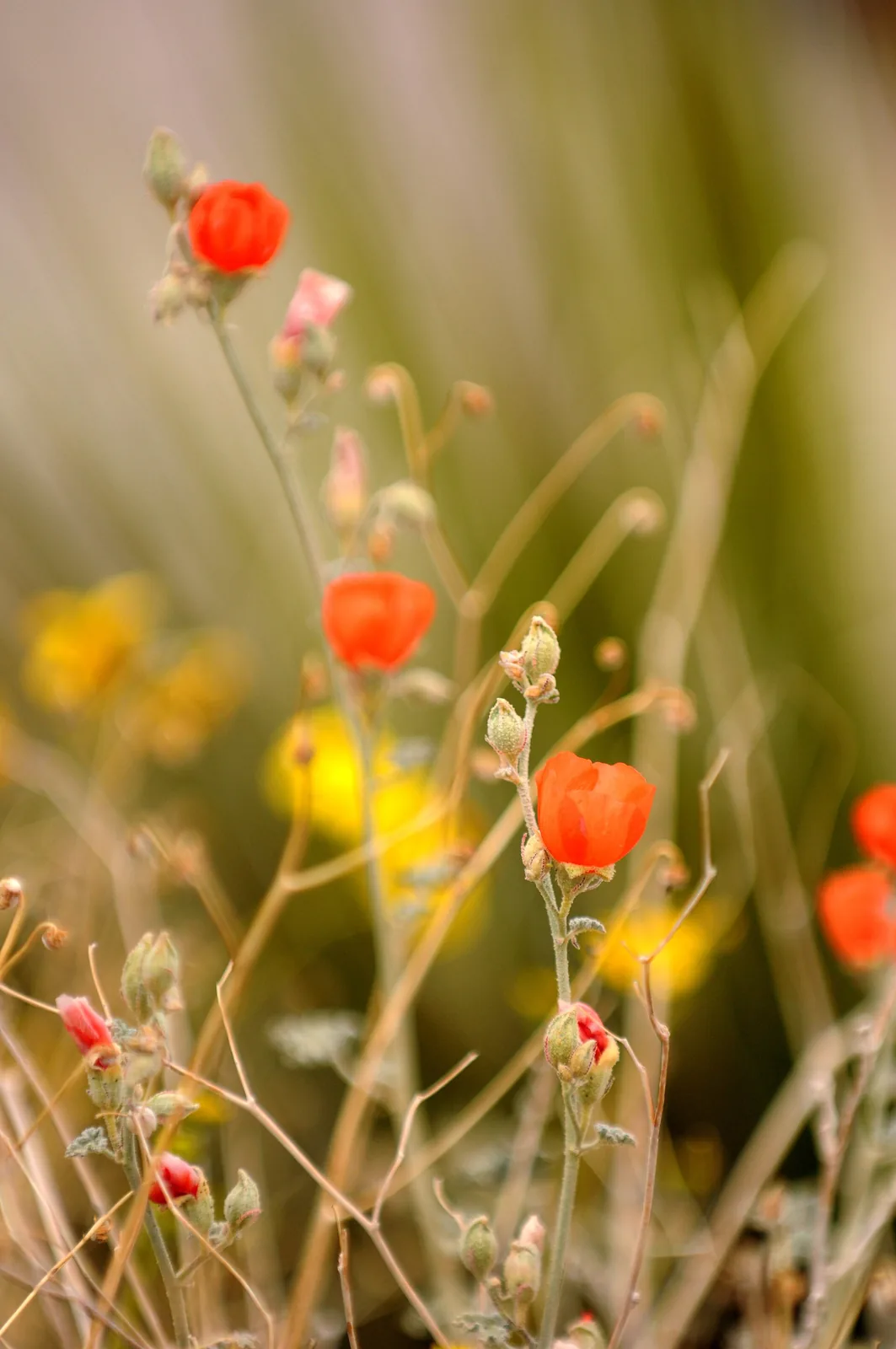
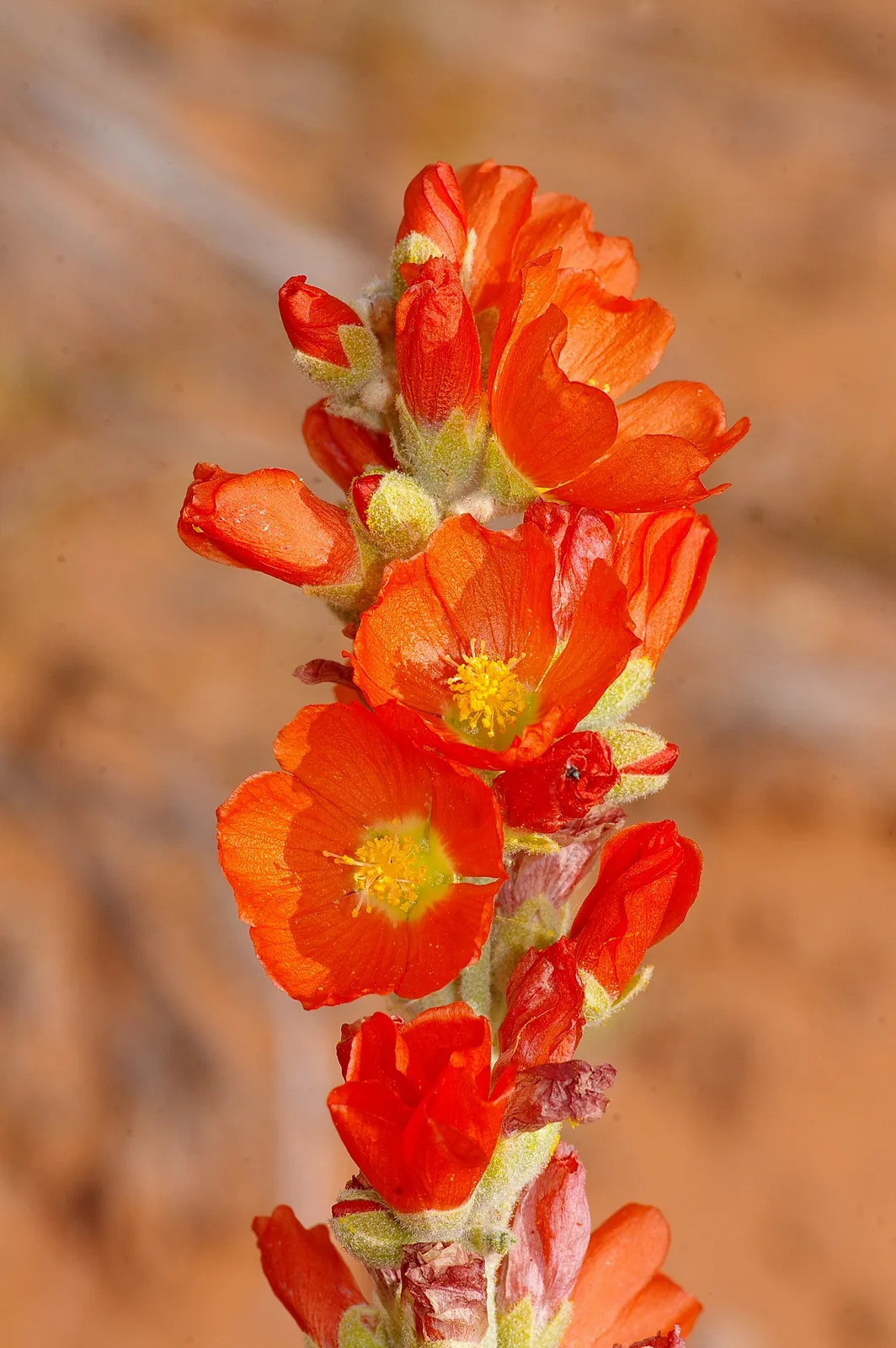
One of the toughest desert perennials, with wands of apricot-orange flowers from late winter into fall that give bees a steady supply of pollen and nectar. It thrives in dry, rocky or sandy soil, even limy ground, with little water. It's fairly short-lived, but it usually reseeds itself.
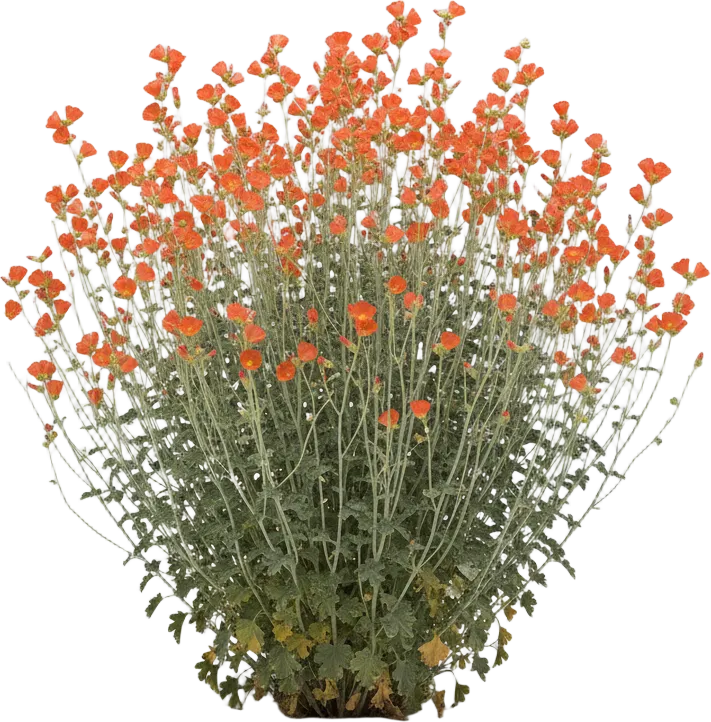
- Mature size
- 3 × 3 ft
- 0.9 × 0.9 m, tall × wide
- Hardiness
- Zones 6a–10b
- USDA
- Sun
- Full sun
- Water
- Dry
- Blooms
- Mar–May, Oct
Desert Globe Mallow at its mature size
A mature Desert Globe Mallow grows to about 3 ft tall and 3 ft wide.
Drawn to scale beside a 5 ft 9 in person. With VeraScape, you see it at this size in your own yard.
Typical mature size, unpruned. Sources: Lady Bird Johnson Wildflower Center, USDA PLANTS.

Through the year
What Desert Globe Mallow looks like month by month in a typical zone 6–7 garden.
In leaf · Jun–Feb
Gray-green woolly leaves, few flowers.
In flower · Mar–May
Gray-green woolly leaves with wands of apricot-orange cup flowers.
Photos



Growing Desert Globe Mallow
- Grows well in
- The desert Southwest and California.
- Growth rate
- Fast
- Good for
- Drought tolerant, pollinators, and fast growing
- Leaves
- Dies back in winter
- Native to
- Mojave and Sonoran deserts (California, Nevada, Utah, Arizona) and Northwest Mexico
Spacing
VeraScape spaces plants so their grown canopies just touch. For Desert Globe Mallow, that’s about 3 ft apart, center to center.
Place a row in your own yard and VeraScape spaces them at their mature width, so you can see whether they’ll crowd the walk.
See Desert Globe Mallow in your yard before you dig
Visualize it at its true size, alongside the rest of your design.