Daylily
Hemerocallis fulva
A tough, low-care perennial with bold orange flowers that each last a day, spreading fast into dense clumps that crowd out weeds and hold slopes. That vigour is the catch: it has naturalized along roadsides across North America, and Maryland and Delaware ban its sale. It's reported toxic to cats.
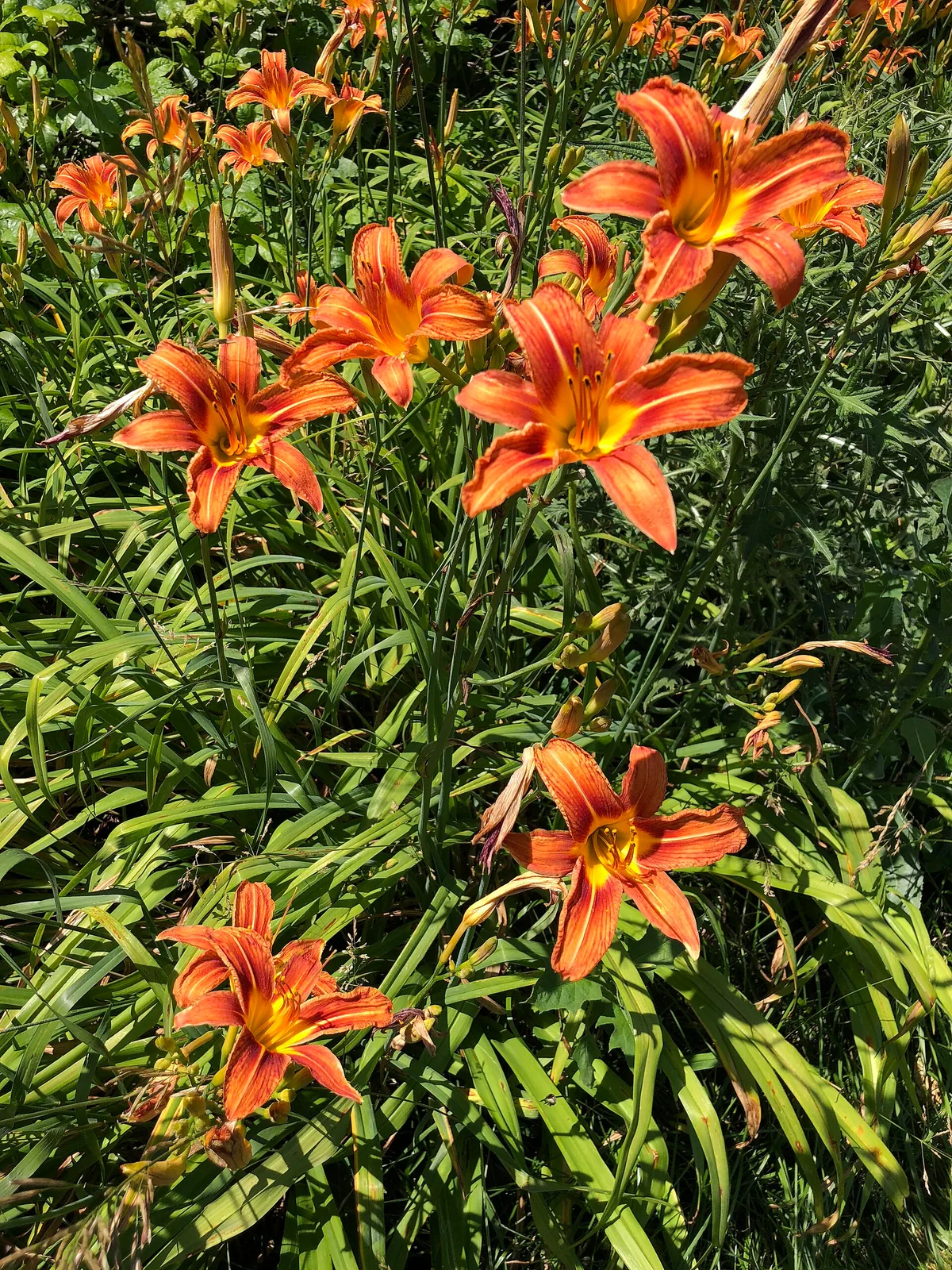
- Mature size
- 4.5 × 2.5 ft
- 1.4 × 0.7 m, tall × wide
- Hardiness
- Zones 3a–9b
- USDA
- Sun
- Full sun to part shade
- Water
- Medium
- Blooms
- Jun–Jul
Daylily at its mature size
A mature Daylily grows 3 to 6 feet tall and 2 to 2.5 feet wide.
Drawn to scale beside a 5 ft 9 in person. With VeraScape, you see it at this size in your own yard.
Typical mature size, unpruned. Sources: NC State Extension.
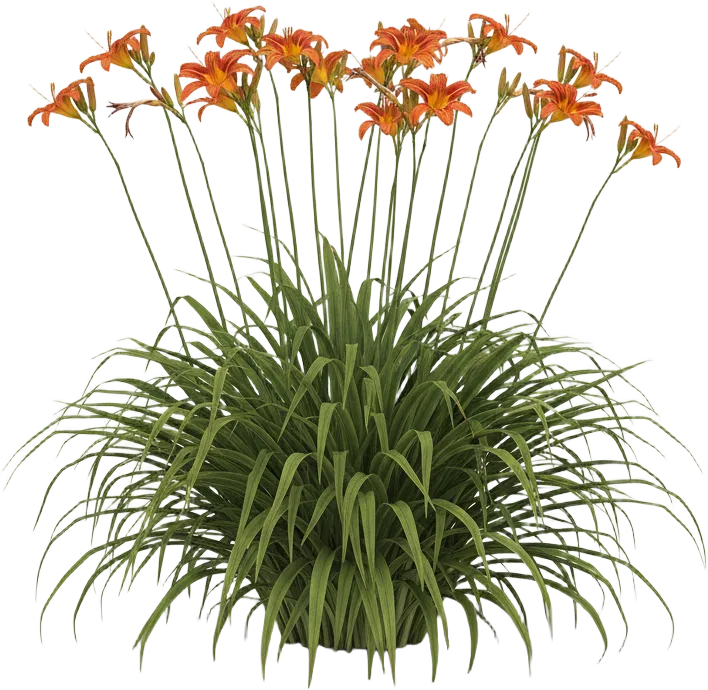

Through the year
What Daylily looks like month by month in a typical zone 6–7 garden.
Below ground · Nov–Mar
Dies back to the ground.
In leaf · Apr–May, Aug–Sep
Fountain of arching bright green strap leaves, no flower stalks.
In flower · Jun–Jul
Tall bare stalks of tawny orange trumpet flowers above the leaves.
Fall · Oct
Strap leaves yellowing and browning.
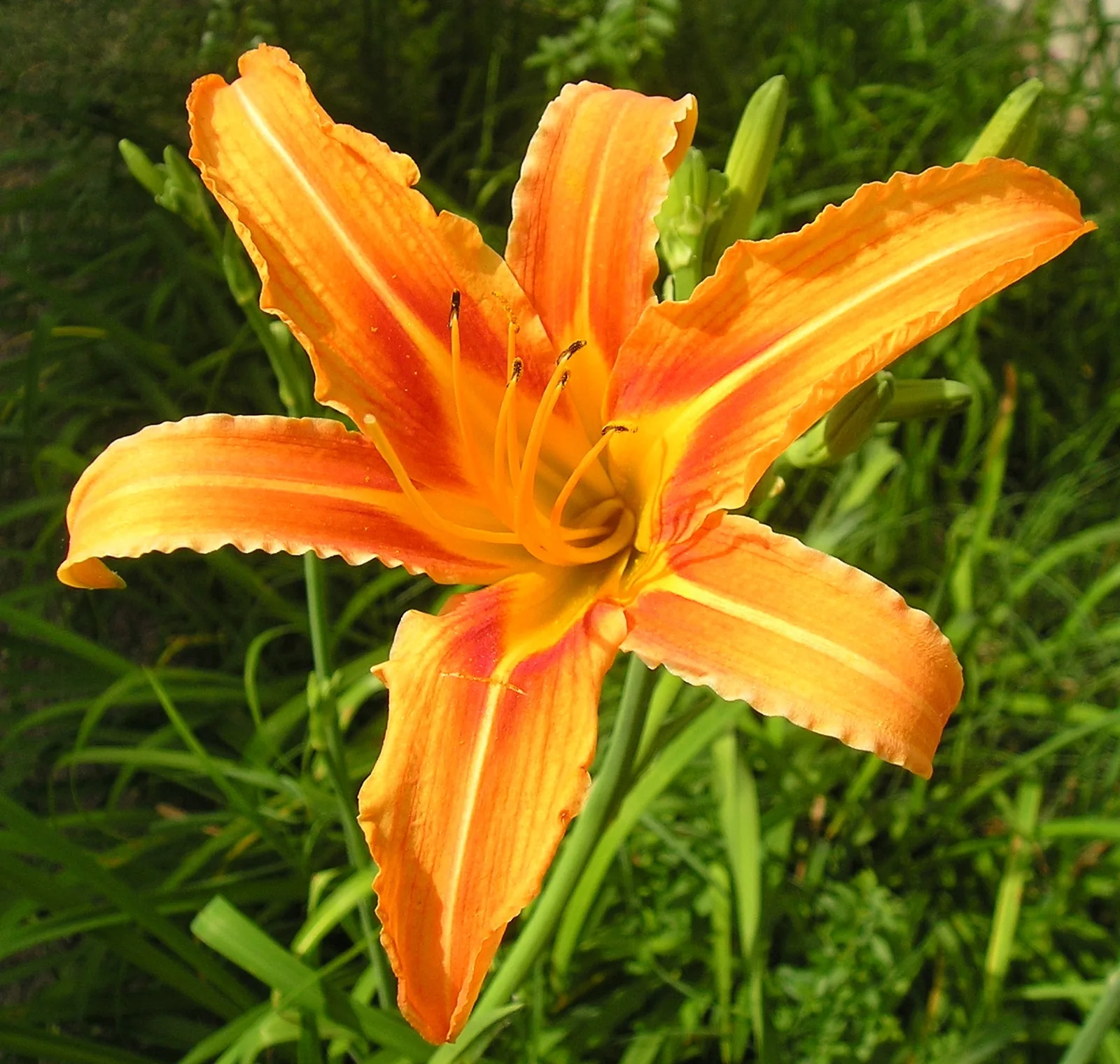
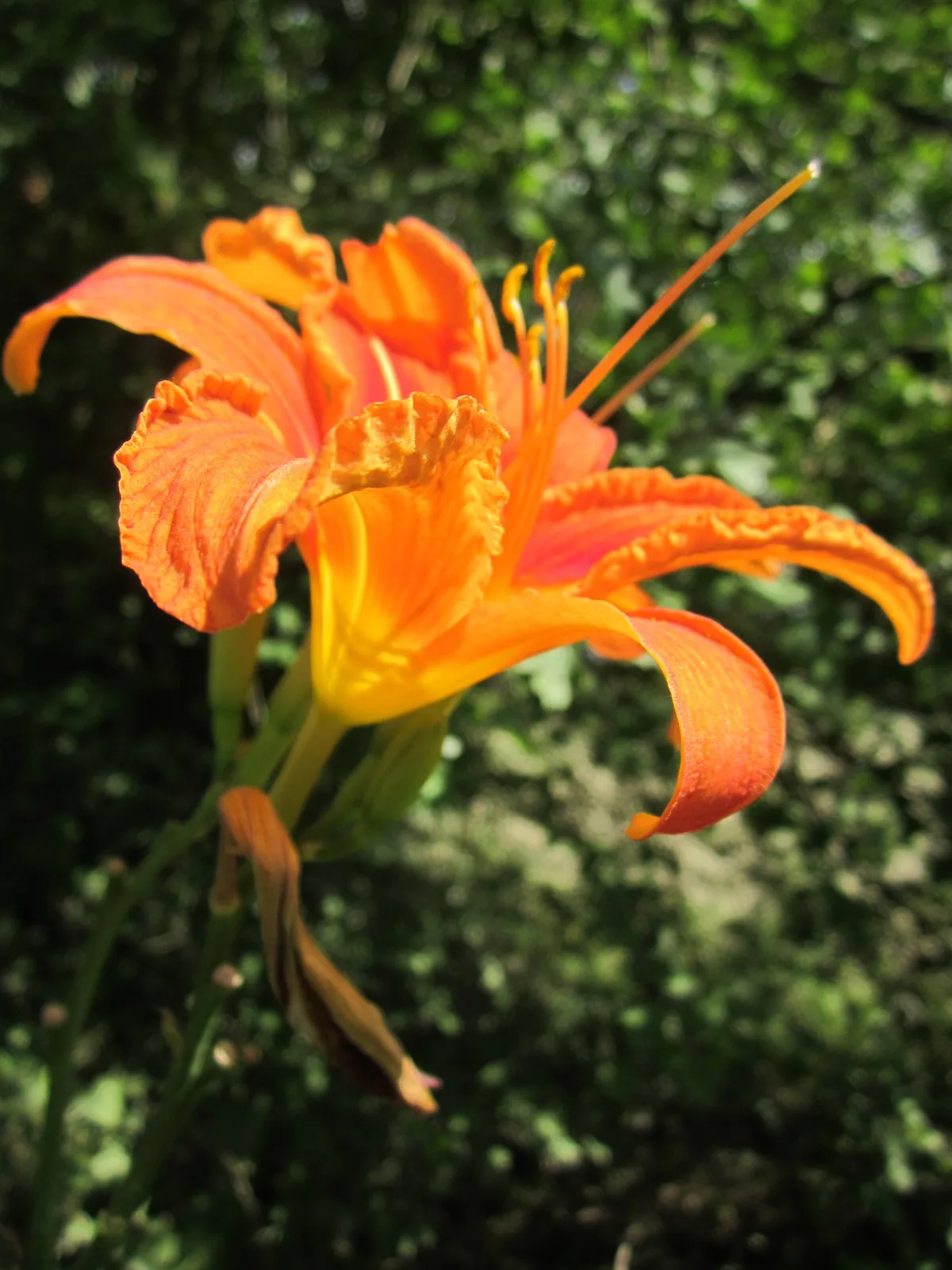
Photos


Growing Daylily
- Grows well in
- The Northeast, the Southeast, the Midwest, the Plains and Mountain West, the Pacific Northwest, and California.
- Growth rate
- Fast
- Good for
- Slopes and fast growing
- Leaves
- Dies back in winter
- Native to
- China and Japan
- State lists
Prohibited in Delaware, so it can’t be sold there. Delaware Invasive Plant List
Prohibited in Maryland, so it can’t be sold there. Maryland Prohibited Invasive Plant List
Spacing
VeraScape spaces plants so their grown canopies just touch. For Daylily, that’s about 2.5 ft apart, center to center.
Place a row in your own yard and VeraScape spaces them at their mature width, so you can see whether they’ll crowd the walk.
See Daylily in your yard before you dig
Visualize it at its true size, alongside the rest of your design.