Common Witch Hazel
Hamamelis virginiana
A native shrub or small tree that brightens late fall with fragrant, spidery yellow flowers and yellow fall colour. It tolerates clay and road salt, and makes a fine specimen, screen or tall hedge at a woodland edge. Keep the soil moist, as it dislikes drought; leaves that hang on can hide the flowers.
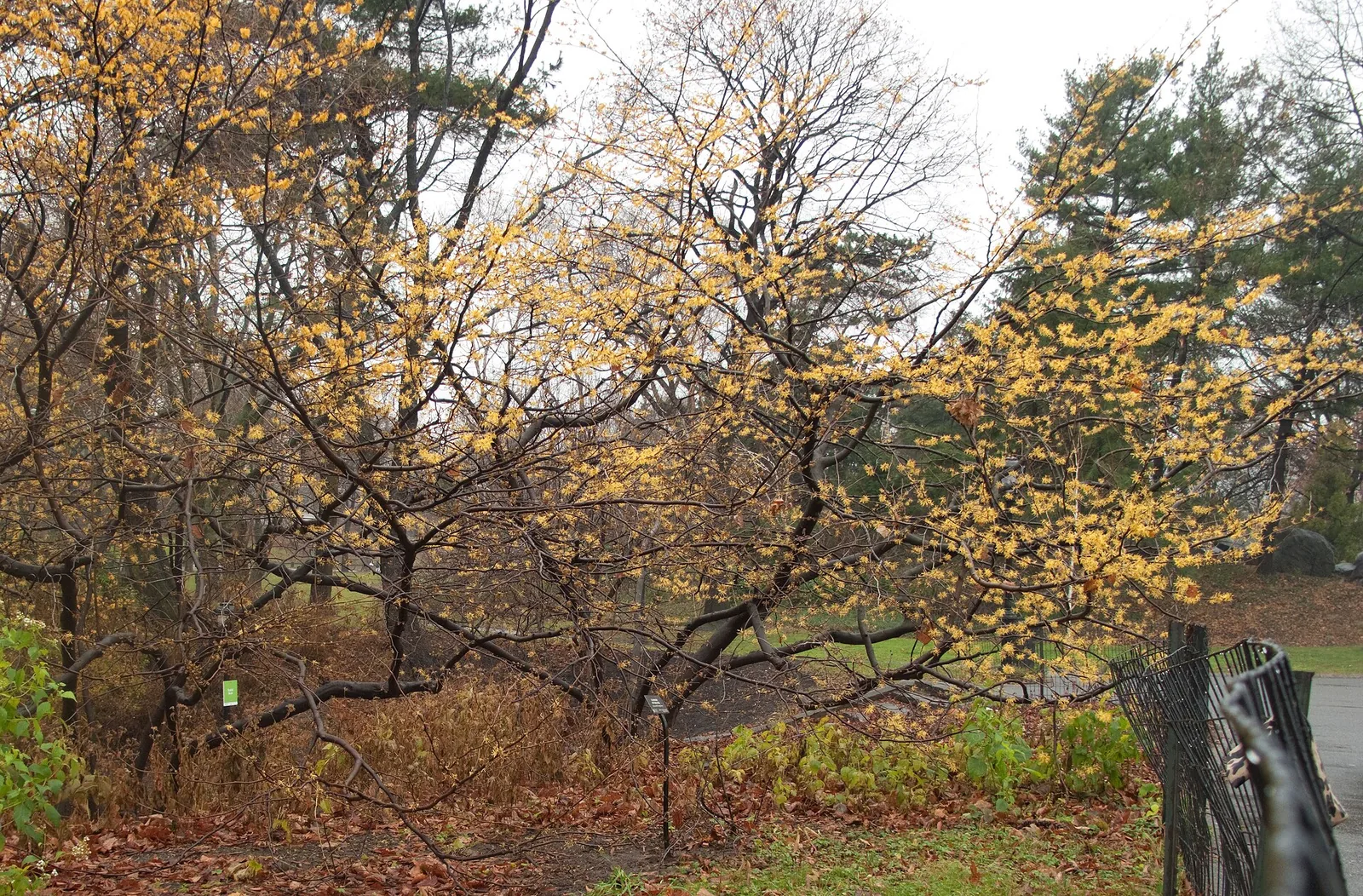
- Mature size
- 20 × 17 ft
- 6 × 5.5 m, tall × wide
- Hardiness
- Zones 3a–8b
- USDA
- Sun
- Full sun to full shade
- Water
- Medium to moist
- Blooms
- Oct–Dec
- Fall color Oct
Common Witch Hazel at its mature size
A mature Common Witch Hazel grows 15 to 25 feet tall and 15 to 20 feet wide, taller than most people.
Drawn to scale beside a 5 ft 9 in person. With VeraScape, you see it at this size in your own yard.
Typical mature size, unpruned. Sources: NC State Extension, The Morton Arboretum, Lady Bird Johnson Wildflower Center.
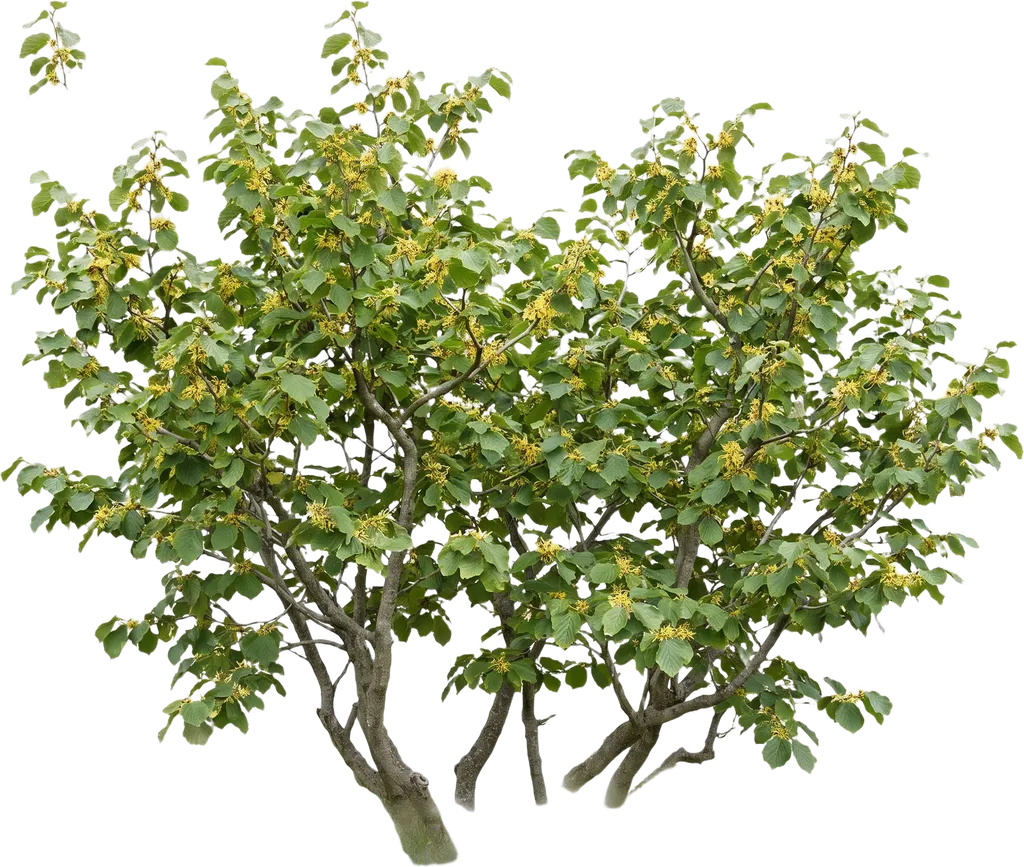

Through the year
What Common Witch Hazel looks like month by month in a typical zone 6–7 garden.
Dormant · Jan–Apr
Bare zigzag gray branches.
In leaf · May–Sep
Broad wavy-edged medium green leaves.
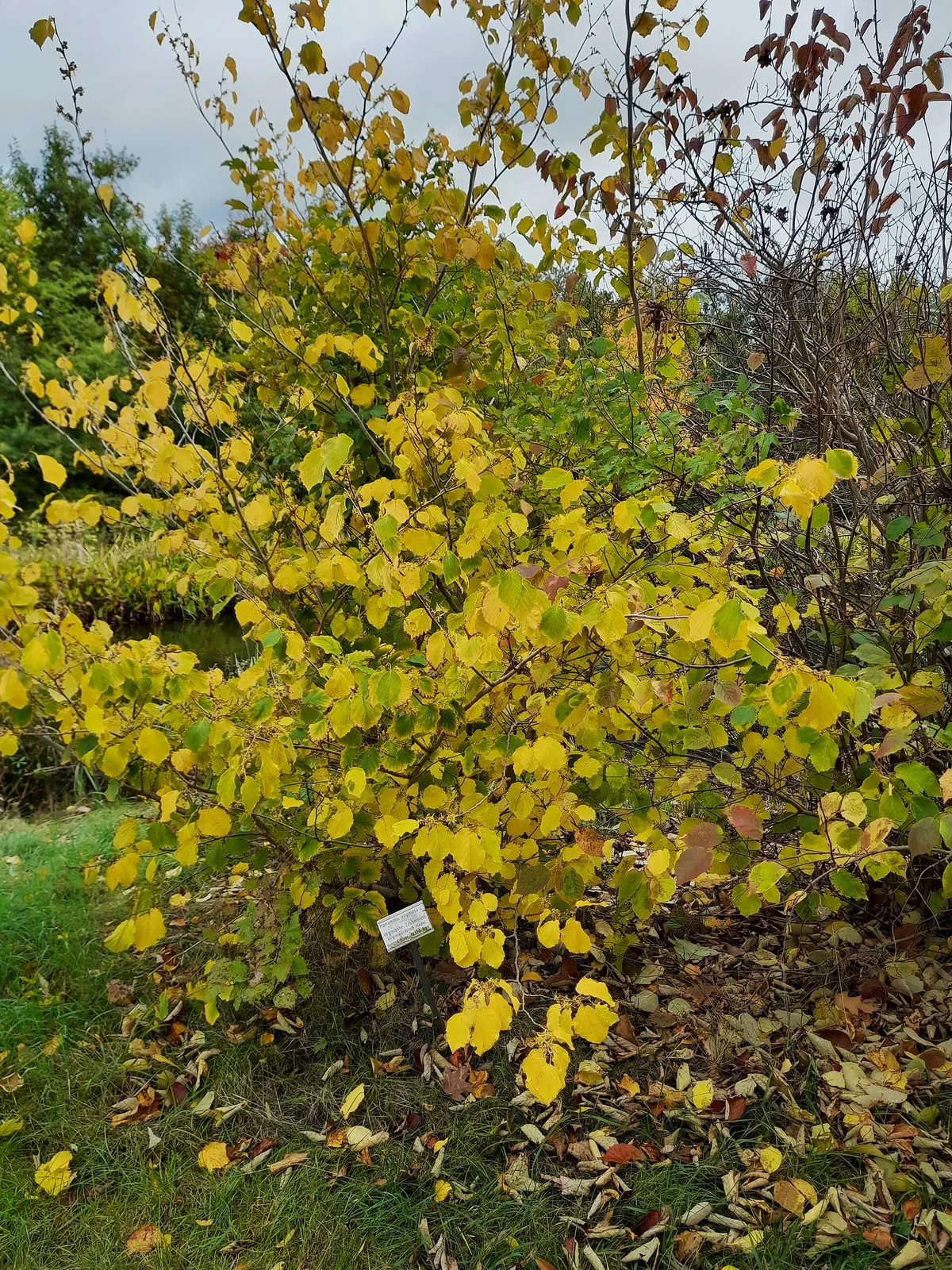
Fall · Oct
Leaves turned golden yellow.
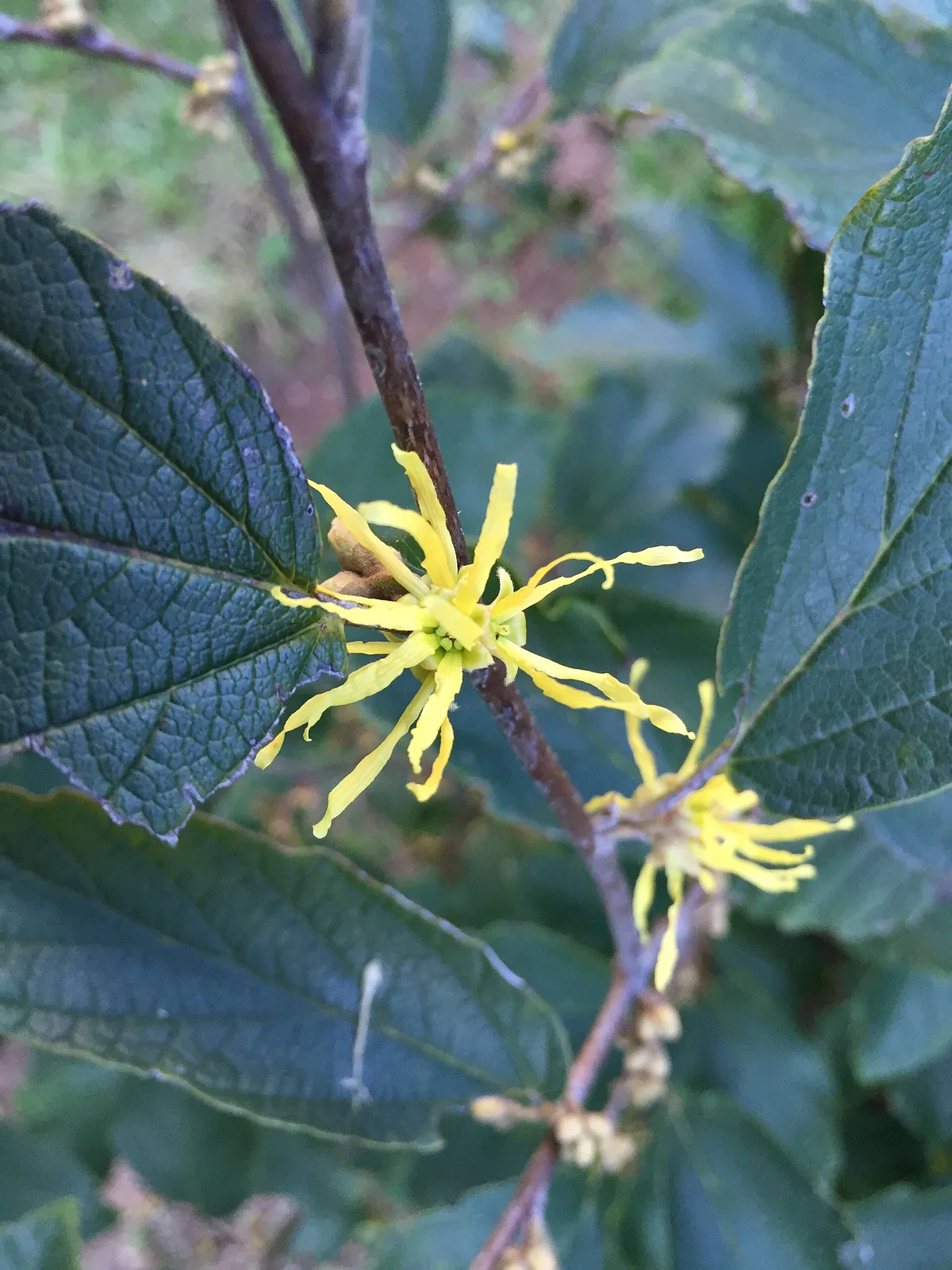
In flower · Nov–Dec
Bare branches with small spidery yellow flowers.
Photos


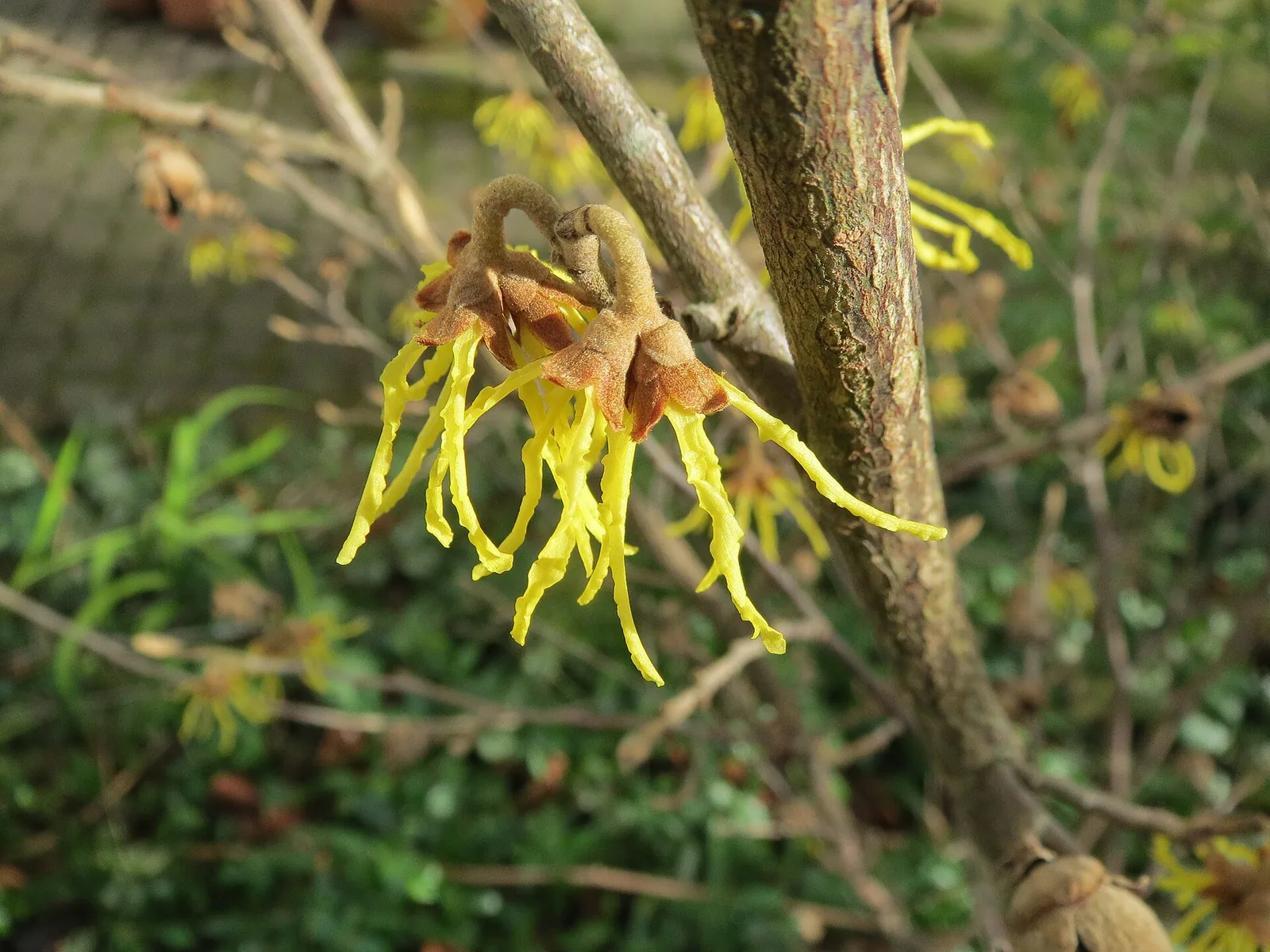

Growing Common Witch Hazel
- Grows well in
- The Northeast, the Southeast, and the Midwest.
- Growth rate
- Medium
- Good for
- Hedge, small space, specimen, shade garden, rain garden, deer resistant, pollinators, fall color, winter interest, and fragrant
- Leaves
- Drops its leaves in winter
- Native to
- Eastern North America
Spacing for a hedge
VeraScape spaces plants so their grown canopies just touch. For Common Witch Hazel, that’s about 17 ft apart, center to center.
Place a row in your own yard and VeraScape spaces them at their mature width, so you can see whether they’ll crowd the walk.
See Common Witch Hazel in your yard before you dig
Visualize it at its true size, alongside the rest of your design.