Climbing Hydrangea
Hydrangea anomala subsp. petiolaris
Lacy, fragrant white flowers in early summer, glossy leaves and peeling cinnamon bark in winter on a self-clinging vine that brightens a shady wall. Patience pays: it's slow for a few years, then climbs with vigour.
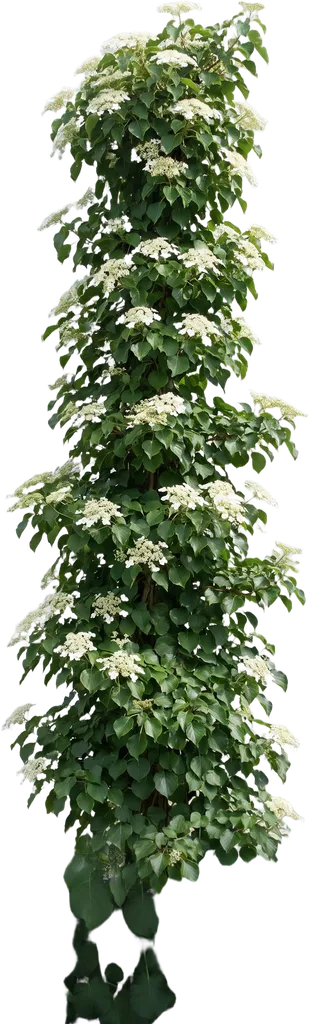
- Mature size
- 30 × 6 ft
- 9 × 1.8 m, tall × wide
- Hardiness
- Zones 4a–8b
- USDA
- Sun
- Part sun to full shade
- Water
- Medium to moist
- Blooms
- Jun–Jul
Climbing Hydrangea at its mature size
A mature Climbing Hydrangea grows to about 30 ft tall and 6 ft wide, taller than most people.
Drawn to scale beside a 5 ft 9 in person. With VeraScape, you see it at this size in your own yard.
Typical mature size, unpruned. Sources: NC State Extension, The Tree Center, The Morton Arboretum.
Through the year
What Climbing Hydrangea looks like month by month in a typical zone 6–7 garden.
Dormant · Dec–Mar
Bare cinnamon-brown stems with peeling bark clinging up the support, some dried flower heads.
In leaf · Apr–May, Aug–Sep
Glossy dark green toothed oval leaves up the support, no flowers.
In flower · Jun–Jul
Flat lacy clusters of white flowers against the glossy green leaves.
Fall · Oct–Nov
Leaves turned clear yellow, flower heads dried to tan.
Growing Climbing Hydrangea
- Grows well in
- The Northeast, the Midwest, and the Pacific Northwest.
- Good for
- Climber, specimen, and shade garden
- Leaves
- Drops its leaves in winter
- Native to
- Japan, Korea, China, and Taiwan
Spacing
VeraScape spaces plants so their grown canopies just touch. For Climbing Hydrangea, that’s about 6 ft apart, center to center.
Place a row in your own yard and VeraScape spaces them at their mature width, so you can see whether they’ll crowd the walk.
See Climbing Hydrangea in your yard before you dig
Visualize it at its true size, alongside the rest of your design.
Other hydrangeas
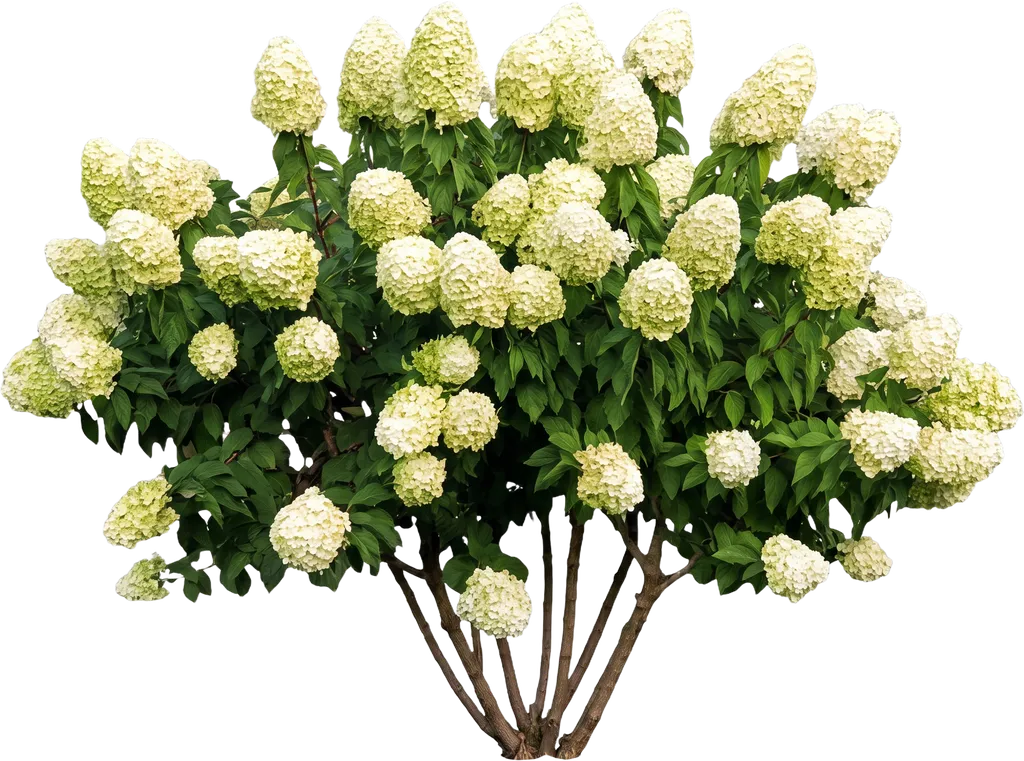 Limelight Hydrangea
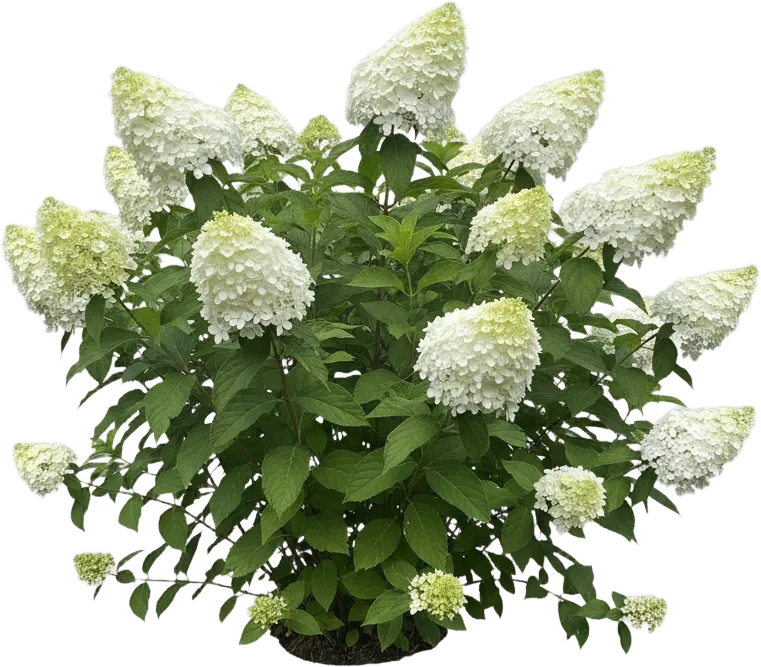 Panicle Hydrangea
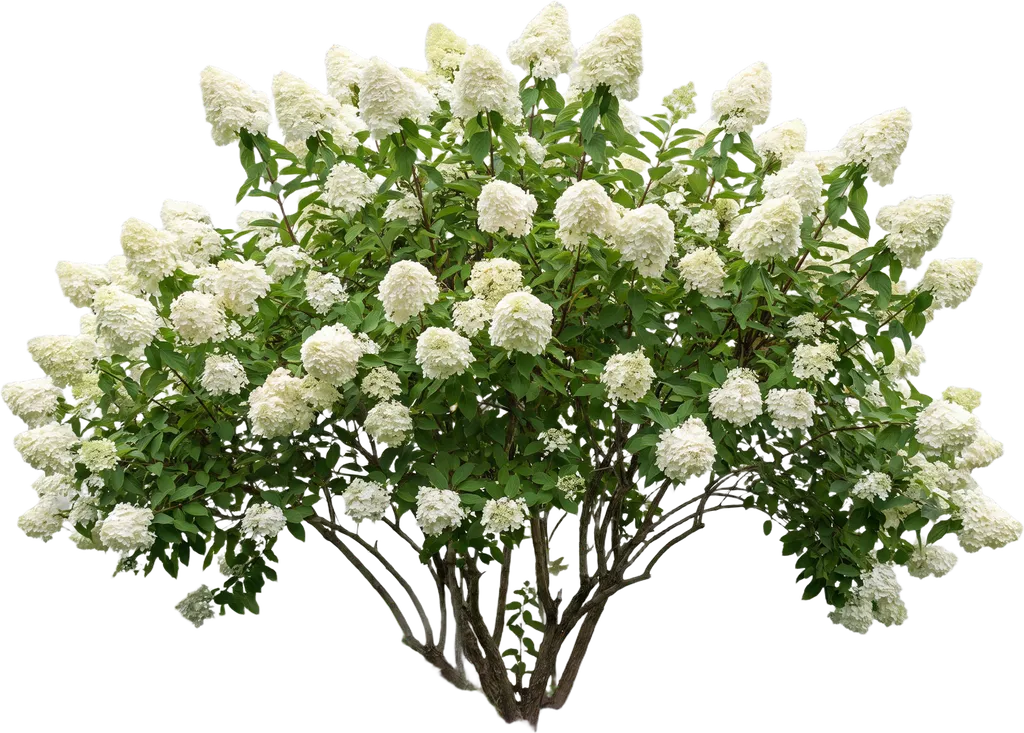 PeeGee HydrangeaClimbing Hydrangea
All drawn to the same scale.