Blazing Star
Liatris spicata
A native perennial with tall spikes of fluffy purple flowers that open from the top down in midsummer, a magnet for butterflies, bees and hummingbirds, and lovely cut or dried. It handles heat, humidity and moister soil than most blazing stars. Avoid soggy winter soil; tall stems may need staking.
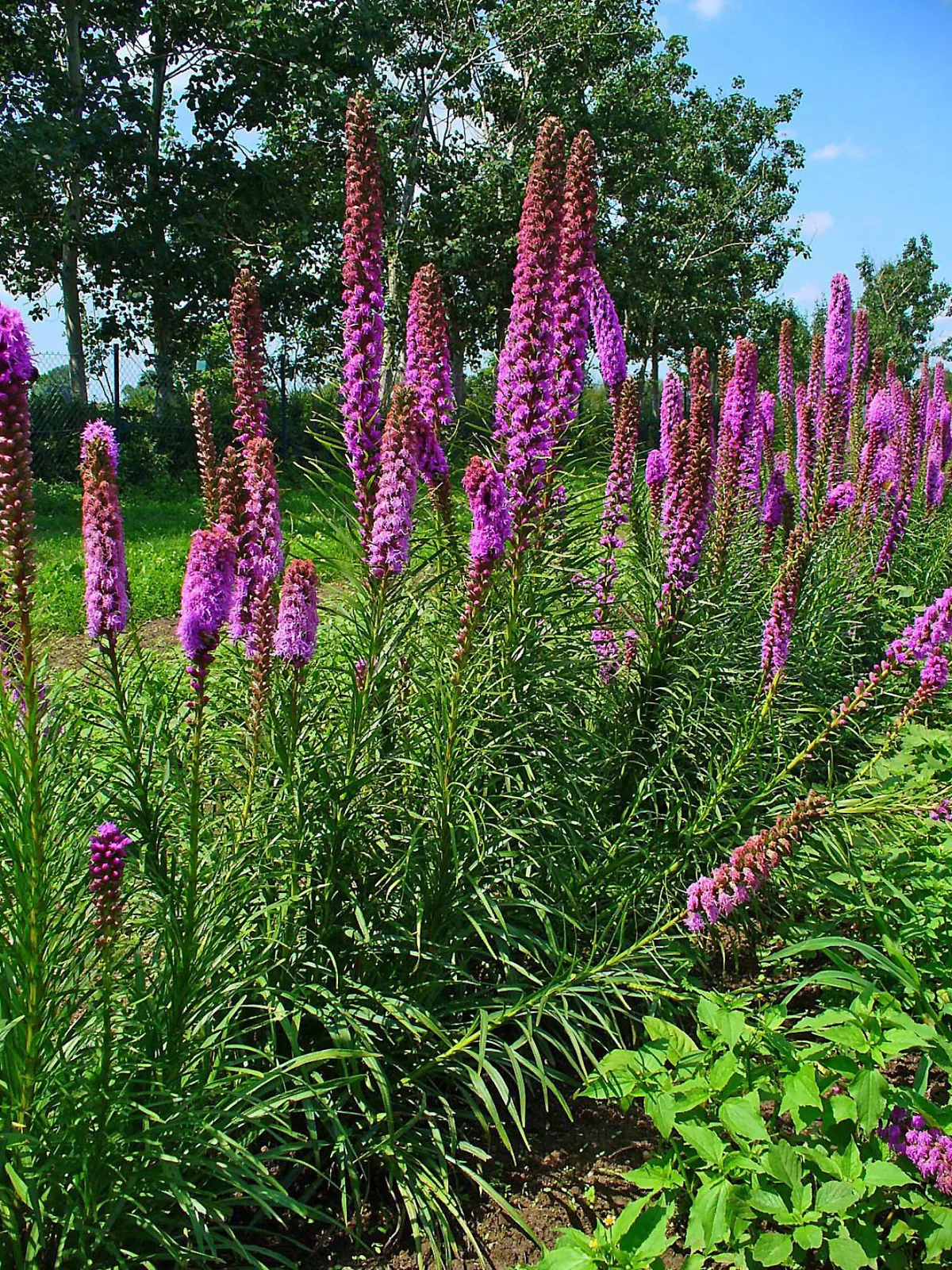
- Mature size
- 3 × 1 ft
- 0.9 × 0.3 m, tall × wide
- Hardiness
- Zones 3a–8b
- USDA
- Sun
- Full sun
- Water
- Medium to moist
- Blooms
- Jul–Aug
Blazing Star at its mature size
A mature Blazing Star grows 2 to 4 feet tall and 0.75 to 1.5 feet wide.
Drawn to scale beside a 5 ft 9 in person. With VeraScape, you see it at this size in your own yard.
Typical mature size, unpruned. Sources: Missouri Botanical Garden.
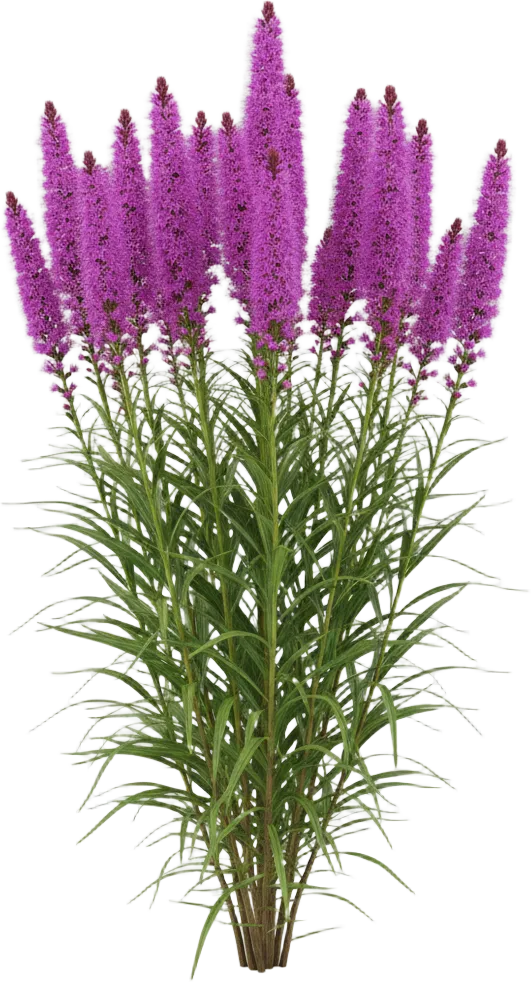

Through the year
What Blazing Star looks like month by month in a typical zone 6–7 garden.
Below ground · Nov–Apr
Dies back to the ground.
In leaf · May–Jun
Tufts of narrow grass-like leaves on leafy upright stems, no spikes open.
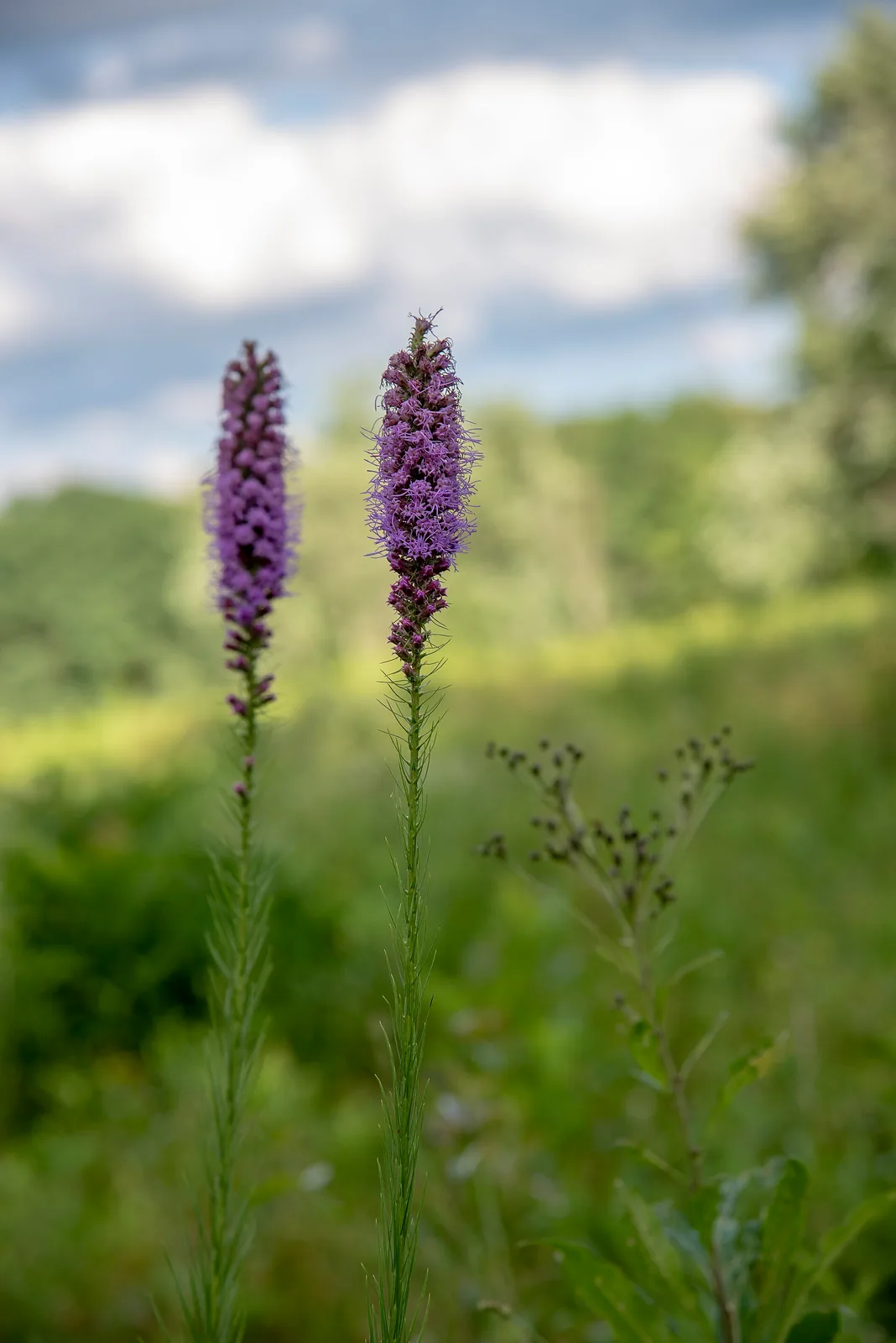
In flower · Jul–Aug
Tall dense bottlebrush spikes of rosy purple flowers.
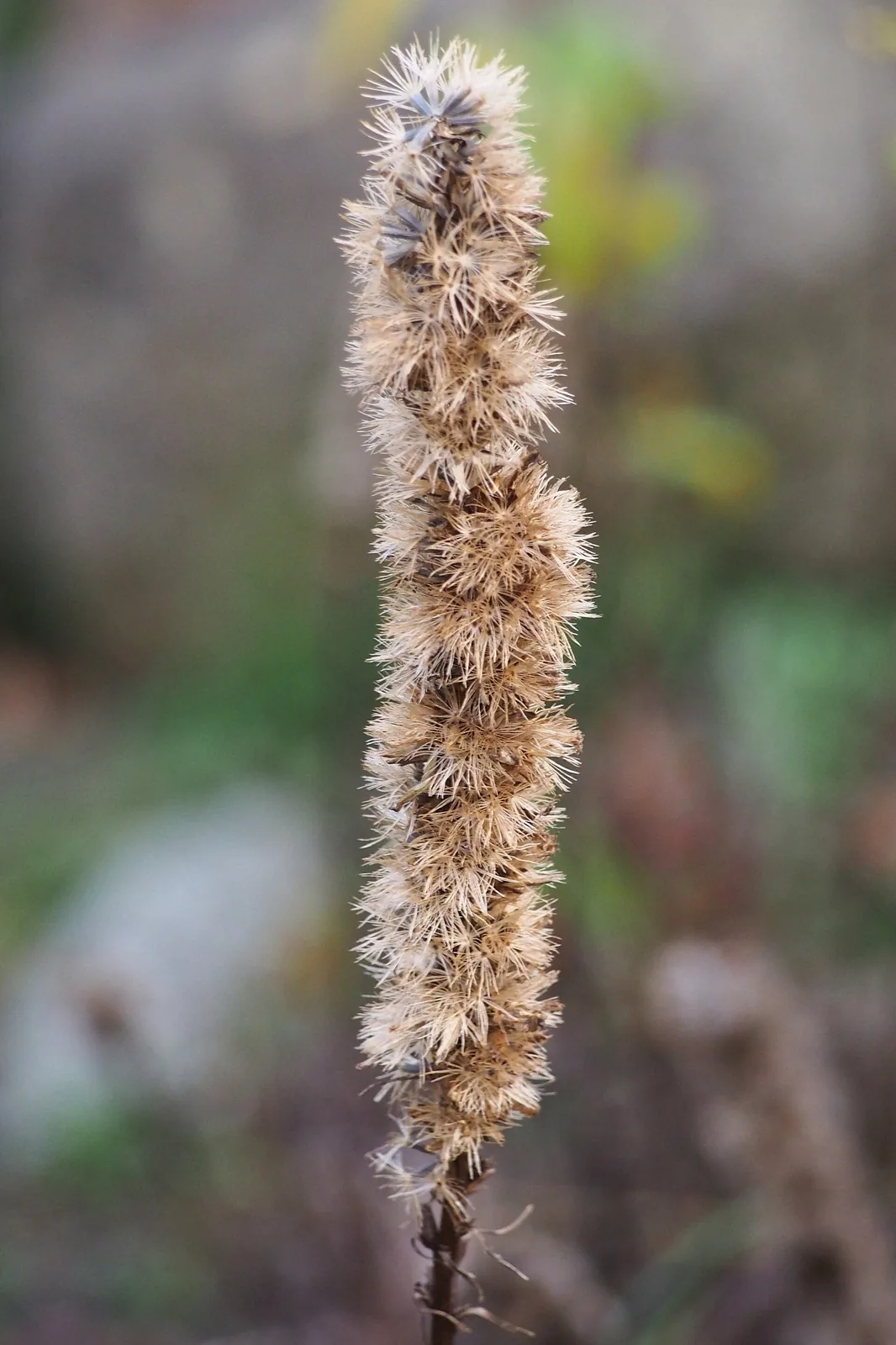
Fall · Sep–Oct
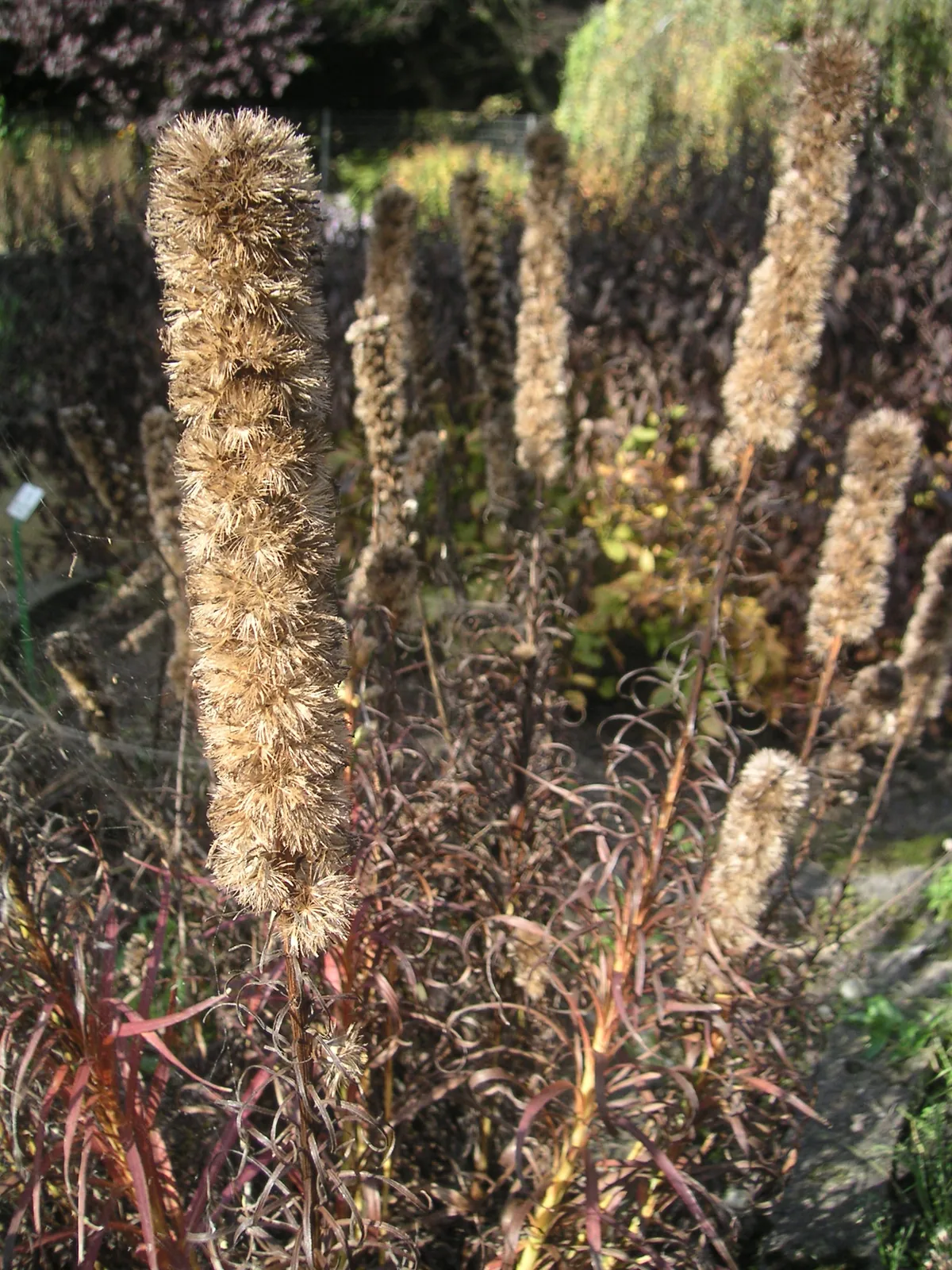
Spikes turned fluffy brown, foliage still mostly green with a slight bronze cast; not dead brown.
Photos



Growing Blazing Star
- Grows well in
- The Northeast, the Southeast, the Midwest, and the Plains and Mountain West.
- Growth rate
- Medium
- Good for
- Rain garden and pollinators
- Leaves
- Dies back in winter
- Native to
- Eastern United States
Spacing
VeraScape spaces plants so their grown canopies just touch. For Blazing Star, that’s about 1 ft apart, center to center.
Place a row in your own yard and VeraScape spaces them at their mature width, so you can see whether they’ll crowd the walk.
See Blazing Star in your yard before you dig
Visualize it at its true size, alongside the rest of your design.