Black Lace Elderberry
Sambucus nigra ‘Eva’ · a lacy black-leaf elderberry
Grown for deeply cut, dark purple leaves, with lemon-scented pink flower heads in early summer and dark berries birds eat, a dramatic informal hedge or rain-garden shrub. It suckers and self-seeds into colonies, so prune it each late winter and pull suckers. Its leaves, stems and roots are poisonous.
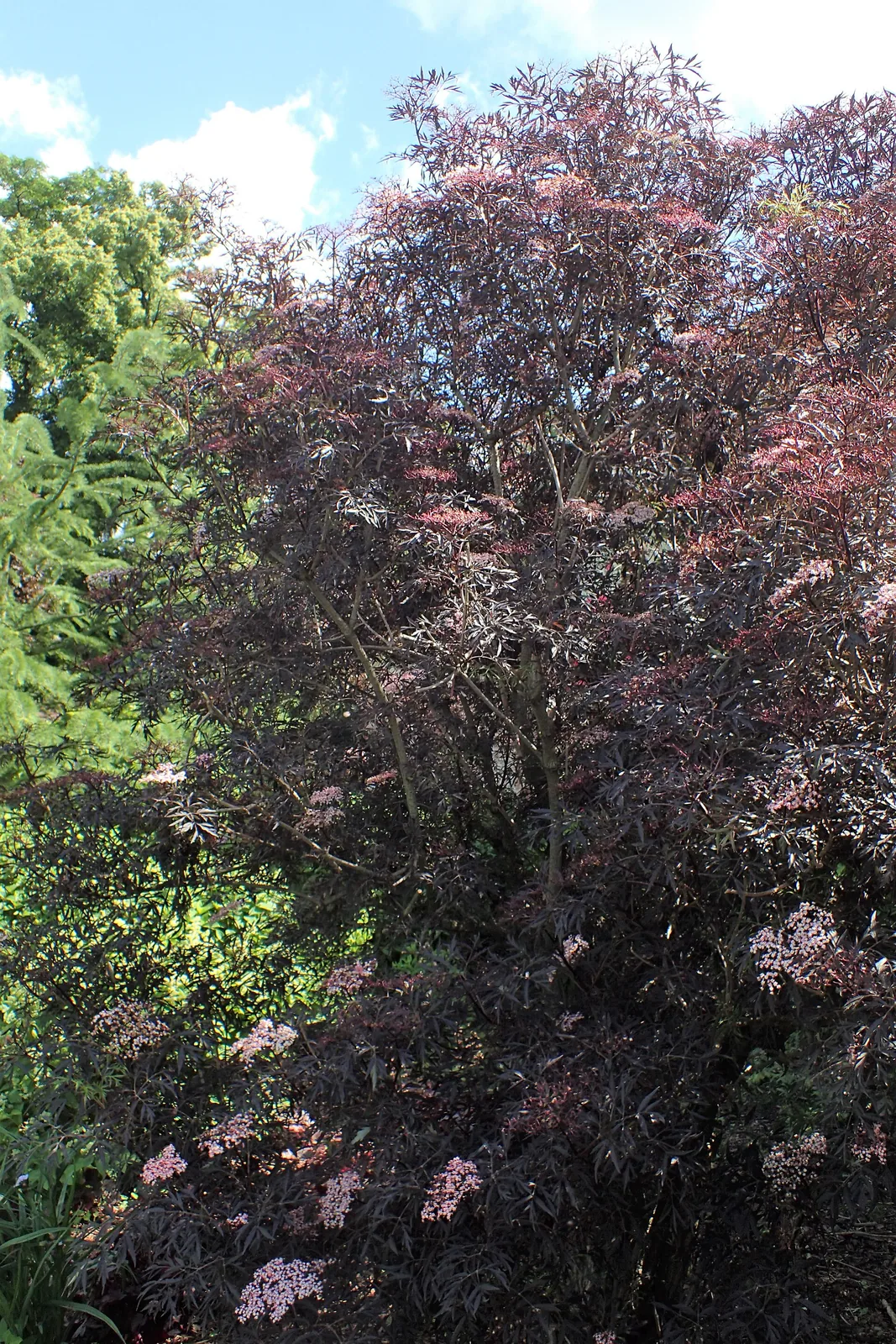
- Mature size
- 7 × 7 ft
- 2.1 × 2.1 m, tall × wide
- Hardiness
- Zones 4a–7b
- USDA
- Sun
- Full sun to part shade
- Water
- Medium to moist
- Blooms
- Jun–Jul
Black Lace Elderberry at its mature size
A mature Black Lace Elderberry grows 6 to 8 feet tall and just as wide, taller than most people.
Drawn to scale beside a 5 ft 9 in person. With VeraScape, you see it at this size in your own yard.
Typical mature size, unpruned. Sources: Missouri Botanical Garden.
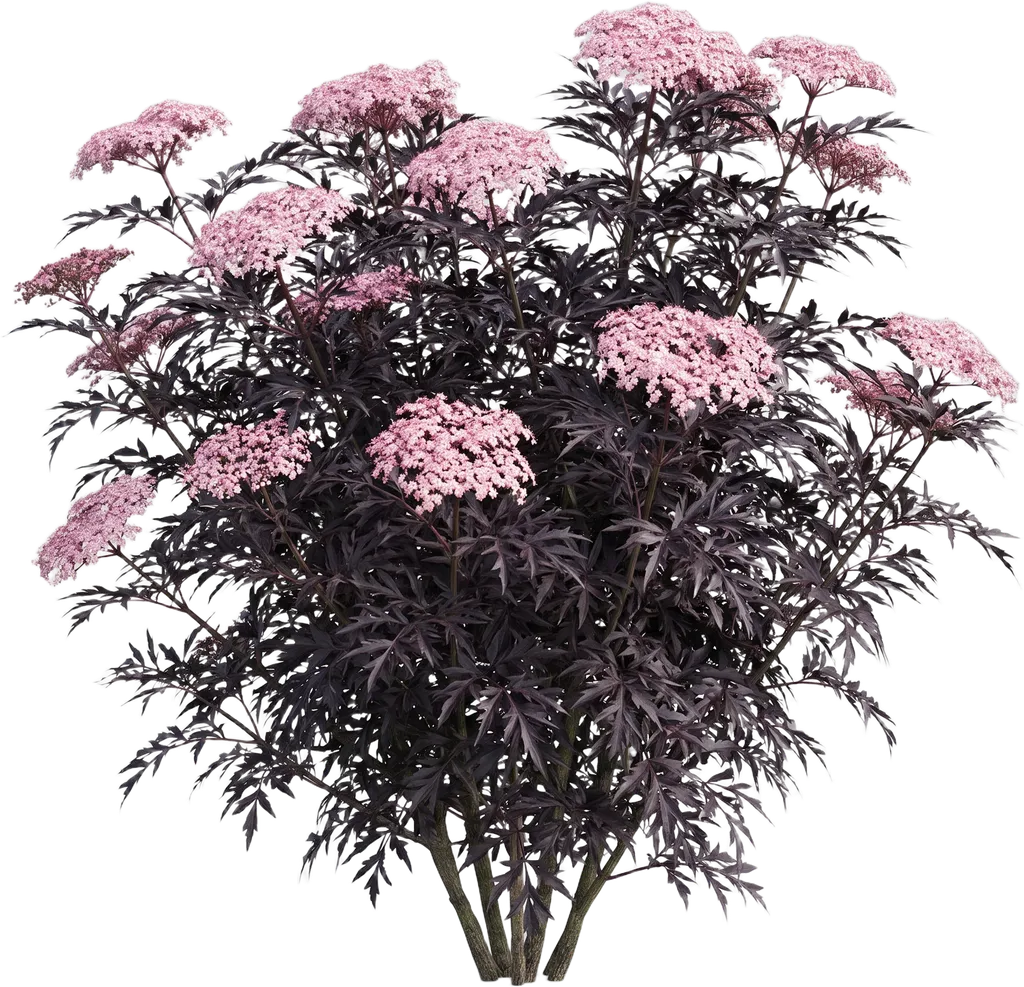

Through the year
What Black Lace Elderberry looks like month by month in a typical zone 6–7 garden.
Dormant · Nov–Apr
Bare upright gray-brown stems.
In leaf · May, Jul–Oct
Dense lacy purple-black leaves, no flowers.
In flower · Jun
Flat domed clusters of soft pink flowers on top of the black lacy foliage.
Photos
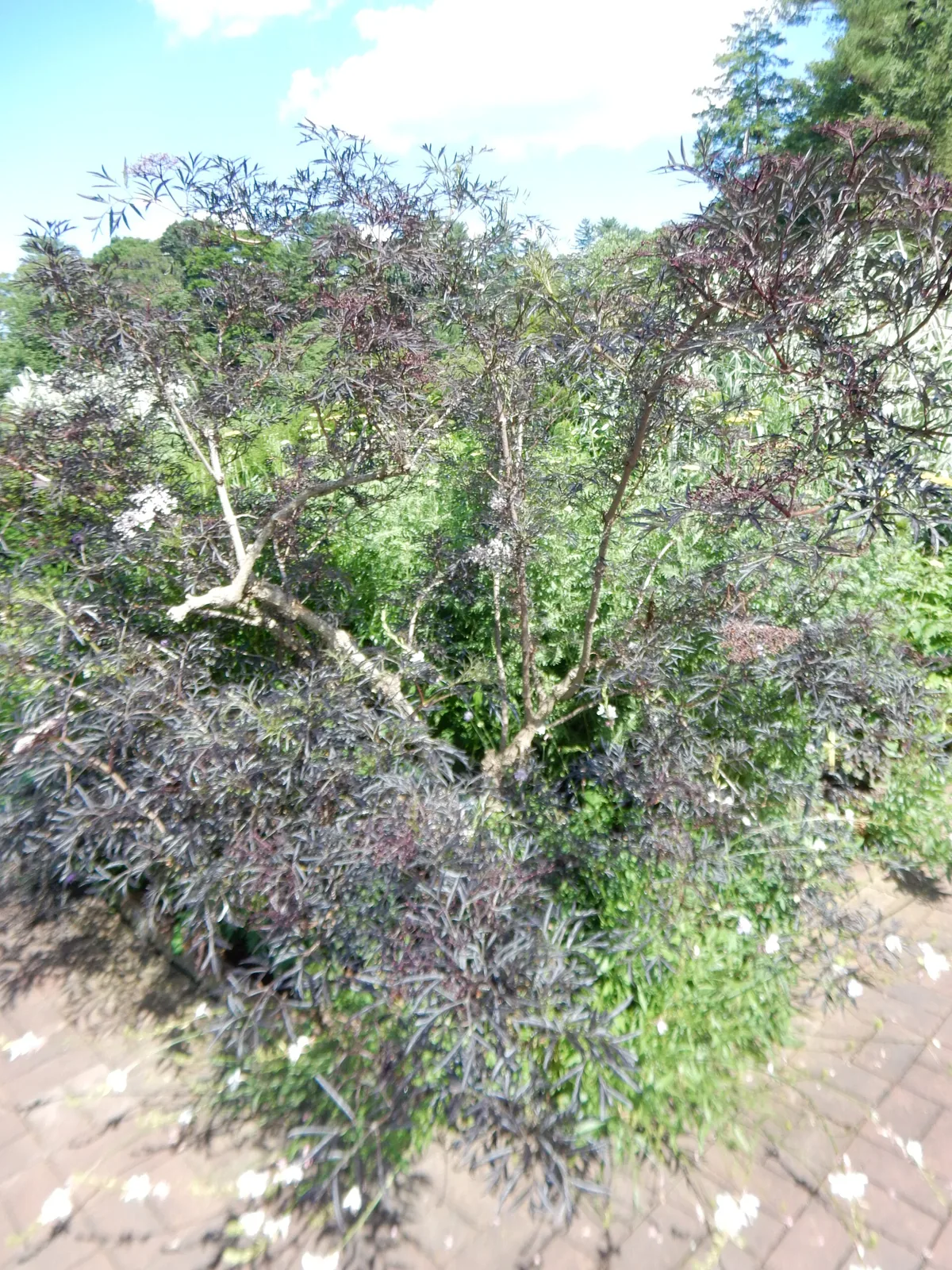

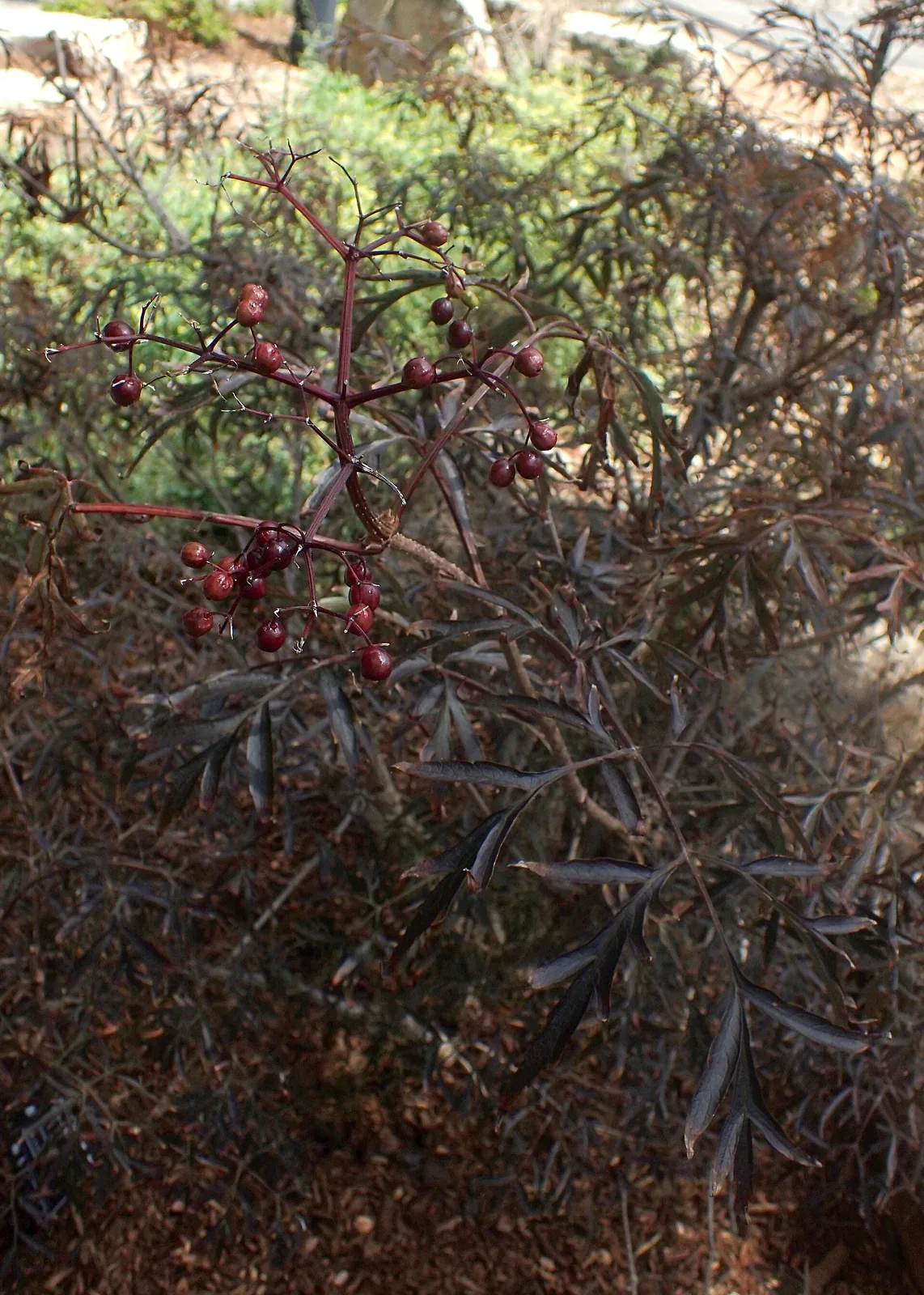

Growing Black Lace Elderberry
- Grows well in
- The Northeast, the Midwest, the Plains and Mountain West, and the Pacific Northwest.
- Good for
- Hedge, rain garden, and fragrant
- Leaves
- Drops its leaves in winter
- Native to
- Europe, Southwestern Asia, and Northern Africa
Spacing for a hedge
VeraScape spaces plants so their grown canopies just touch. For Black Lace Elderberry, that’s about 7 ft apart, center to center.
Place a row in your own yard and VeraScape spaces them at their mature width, so you can see whether they’ll crowd the walk.
See Black Lace Elderberry in your yard before you dig
Visualize it at its true size, alongside the rest of your design.