Black-eyed Susan
Rudbeckia fulgida
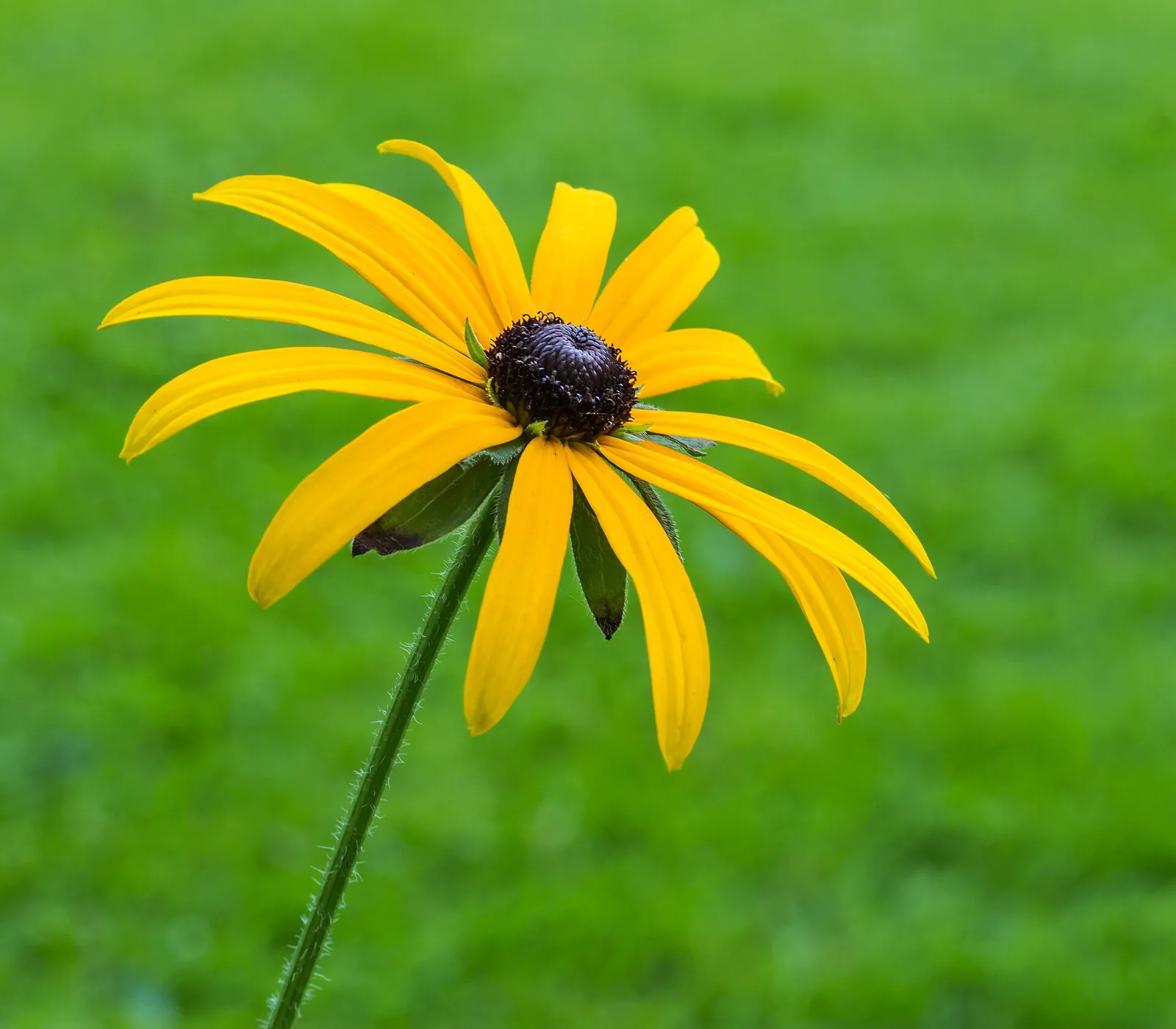
Easy, cheerful native daisies with glossy gold petals around a dark centre, blooming from early summer into fall, great massed in borders and meadows, and butterflies visit. It takes heat, humidity, drought and deer. Leave the seed heads for winter birds. It spreads into broad clumps and rots in soggy soil.

- Mature size
- 2.5 × 1.5 ft
- 0.8 × 0.5 m, tall × wide
- Hardiness
- Zones 3a–9a
- USDA
- Sun
- Full sun to part sun
- Water
- Dry to medium
- Blooms
- Jul–Oct
Black-eyed Susan at its mature size
A mature Black-eyed Susan grows 2 to 3 feet tall and 1 to 2 feet wide.
Drawn to scale beside a 5 ft 9 in person. With VeraScape, you see it at this size in your own yard.
Typical mature size, unpruned. Sources: NC State Extension.
Through the year
What Black-eyed Susan looks like month by month in a typical zone 6–7 garden.
Below ground · Nov–Apr
Dies back to a flat rosette.
In leaf · May–Jun
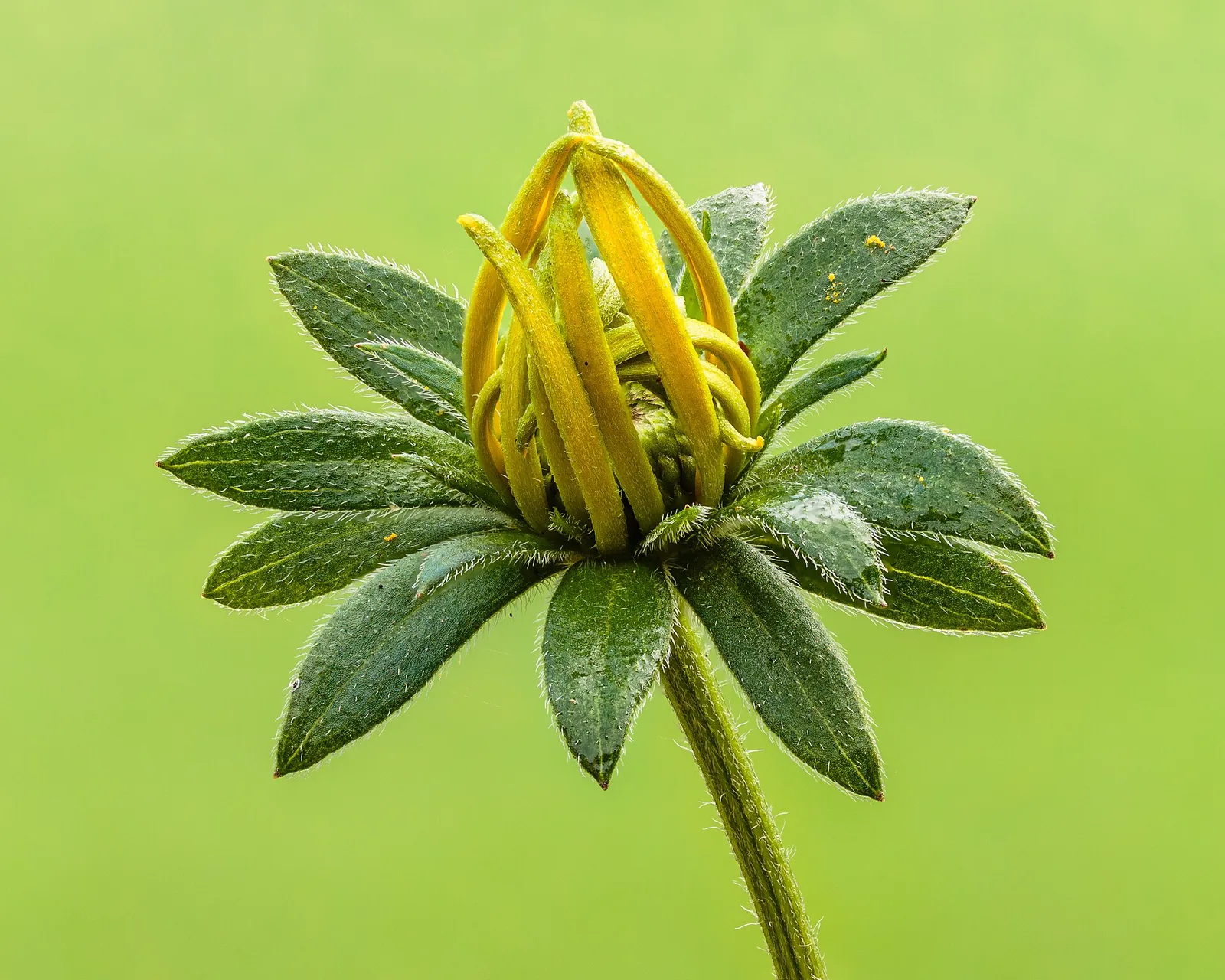
Clump of rough dark green leaves, no flowers.
In flower · Jul–Sep
Golden-yellow daisies with dark brown button centres.
Fall · Oct
Dark brown button seed heads on stems, few petals.
Photos

Growing Black-eyed Susan
- Grows well in
- The Northeast, the Southeast, the Midwest, the Plains and Mountain West, and the Pacific Northwest.
- Growth rate
- Fast
- Good for
- Specimen, drought tolerant, deer resistant, pollinators, winter interest, and fast growing
- Leaves
- Dies back in winter
- Native to
- Eastern North America
Spacing
VeraScape spaces plants so their grown canopies just touch. For Black-eyed Susan, that’s about 1.5 ft apart, center to center.
Place a row in your own yard and VeraScape spaces them at their mature width, so you can see whether they’ll crowd the walk.
See Black-eyed Susan in your yard before you dig
Visualize it at its true size, alongside the rest of your design.
Other black-eyed susans
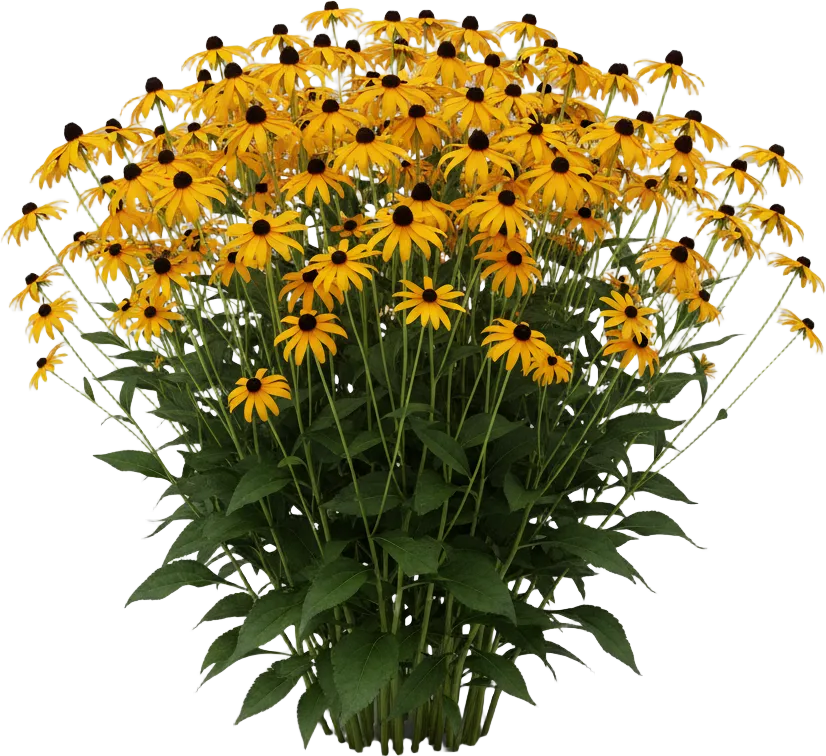 Goldsturm Black-eyed Susan
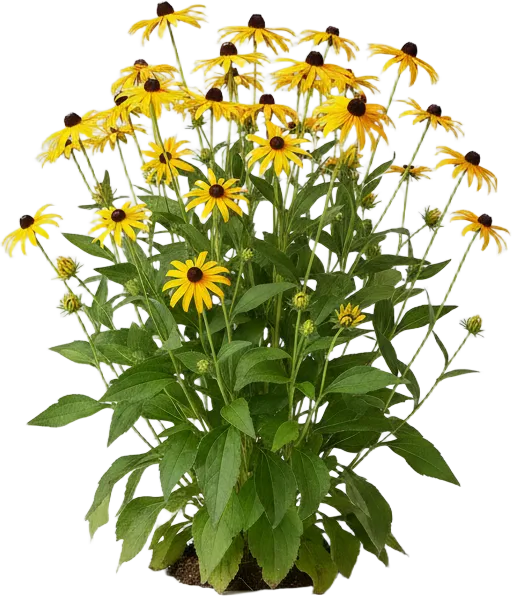 Black-eyed Susan
All drawn to the same scale.