Aromatic Aster
Symphyotrichum oblongifolium
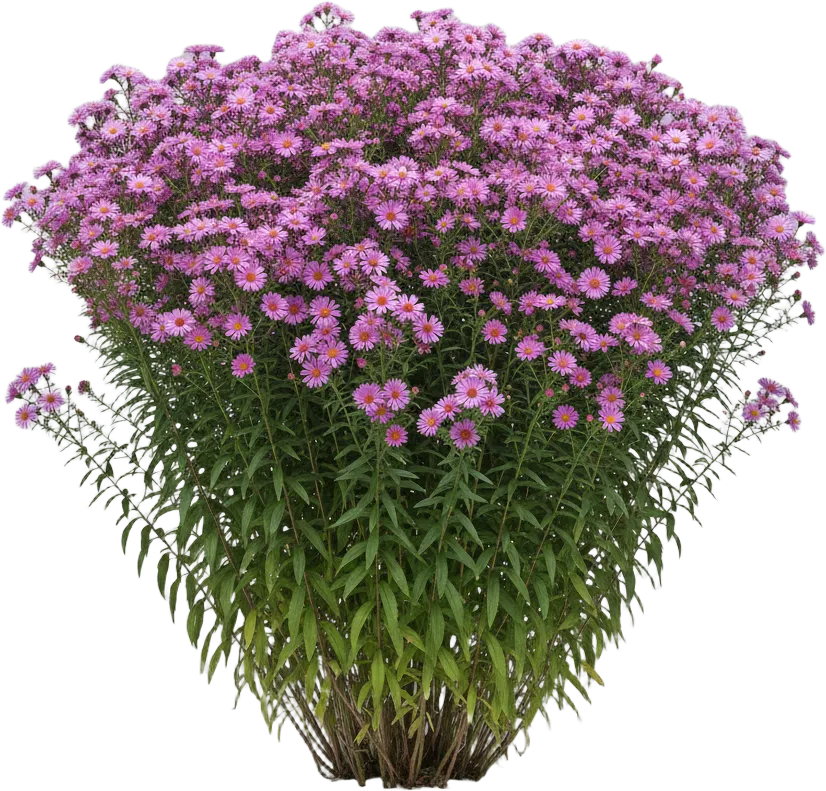
A native aster that makes a dense, low mound smothered in small purple daisies from late summer to frost, a great stand-in for fall mums; its stems smell of balsam when crushed. It takes drought, poor soil and coastal conditions, and deer and rabbits leave it alone. Give it sun and good drainage to avoid mildew.
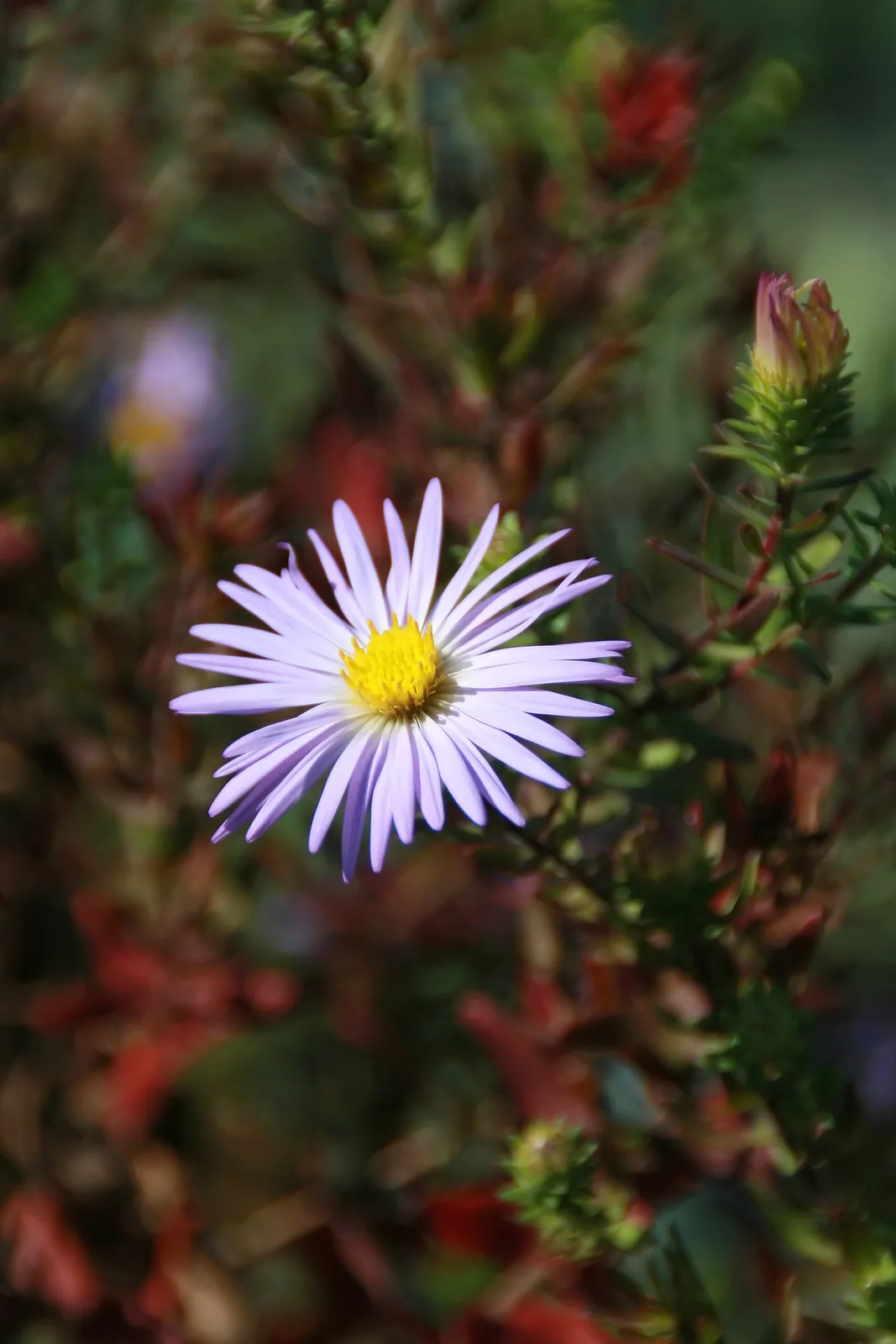

- Mature size
- 2 × 2 ft
- 0.6 × 0.6 m, tall × wide
- Hardiness
- Zones 3a–8b
- USDA
- Sun
- Full sun to part sun
- Water
- Dry to moist
- Blooms
- Sep–Oct
Aromatic Aster at its mature size
A mature Aromatic Aster grows 1 to 3 feet tall and just as wide.
Drawn to scale beside a 5 ft 9 in person. With VeraScape, you see it at this size in your own yard.
Typical mature size, unpruned. Sources: NC State Extension.
Through the year
What Aromatic Aster looks like month by month in a typical zone 6–7 garden.
Below ground · Dec–Apr
Dies back to the ground.
In leaf · May–Aug
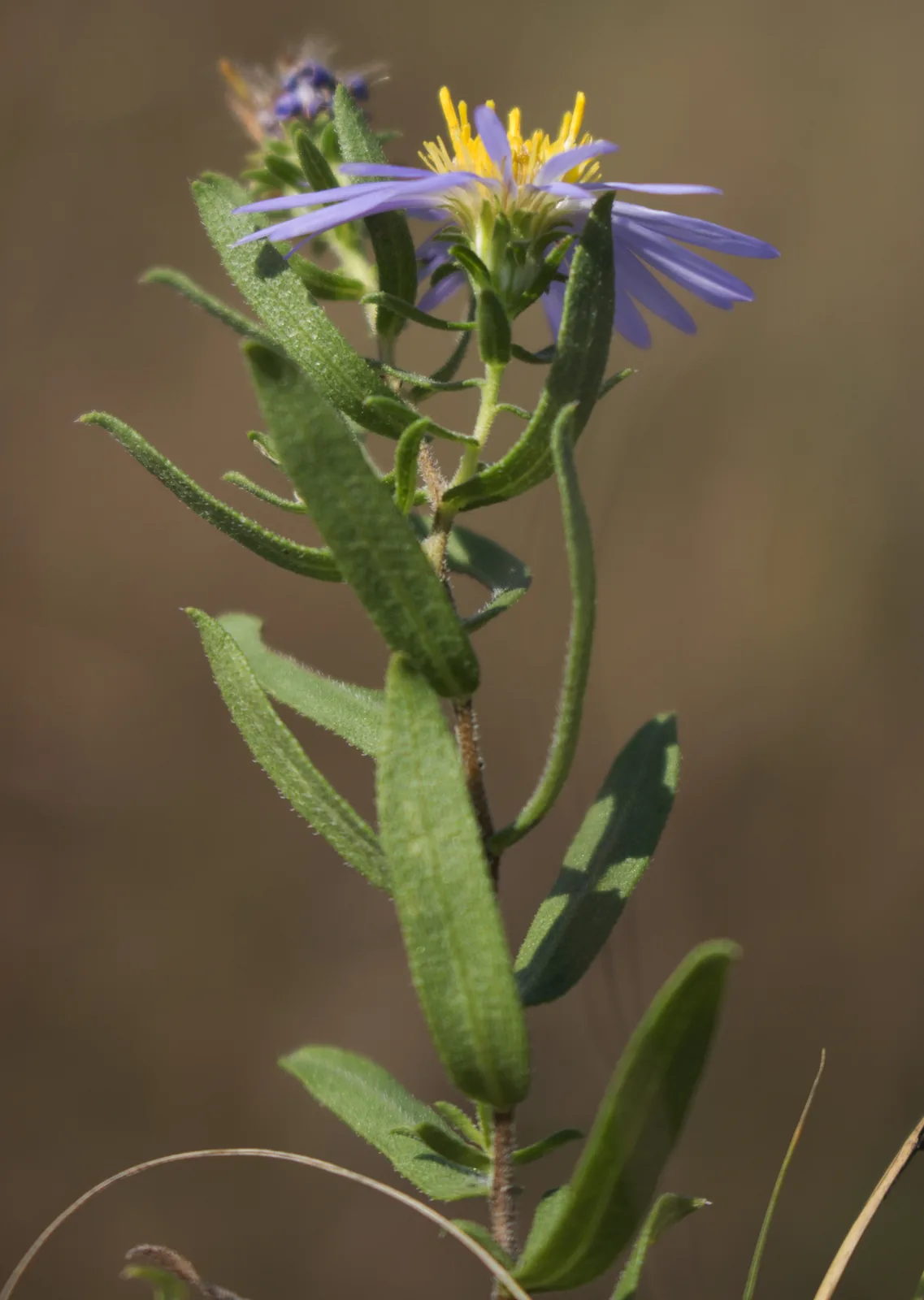
Bushy dome of small gray-green oblong leaves.
In flower · Sep–Oct
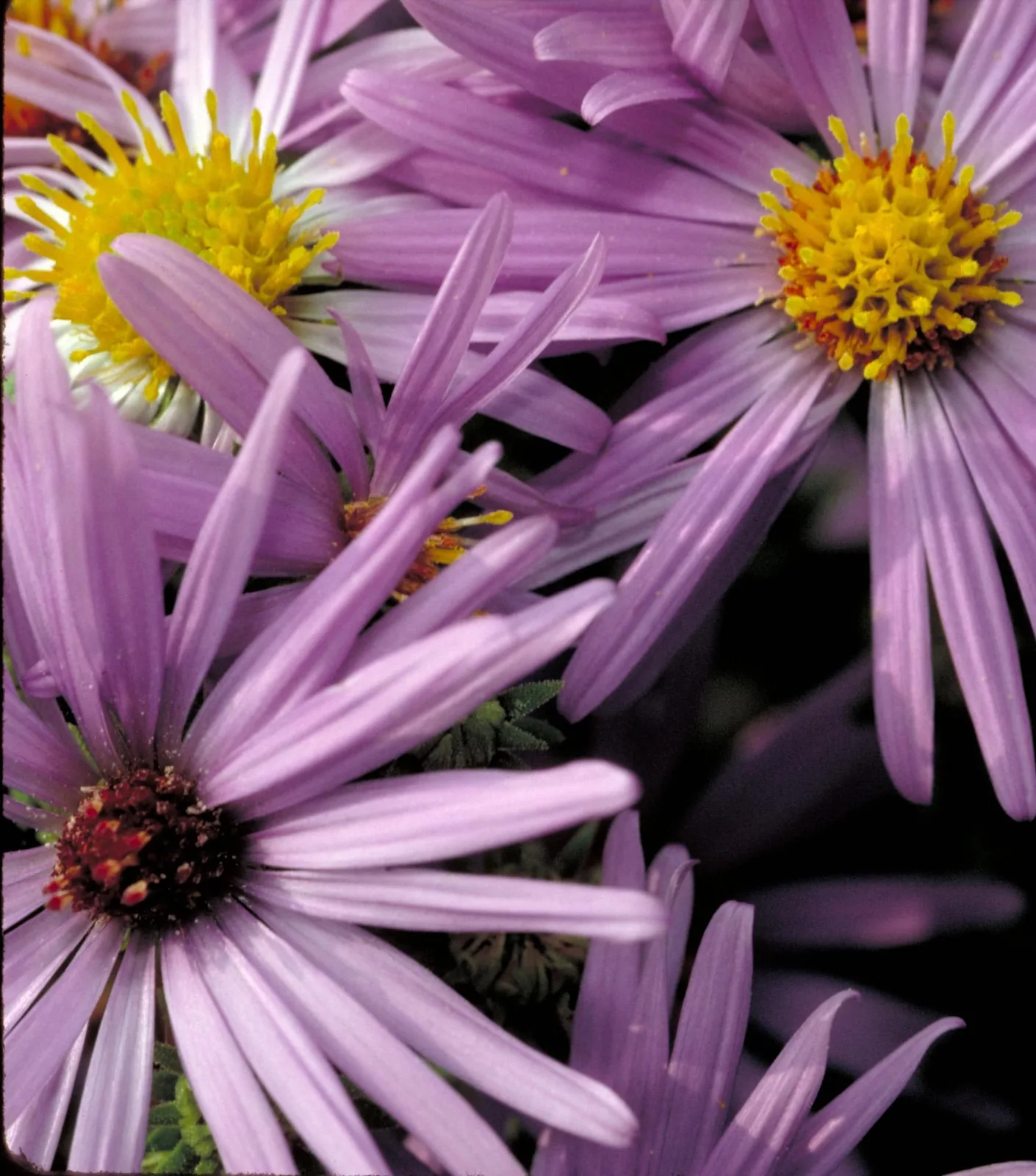
Dome covered in lavender-blue daisies with yellow centres.
Fall · Nov
Fluffy tan seed heads, foliage browning.
Photos


Growing Aromatic Aster
- Grows well in
- The Northeast, the Southeast, the Midwest, and the Plains and Mountain West.
- Growth rate
- Medium
- Good for
- Drought tolerant, deer resistant, pollinators, and fragrant
- Leaves
- Dies back in winter
- Native to
- Central United States and Northeastern Mexico
Spacing
VeraScape spaces plants so their grown canopies just touch. For Aromatic Aster, that’s about 2 ft apart, center to center.
Place a row in your own yard and VeraScape spaces them at their mature width, so you can see whether they’ll crowd the walk.
See Aromatic Aster in your yard before you dig
Visualize it at its true size, alongside the rest of your design.
Other asters
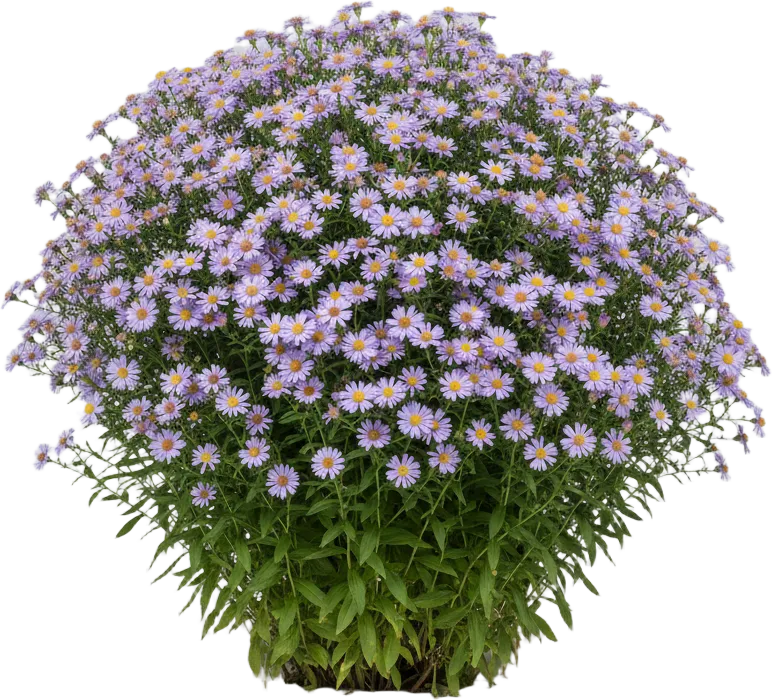 Aromatic Aster
 New England Aster
All drawn to the same scale.