Amsonia / Bluestar
Amsonia hubrichtii
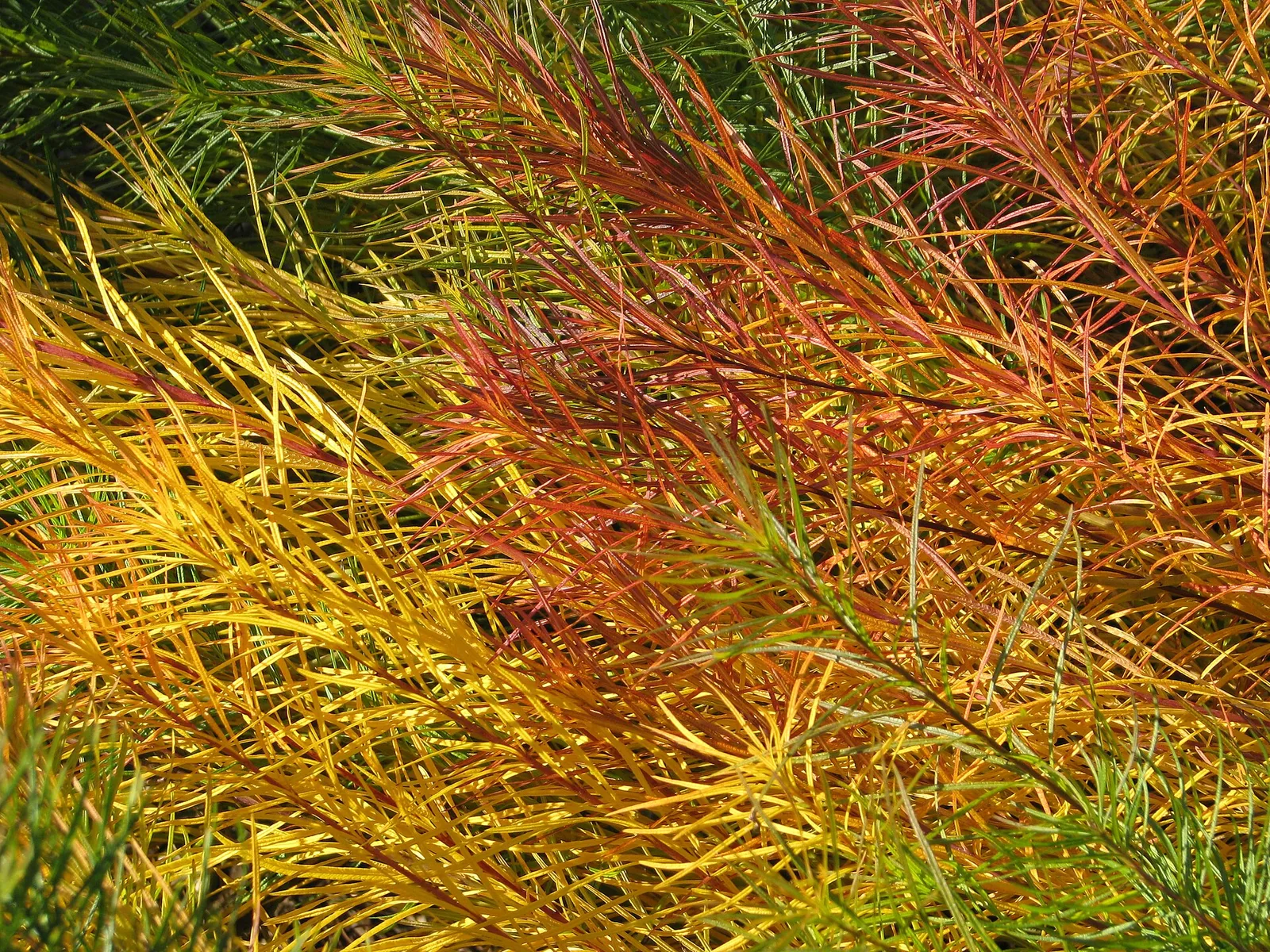
Prized for fine, feathery foliage that turns bright gold in fall, after powder-blue star flowers in spring; it's best massed in a border. It's easy in average, well-drained soil, clay included, and deer tend to avoid it. It's slow to fill in, and shade makes it flop, so give it sun and trim it after flowering.
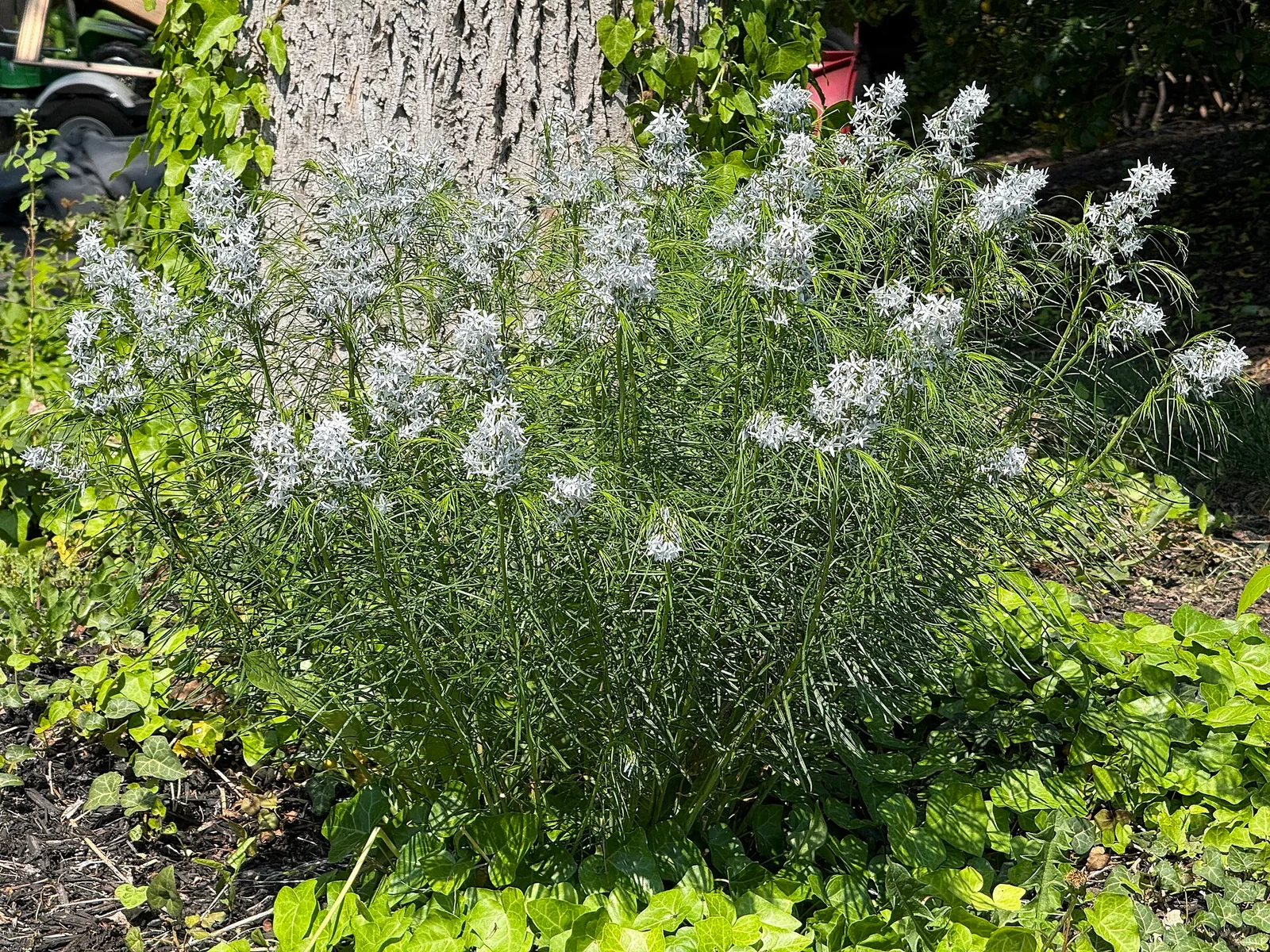
- Mature size
- 2.5 × 2.5 ft
- 0.8 × 0.8 m, tall × wide
- Hardiness
- Zones 5a–8b
- USDA
- Sun
- Full sun to part shade
- Water
- Dry to moist
- Blooms
- Apr–May
- Fall color Oct–Nov
Amsonia / Bluestar at its mature size
A mature Amsonia / Bluestar grows 2 to 3 feet tall and just as wide.
Drawn to scale beside a 5 ft 9 in person. With VeraScape, you see it at this size in your own yard.
Typical mature size, unpruned. Sources: Missouri Botanical Garden.
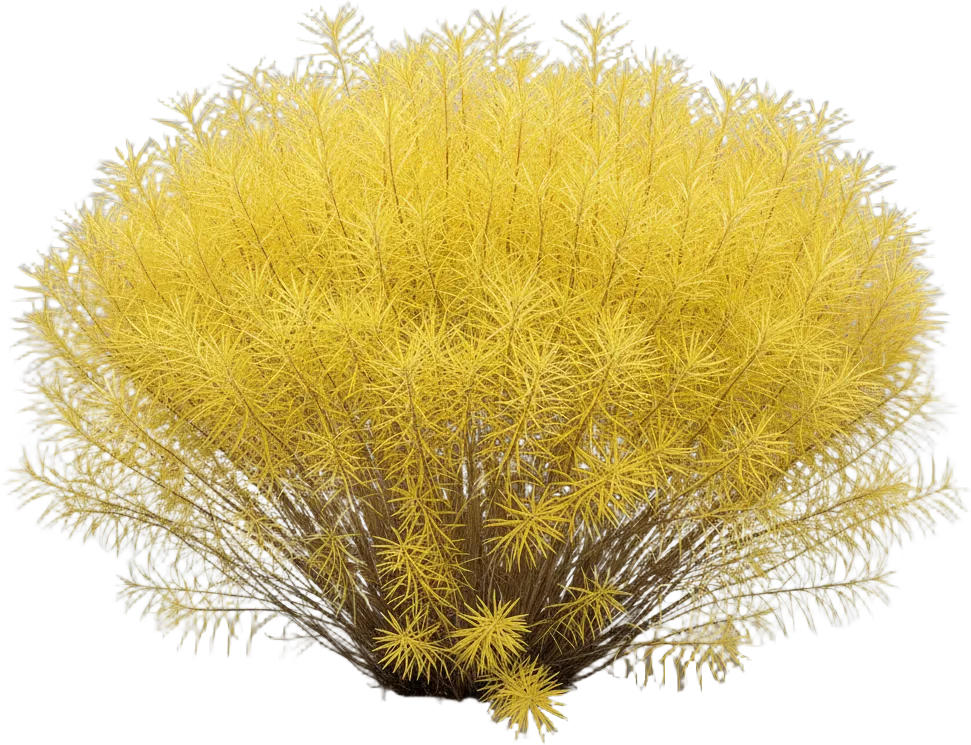

Through the year
What Amsonia / Bluestar looks like month by month in a typical zone 6–7 garden.
Below ground · Dec–Mar
Cut back to the ground.
In leaf · Apr, Jun–Sep
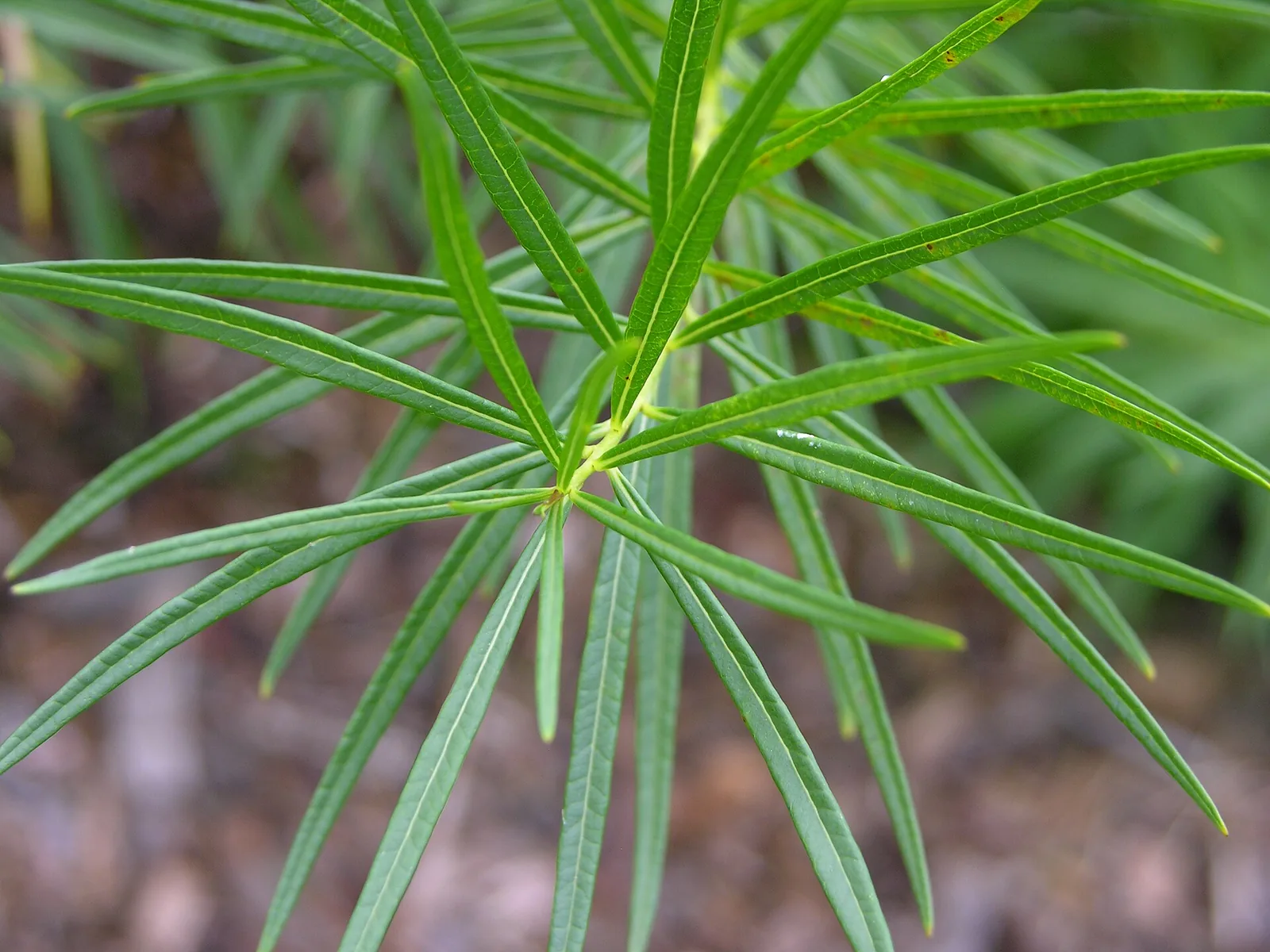
Billowy mound of fine thread-like bright green leaves, feathery texture.
In flower · May
Feathery green mound topped with loose clusters of small pale blue star-shaped flowers, a slight steely cast; clearly blue, not gray or white.
Fall · Oct–Nov
Every fine leaf turned brilliant golden yellow, glowing.
Photos


Growing Amsonia / Bluestar
- Grows well in
- The Northeast, the Southeast, and the Midwest.
- Growth rate
- Slow
- Good for
- Specimen, drought tolerant, rain garden, deer resistant, pollinators, and fall color
- Leaves
- Dies back in winter
- Native to
- South-Central United States (Arkansas, Oklahoma)
Spacing
VeraScape spaces plants so their grown canopies just touch. For Amsonia / Bluestar, that’s about 2.5 ft apart, center to center.
Place a row in your own yard and VeraScape spaces them at their mature width, so you can see whether they’ll crowd the walk.
See Amsonia / Bluestar in your yard before you dig
Visualize it at its true size, alongside the rest of your design.